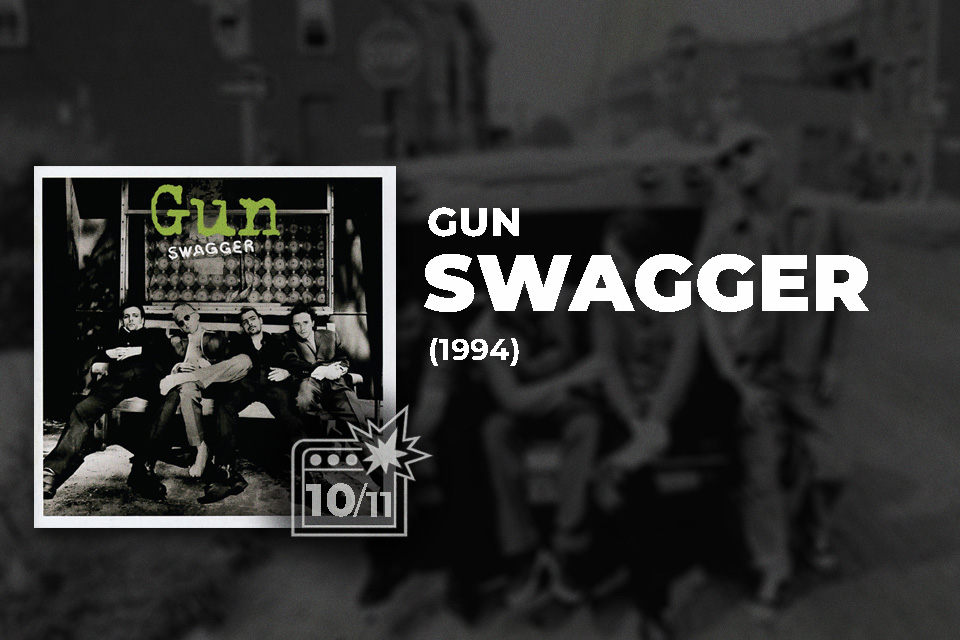
In summary:
One of the great British rock records of the 1990s, Swagger finds Gun scaling their sound to arena size without sacrificing the grit that made it matter.
Swagger receives 10/11.
★ ★ ★ ★ ★ ★ ★ ★ ★ ★
Album details
Album Details
Release date: August 1st, 1994
Label: A&M
Producer: Chris Sheldon
Musicians:
- Mark Rankin (vocals)
- Giuliano Gizzi (guitar)
- Dante Gizzi (bass, backing vocals)
- Mark Kerr (drums)
Singles:
- Word Up!
- Don’t Say It’s Over
- The Only One
- Something Worthwhile
- Seems Like I’m Losing You
Chart performance:
- #5 UK Album Chart
- #2 Scottish Album Chart
Total sales: 60,000
Certification: Silver
Score: ★ ★ ★ ★ ★ ★ ★ ★ ★ ★
Gun – Swagger (1994) Review
How do you turn steady progress into something definitive?
By 1994, Gun had already proven they could survive the shifting sands of rock’s early-90s upheaval. With Swagger, they didn’t just endure — they ascended.
Their third studio album captures the moment when grit, groove and ambition finally aligned, resulting in a record that feels bigger, bolder and more sonically expansive than anything they had released before. Swagger doesn’t merely refine their sound; it delivers the most complete version of it.
Got A Weird Thing To Show You
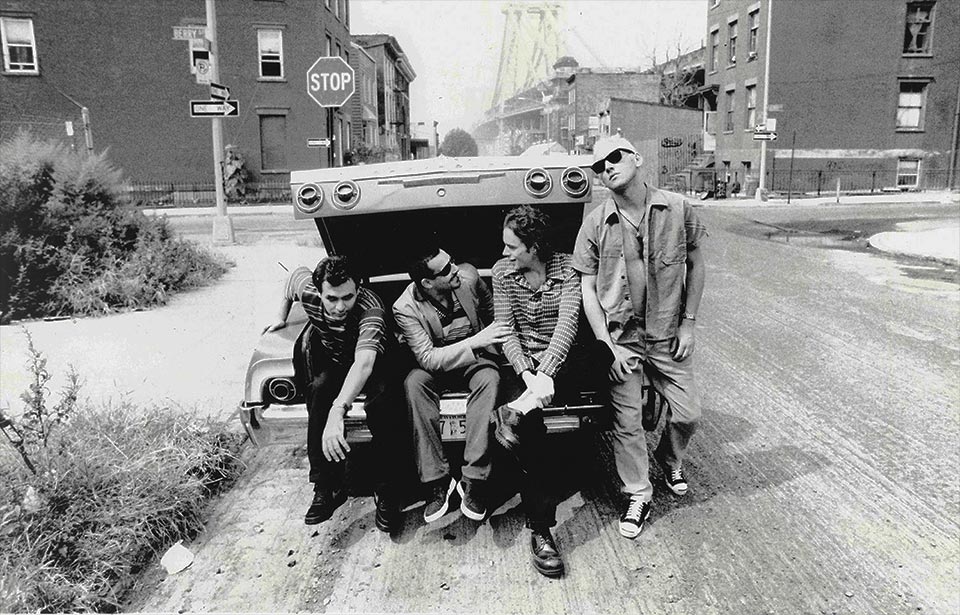
Of course, any discussion of Swagger inevitably circles back to Word Up.
Originally conceived as a playful warm-up exercise, their cover of the Cameo classic quickly evolved into something far more significant.
For it allowed Gun to drill into the groove-driven undercurrent that had always simmered beneath their sound – the same “rock you can dance to” sensibility hinted at on earlier cuts like Dance and Money (Everybody Loves Her). The INXS influence, long detectable in their rhythmic instincts, was finally brought to the surface, and in the process, they unlocked a new dimension.
Bigger production, tighter rhythm and massive guitar hooks made it feel like a natural extension of their identity rather than a novelty, and for many listeners, this remains the definitive version of the song.
Yet success carried a sting.
The sheer scale of Word Up’s chart success inevitably cast a shadow over the album’s original material, unfairly reducing the Scottish rockers to “the band who covered that song” in the eyes of casual observers. Worse still, it appeared to tilt their trajectory toward the pop mainstream — a direction that would prove far less sustainable on the ill-fated 0141 632 6326, ultimately contributing to their dissolution.
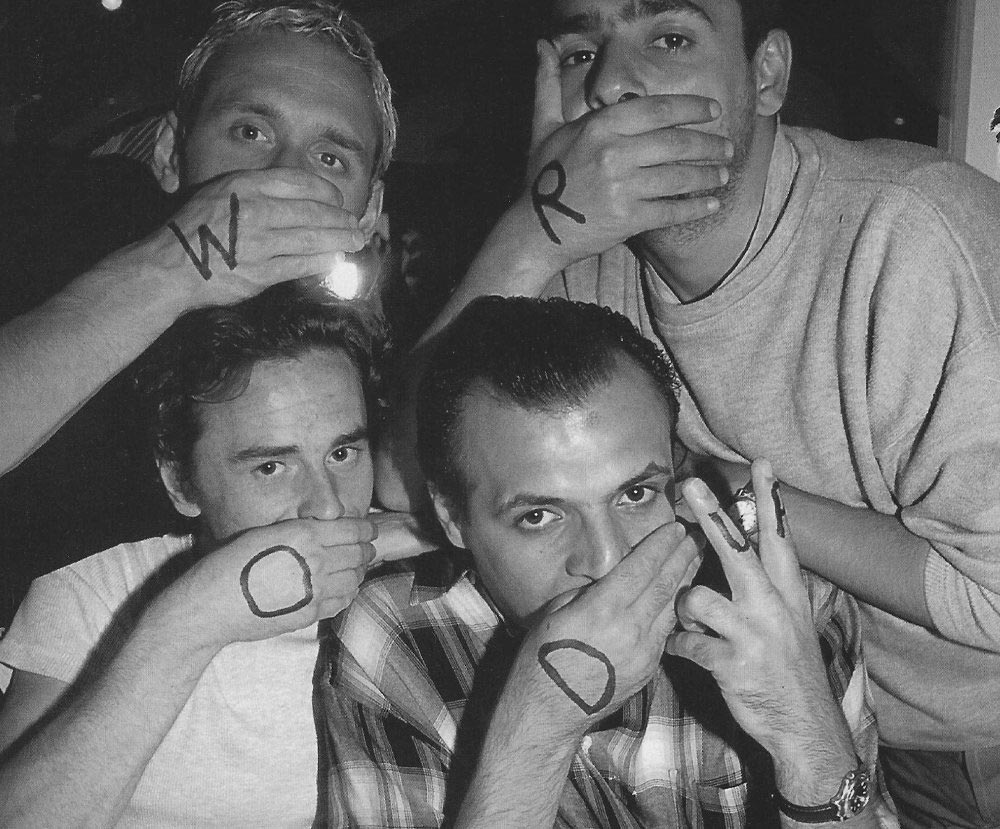
“We hear lots of bands complain that heavy guitar music doesn’t get played on radio anymore. We disagree. We’ve believe if you have the right song you will get played no matter what. Look at Word Up, it’s probably the heaviest we’ve ever sounded!”
– Mark Rankin

The Sunrise Meets The Day
If Word Up opened the door, it’s the band’s original material that justifies the acclaim.
Here, for the first time, Gun’s groove and melody coexist without compromise.
The standout moment is Don’t Say It’s Over, arguably the finest thing they had written to that point. Its opening riff lands with authority, the chorus soars without strain, and Giuliano Gizzi’s guitar solo strikes the perfect balance between melody and bite.
It’s everything Gun had been building toward since their debut, delivered with newfound weight and confidence.
Deeper cuts like Crying Over You and Seems Like I’m Losing You follow a similar blueprint — muscular riffs, emphatic choruses, airtight structure — yet they never feel like retreads because the songwriting is simply too sharp.
Indeed, it seems that where lesser bands might repeat themselves, Gun refine.
Elsewhere, Stand In Line benefits enormously from Mark Kerr’s thunderous drum performance, anchoring the track with a physical presence that their earlier records only hinted at. And the closing pairing of One Reason and Vicious Heart capture mid-’90s rock radio at its most commanding, with clean guitars ringing out against enormous percussion and melody elevated by scale rather than buried beneath it.
The anthems feel timeless, the hooks sharper, the choruses wider — this is a band no longer proving themselves but owning the room.
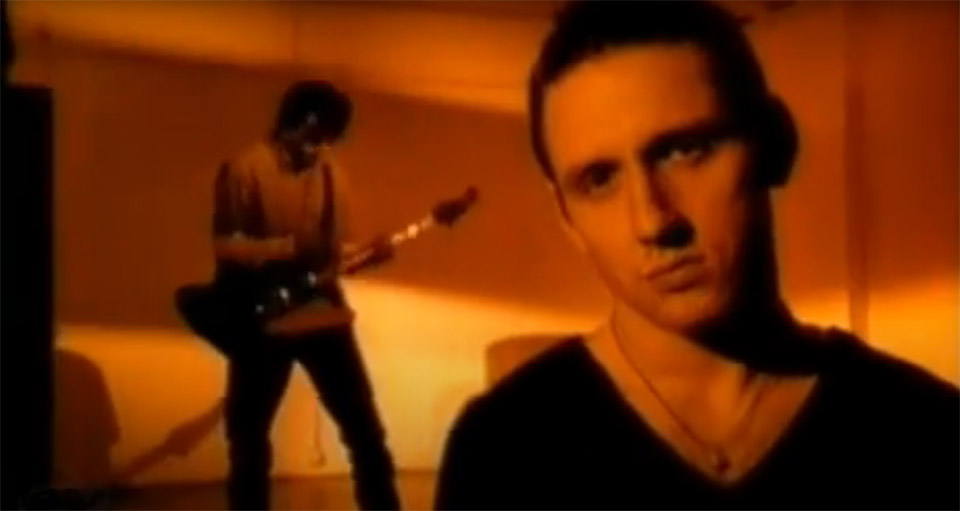
"Break away while the wheels are turning
Looking round there can be no doubt."

VICIOUS HEART
In With The In Crowd
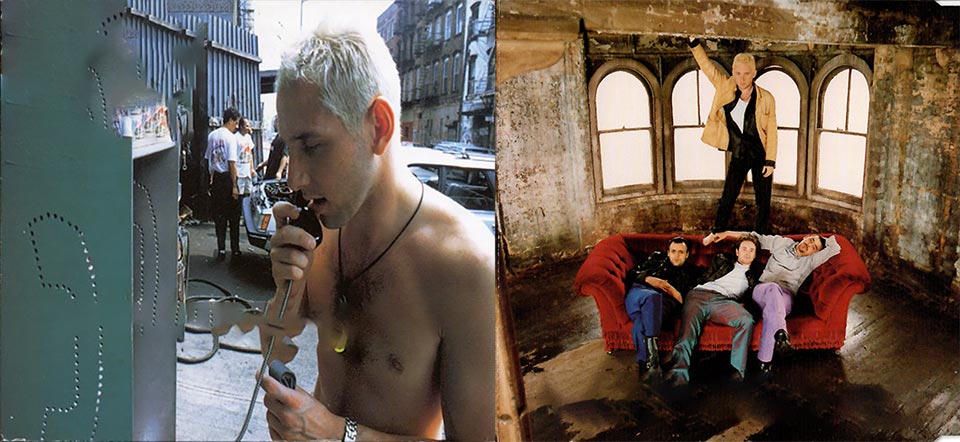
Much of Swagger’s impact can be traced to producer Chris Sheldon.
Where previous records occasionally felt restrained, Sheldon allows these songs to expand to their natural size. The guitars are clean without losing bite, layered with a clarity that lets every riff cut through the mix. At the same time, the drums are thick, loud, uncompressed — in a way that still feels physical decades later.
It’s no coincidence that this album was recorded after Gun had spent the best part of 1994 touring with the likes of Def Leppard and Bon Jovi. They had learned what scale sounded like in real time, and on Swagger, they finally captured it on record.
Crucially, Sheldon’s production amplifies the band’s natural groove rather than smoothing it away, giving the album a stadium-sized presence that retains the band’s trademark grit at its core. It sounds enormous – and, more importantly, it sounds earned.
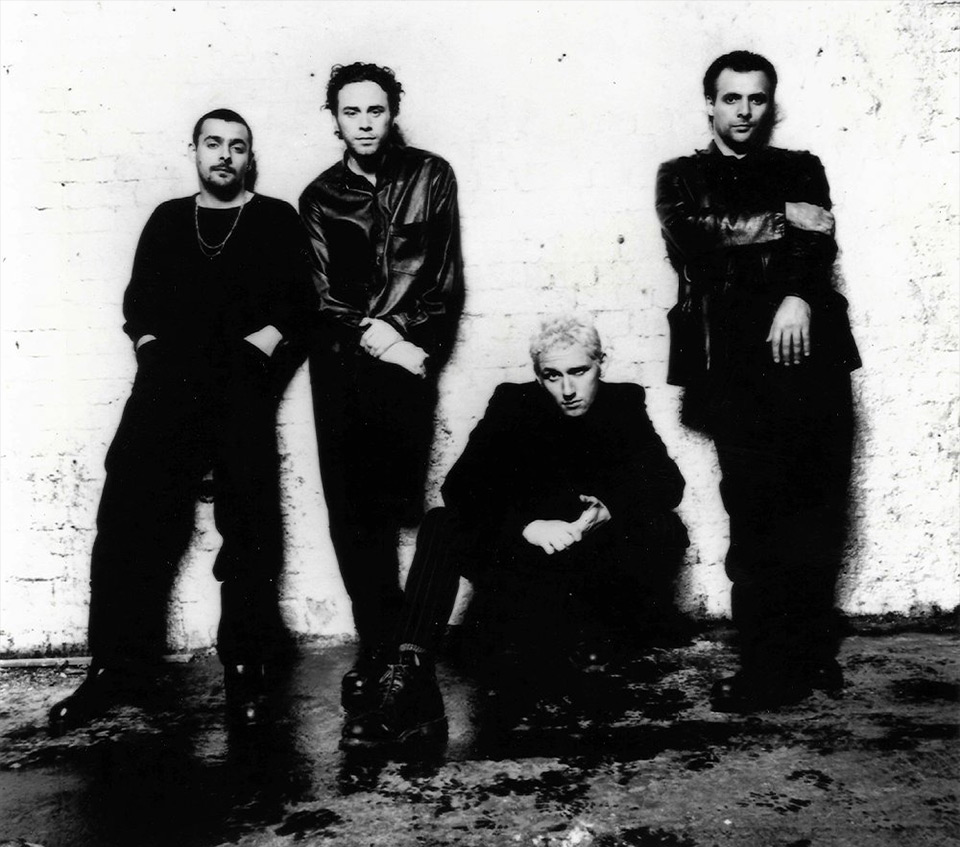
“The press used to lump us in with rock bands we had nothing in common with – Poison, Little Angels, etc – and I hate that. They were nothing like us, but we just happened to arrive at a similar time. Musically I’ve always felt we’ve got more in common with bands like The Cult because they try to evolve their sound on each album. We’re trying to grow as artists, and I want other UK rock bands to do the same, because all the biggest innovators in the last 3-4 years are American and we’d like to change that.”
– Mark Rankin
A New Direction
There’s also a quieter evolution taking place beneath Swagger’s towering production.
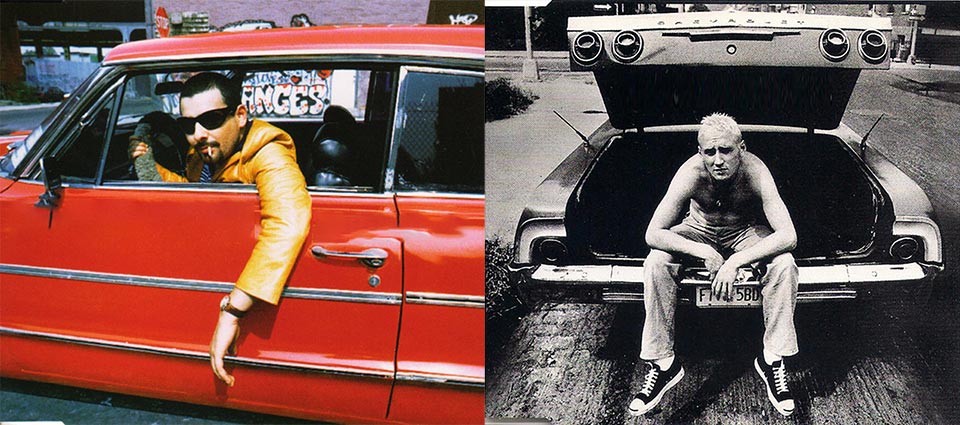
The Gizzi brothers had always been central to Gun’s identity, but this is the first album where Dante Gizzi’s presence truly becomes audible. His backing vocals weave more confidently through the mix, adding warmth and melodic depth to the band’s increasingly expansive sound. On Something Worthwhile, he even steps forward to handle lead vocals – a subtle but significant moment in the band’s story.
At the time, it may have felt like a simple widening of the creative circle. In hindsight, it carries greater weight. When Gun re-emerged in the 2010s without Mark Rankin, it was Dante who assumed frontman duties. The seeds of that transition can be heard here.
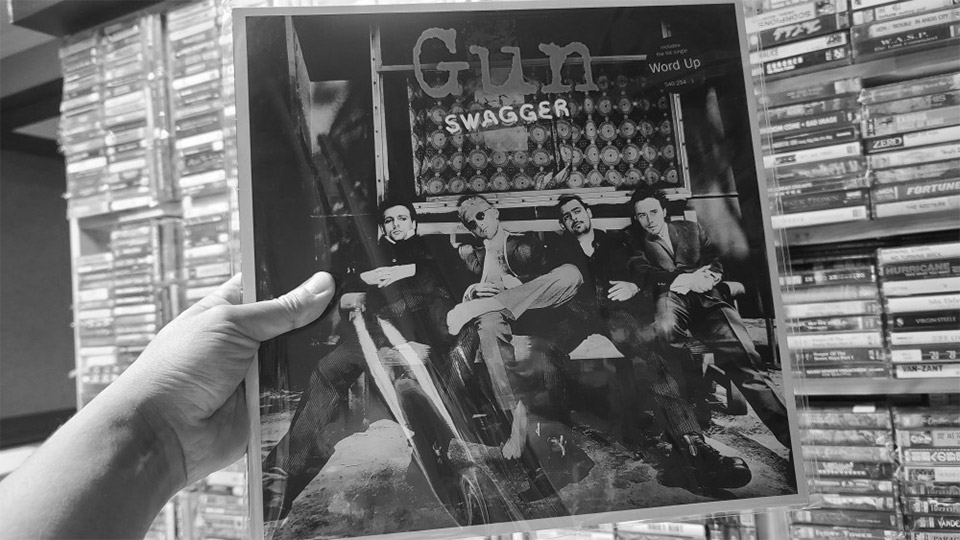
Gun: Swagger
Time has been kind to Swagger.
While the Scottish rockers would later enjoy a welcome resurgence in the 2010s, this remains the moment when everything aligned – the songwriting, the groove, the production and the confidence. It’s the sound of a band not chasing trends, but fully realising their potential.
More than thirty years on, Swagger still sounds enormous. It stands as the definitive statement of Gun at their peak — proof that they weren’t merely on tour with Bon Jovi and Def Leppard, but ready to stand alongside them.
This is Gun, dialled all the way up.
“11” Re-worked Tracklist
“11” Re-worked Tracklist
Maybe it’s the autism in me, but I’ve always been skilled at shuffling album playlists to create a superior listening experience.
Hey, what can I say? Superman got laser eyes, and I got this!
Here’s how you should listen to Gun: Swagger (1994) for maximum effectiveness:
- Find My Way (3:19)
- Word Up (4:20) ★
- Don’t Say It’s Over (4:09) ★
- Vicious Heart (4:02)
- Seems Like I’m Losing You (3:45)
- Stand In Line (4:01)
- Crying Over You (4:34)
- Something Worthwhile (4:17)
- Stay Forever (4:20) ^
- The Only One (4:38)
- One Reason (4:13) ★
★ Standout track
^ Bonus track
In summary:
One of the great British rock records of the 1990s, Swagger finds Gun scaling their sound to arena size without sacrificing the grit that made it matter.
Swagger receives 10/11.
★ ★ ★ ★ ★ ★ ★ ★ ★ ★
>> Swagger is part of our Gun album review series.
Related Posts
 Reviews, Gun
 Heavier and more self-assured, Gallus confirmed Gun’s staying power in a rapidly changing rock landscape.
 Reviews, Gun
 Gun’s 0141 632 6326 aimed to reinvent their sound. Instead, it exposed creative fractures that led to a decade-long hiatus.
 Reviews, Gun
 Hombres (2024) crowns Gun’s second act: heavier, riff-led and acclaimed, with a UK Top 10 peak and Scottish Album of the Year recognition.

Leave a Reply to Gun: Break The Silence (2012) Review | These Go To Eleven Cancel reply