
These Go To Eleven Says:
A polished, hard-hitting return that proves Bush still know how to write huge choruses.
★ ★ ★ ★ ★ ★ ★ ★
STANDOUTS The Sound Of Winter · All Night Doctors · Be Still My Love
8/11
Strong
Album details & credits
- Title
- The Sea Of Memories
- Artist
- Bush
- Released
- September 13, 2011
- Label
- Zuma Rock Records in partnership with earROCK
- Produced by
- Bob Rock
- Key personnel
- Gavin Rossdale (vocals and rhythm guitar) · Chris Traynor (lead guitar) · Corey Britz (bass) · Robin Goodridge (drums)
- Singles
- The Afterlife · The Sound Of Winter · Baby Come Home
- Chart performance
- No.18 on Billboard 200 Chart · No.8 on Billboard Rock Chart · No.200 on UK Albums Chart · No.32 on UK Independent Albums Chart
- Total sales
- 26,000
- Certification
- n/a
- Score
- ★ ★ ★ ★ ★ ★ ★ ★
Bush – The Sea Of Memories (2011) Review
Ten years is long enough for a comeback to feel either exciting or completely unnecessary.
For Bush, some would argue it was the latter.
Their original run had ended in steep commercial decline, and their brand of heavy post-grunge had faded even further from mainstream rock radio in the years they’d been away. When two founding members then declined Gavin Rossdale’s invitation to return to the fold, it seemed like the writing was on the wall.
That’s what makes The Sea Of Memories such a pleasant surprise: rather than sounding like a band trying to relive the ’90s, Bush returned with a collection of songs strong enough to justify their reinvention.

Everything Really Is Zen
One of Gavin Rossdale’s most frustrating characteristics throughout the 1990s was his apparent discomfort with his own commercial strengths.
Having proven himself to be an excellent writer of radio-ready rock anthems, he frequently seemed determined to sabotage that gift in pursuit of critical acclaim.
Case in point: Razorblade Suitcase.
Interestingly, Rossdale would later admit that he’d spent far too much of the band’s early career trying to appease critics who didn’t like Bush, rather than simply concentrating on the audience they already had.
By the time they finally embraced straight-ahead rock on 2001’s Golden State, the album failed to make commercial waves in the midst of the nu-metal uprising, sending the band into a lengthy hiatus. Consequently, the most intriguing question surrounding The Sea Of Memories is exactly which thread the band would pull.
Interestingly, it doubles down on its predecessor’s direction.
Yet, where Golden State relied on driving guitars and tightly wound arrangements, The Sea Of Memories boasts a much broader sonic palette. The drums have considerable depth, the guitars are pristine, and the addition of atmospheric keyboards contributes to a sound noticeably more mainstream than anything Bush attempted during their original run.
Bob Rock’s presence in the producer’s chair makes perfect sense here. Having steered massive successes for the likes of Metallica, Bon Jovi and Aerosmith, the legendary producer was never going to bury Rossdale’s melodic instincts beneath awkward production.
The end result is both polished and impressive, but it comes with a trade-off: The Sea Of Memories is considerably less aggressive than the band’s back catalogue, and its cleaner textures occasionally expose weaknesses that a wall of heavy distortion might have disguised.
When the hooks are strong enough, though, none of that matters.

Don’t Call It A Comeback
Although The Afterlife had already announced Bush’s return in 2010, it was second single The Sound Of Winter that transformed the reunion into a genuine commercial success.
And deservedly so.
The song builds from a restrained base, allowing Rossdale’s familiar vocal to establish the melody before the rhythm section expands into one of the finest choruses of Bush’s later career. It boasts the same understanding of tension and release that previously made Comedown and Machinehead so successful, while Bob Rock provides a considerably more polished, almost cinematic quality.
The result is unmistakably Bush, but with a modern twist.
Commercially, The Sound Of Winter became the band’s first No. 1 on Billboard’s Alternative Songs chart since The Chemicals Between Us in 1999. That achievement was especially impressive given that Bush were now releasing music through their own Zuma Rock imprint, in partnership with eOne Music, rather than enjoying the promotional support of a traditional major label.
Twelve years after their previous alternative-radio chart-topper, Rossdale had demonstrated that his ability to write enormous rock choruses remained intact.
More importantly, he’d found a way to make them work for a new generation.
"Head straight, screwed on. We screwed up for too long."

The Sound Of Winter

The New Dynamic
Chris Traynor is central to why the album works as neatly as it does.
Although he’d joined Bush towards the end of the Golden State tour, Traynor spent much of the following decade working alongside Gavin Rossdale, first in the short-lived Institute and subsequently on Rossdale’s 2008 solo album, WANDERlust.
As such, by the time Bush reconvened in 2010, the two guitarists had developed a musical relationship entirely independent of the original line-up.
This new dynamic changes the shape of the band: where ex-lead Nigel Pulsford’s work often carried a ragged, traditional alt-rock edge, Traynor favours a thicker, more controlled sound. On All My Life, his axe grinds through an enormous, distortion-filled riff that ranks among the record’s most satisfying moments.
Interestingly, Gavin Rossdale explained in a 2011 interview that much of The Sea Of Memories’ guitar sound came from combining his preferred Fender Stratocaster with Traynor’s Gibson Les Paul, each using radically different amplifier setups.
The new sound may be a departure from the scrappy interplay of Sixteen Stone, but it’s one that suits the increasingly melodic direction Bush appear to be pursuing.

“When I was putting the band back together, Chris seemed like the natural choice for lead guitar. He was awesome when he stepped in during our 2001 tour, and we’ve been working together ever since.”
– Gavin Rossdale

Glorious Deep Cuts
One of the album’s most pleasant surprises is All Night Doctors, a gorgeous piano-led ballad that ranks among Rossdale’s finest compositions.
The sparse arrangement inevitably draws comparisons with Glycerine, but there’s a considerable difference in subject matter.
In a 2011 interview with Cincinnati CityBeat, Rossdale explained that the song discusses everyday collapse and the various ways people attempt to escape their problems, including self-medication.
The lyrics revolve around two central characters: a woman who wonders whether her existence has made any meaningful difference to somebody else’s life, and her male counterpart who wrestles with his own inner demons regarding unmet ambitions and dashed hopes.
It’s an unusually thoughtful piece of songwriting from a musician who, by his own admission, often prefers to use abstract lyrics that make very little sense.
Elsewhere, The Afterlife and Baby Come Home offer the sort of immediate, radio-friendly choruses that Rossdale has always excelled at, while The Mirror Of The Signs makes excellent use of the album’s broader instrumentation, combining restless drumming with electronic textures and distorted guitars.
For those who prefer their Bush a little heavier, Stand Up and The Heart Of The Matter provide plenty of ammunition.
Impressively, the best is yet to come.
Closing track Be Still My Love rounds things out with a beautifully restrained ballad, incorporating strings and subtle percussion into a heartbreaking arrangement that sounds almost completely removed from the noisy, distortion-heavy records that established this band’s reputation.
Its lyrics, which discuss the loss of a loved one, mark another career-high performance for Rossdale.
If you venture into the deluxe material, you’ll find one final little gem by the name of The Year Of Danger. Reportedly assembled from the scraps of three unused tracks, this eclectic little rocker bounces along to a series of quirky melodic shifts that occasionally recall The Police, and is so effective that it’s difficult to understand why such an interesting composition was omitted from the original tracklist.
"It's a killer inside as I'm watching you slide out my hand."

Be Still My Love

Where It Shows Its Seams
The Sea Of Memories had already undergone considerable surgery before finally reaching the public.
Bush’s initial recording sessions with Bob Rock were intended to produce the album for longtime label Interscope, but the company reportedly wasn’t satisfied with the results, believing they lacked a suitable radio hit.
The band cut ties with Interscope the following year, severing a partnership that had run since 1994, and decided to operate outside the major label machine in order to maintain full creative control of their music. Their first decision was to revisit the studio with Rock, adding five new songs and reworking much of the existing material.
Yet despite this additional effort, some of Rossdale’s old songwriting frustrations rear their heads on a number of occasions. There’s a recurring tendency to pair an excellent chorus with a comparatively weak verse, or introduce an interesting musical idea then leave it feeling irritatingly undercooked.
Numbers like Red Light and I Believe In You are the clearest examples; neither one fully earning the space it occupies on the record. And while comeback single The Afterlife is undeniably catchy, it also feels like a track that might’ve become a classic had they taken a little more time to ensure its electric chorus was matched by an equally strong support structure.

Crunching The Numbers
Commercially, The Sea Of Memories delivered a respectable return.
The album debuted at No. 18 on the Billboard 200, selling approximately 20,000 copies in the United States during its opening week.
Admittedly, those figures were a far cry from the multi-platinum successes of the band’s early career, but considering Bush had been absent for a decade, lost two original members, and parted ways with their longtime record label, a Top 20 debut was hardly a disaster.
Combined with the remarkable radio success of The Sound Of Winter, it demonstrated that there was still an audience out there for Bush.
In some ways, that’s all it needed to do.

“The Sound Of Winter is our favourite song to play live, because it works as a bridge between the old stuff and the direction we want to go in from here.”
– Chris Traynor

Bush – The Sea of Memories
What makes The Sea Of Memories work is that it doesn’t pretend the years in between never happened.
Gavin Rossdale sounds more comfortable with his natural songwriting strengths than at almost any point in Bush’s career, and Chris Traynor’s distinctive guitar work proves an excellent fit for the band’s increasingly melodic approach.
The occasional misfire prevents this from joining the very best of their back catalogue, but songs like The Sound Of Winter, All Night Doctors and Be Still My Love are substantial additions to the band’s discography.
After ten years away, Bush returned with something considerably more worthwhile than an excuse to play their greatest hits again.
FINAL VERDICT:
A polished, hard-hitting return that proves Bush still know how to write huge choruses.
★ ★ ★ ★ ★ ★ ★ ★
Editor’s note: A remastered 15th-anniversary edition featuring nine bonus tracks was released in September 2026.
8/11
Strong
See Our Reworked Tracklist
These Go To Eleven
Reworked Tracklist
Our alternative running order places The Sound Of Winter right at the beginning, incorporates the excellent The Year Of Danger and Ghost, and retains Be Still My Love as the album’s closing number.
Here’s how we recommend listening to Bush: The Sea Of Memories (2011) for maximum impact:
- The Sound Of Winter (3:30) ★
- The Heart Of The Matter (4:24)
- The Afterlife (4:47)
- All Night Doctors (4:19) ★
- Red Light (3:32)
- The Mirror Of The Signs (4:23)
- The Year Of Danger (4:37) ^
- All My Life (3:24)
- Stand Up (4:21)
- Baby Come Home (4:17)
- She’s A Stallion (4:38)
- I Believe In You (3:13)
- Ghost (4:54) ^
- Be Still My Love (4:48) ★
★ Standout track
^ Featured on The Sea Of Memories: Deluxe Edition (2011)
– Excluded tracks: Love Will Tear Us Apart (3:16), Lay Down Your Guns (4:10)
STANDOUTS The Sound Of Winter · All Night Doctors · Be Still My Love
MORE READING The Sea Of Memories (2011) is part of our Bush album review series.
Further reading
Continue the Bush story.
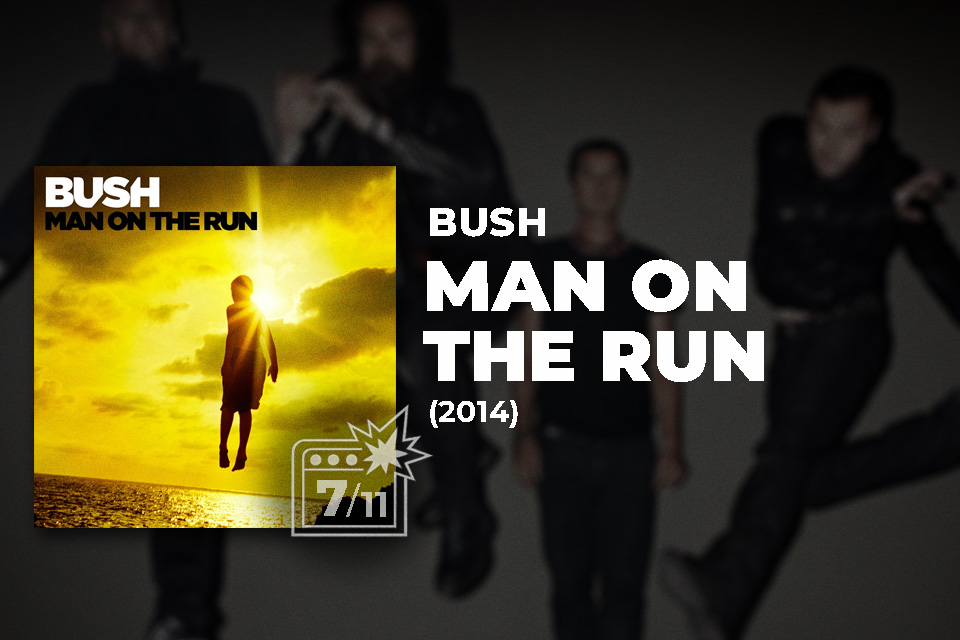
An EDM-inspired Bush album? Whatever next…

Bush deliver the album of their career, but nobody was listening.

Bush hit their stride on a thrilling third album, while confirming that it is indeed “all over” for orangutans.
Explore the full Bush discography guide
Bush’s catalogue is one of rock’s more fascinating arcs: a huge grunge-era breakthrough, a backlash-fuelled search for credibility, a polished late-’90s peak, and an unexpectedly strong second incarnation.