
These Go To Eleven Says:
A fascinating but uneven second album. Bush sound tougher, stranger and considerably less manufactured than their critics suggested, but the pursuit of rawness frequently buries the melodic instincts that made them successful in the first place.
★ ★ ★ ★ ★ ★
STANDOUTS Swallowed · Cold Contagious · Synapse
6/11
Flawed
Album details & credits
- Title
- Razorblade Suitcase
- Artist
- Bush
- Released
- November 19, 1996
- Label
- Trauma/Interscope Records
- Produced by
- Steve Albini
- Key personnel
- Gavin Rossdale (vocals and rhythm guitar) · Nigel Pulsford (lead guitar) · Dave Parsons (bass) · Robin Goodridge (drums)
- Singles
- Swallowed · Greedy Fly · Bonedriven · Cold Contagious
- Chart performance
- No.1 on Billboard 200 Chart · No.4 on UK Albums Chart · No.1 on UK Rock & Metal Albums Chart
- Total sales
- 3,600,000
- Certification
- 3x platinum
- Score
- ★ ★ ★ ★ ★ ★
Bush – Razorblade Suitcase (1996) Review
Bush entered 1996 in an enviable position that somehow managed to feel like a crisis.
Sixteen Stone had made them one of the biggest rock bands in America, producing a formidable run of singles and selling millions of copies. It had also left them permanently attached to accusations of being polished Nirvana imitators who had arrived just in time to profit from somebody else’s scene.
Most bands would have answered by making Sixteen Stone II.
Bush hired Steve Albini.
Considering Albini had recently engineered Nirvana’s ultra-raw In Utero, it was either a wonderfully stubborn decision or an great way of handing their detractors another stick to beat them with.
What followed was Razorblade Suitcase: darker, looser and considerably less polished than its predecessor. It sounds more like four musicians occupying the same room and less like a collection of alternative-rock singles being prepared for radio.
Sometimes that makes Bush far more interesting.
Sometimes it simply makes the songs harder to enjoy.

The Albini Gamble
Hiring Albini was not quite the calculated grab for credibility it can appear in hindsight.
Rossdale had admired his work long before Bush broke through, especially his collaborations with Pixies and PJ Harvey. He believed that Bush had become a much tougher, more layered band after playing hundreds of shows across the USA since their debut caught fire, and wanted a producer capable of capturing that feeling in the studio.
Steve Albini was an obvious choice.
He also happened to be the worst possible choice if Bush wanted the Nirvana comparisons to disappear.
Rossdale has since admitted as much, describing the decision as commercially foolish and acknowledging that returning to Sixteen Stone producer Clive Langer would probably have resulted in a more immediately successful record. At the time, however, Bush deliberately chose the harder route.
The irony is that Albini himself appears to have had little interest in Bush’s supposed credibility problem. Contemporary Spin coverage from the sessions found him defending the band as hard-working musicians who had earned their success rather than having it manufactured around them.
“You couldn’t meet a more down-to-Earth, hard-working bunch of guys than Bush. I hate the way they’re disprespected in the media, because they’re not “faking” anything — they’ve honed their skills by touring relentlessly, putting in many more hours than a lot of the bands who are heralded by the music press.”
– Steve Albini
The resulting album certainly does not sound manufactured.
Albini strips away much of the polish that helped Sixteen Stone land so effectively. Nigel Pulsford’s lead guitar scratches rather than gleams, Robin Goodridge’s drums occupy far more physical space within the mix, and audible imperfections are allowed to remain where another producer might have tidied them away.
This semi-live recording style means there is much more air in the record, but also more dirt.
It suits Bush better than many people would’ve expected.
It just doesn’t suit every song.

Just Wanted To Be Myself
The clearest success is Swallowed.
Where Sixteen Stone frequently built towards enormous choruses, Swallowed seems almost reluctant to reveal itself. The arrangement feels hollowed out, with Gavin Rossdale sounding detached from the instruments rather than planted firmly on top of them.
Remarkably, it works.
Rossdale wrote the track after the sudden transformation of Bush’s fortunes, having spent years struggling for attention in the UK before suddenly finding himself at the helm of a massive American rock band. He has since described the experience not as a complaint about fame, but as the disorientation of having every previously locked door suddenly open all at once.
Albini’s stripped-back production bottles that feeling of unease perfectly.
There is plenty of distortion, but even as it expands, Rossdale still sounds isolated within the arrangement, underlining the lyrical message that while success has increased the size of the room, it hasn’t necessarily made him any more comfortable occupying it.
It went on to become Razorblade Suitcase’s defining single, spending seven weeks at No.1 on Billboard’s Modern Rock Tracks chart, proving to their critics that Bush could write a substantial hit outside of what many had expected to be a one-album career.
"I'm with everyone, and yet... not."

Swallowed

A Rougher Kind Of Bush
The album’s best material arrives when Steve Albini’s rawness actually suits the song.
Second single Greedy Fly is a good example.
Its stop-start arrangement makes far better use of space than many of the tracks surrounding it, repeatedly pulling the instruments away before allowing them to crash back in. Rossdale has since admitted that even he became tired of the band’s reliance on restrained-verse/large-chorus structure in their early years, but the tension between those sections remains one of the track’s strengths.
Axeman Nigel Pulsford is particularly important across this record. The cleaner separation afforded to the instruments exposes his concave playing style: bent notes, fragments of feedback and abrasive noises that don’t behave like conventional lead guitar parts — rather than decorating Rossdale’s rhythm, he frequently appears to be arguing with it.
That approach is particularly effective on Cold Contagious.
The song is in no hurry whatsoever. Its heavy, threatening groove drags itself forward while Pulsford’s guitar seems to hover somewhere between a riff and an instrument being dismantled.
When the louder sections finally arrive, their impact comes from the amount of empty ground Bush have forced the listener to cross first. At six minutes, it tests the limits of that patience, and Rossdale himself now admits that it could have benefitted from a little editing.
Yet despite its extended length, it remains one of the album’s best songs.
The progressive Insect Kin takes the opposite route, gradually uncoiling itself into something far less controlled. Its devastatingly effective final third is one of the highlights of the record, with Bush allowing the accumulated tension to become genuinely ugly rather than immediately resolving it with another polished chorus.
This is where Albini earns his place — he makes the band sound raw and dangerous in a way Sixteen Stone never attempted.

Great Moments, Incomplete Songs
Unfortunately, Razorblade Suitcase often fails to deliver on its own potential.
There are numerous occasions scattered throughout its lengthy 61-minute runtime where it seems a superb song is about to emerge, only for it to go nowhere.
Bonedriven is one of the clearest offenders. There’s no doubt a great song lurking somewhere within its skeletal arrangement, but the decision to keep everything so stripped-back prevents it from ever developing into the force of nature it threatened.
The similar Straight No Chaser is another; its basic composition is perfectly serviceable, but the minimalistic studio treatment leaves it feeling like a missed opportunity on a track that could’ve gone on to become one of Bush’s standout hits.
This recurring issue becomes even more frustrating when individual sections of songs are excellent.
Sleeper hit Mouth owns one of the album’s stronger choruses, but wastes far too much time trapped inside an inadequate verse structure. Meanwhile, A Tendency To Start Fires reverses the problem: there is genuine character in the verses, but the payoff lacks the melodic authority required to finish the job.
Finally, despite offering handfuls of Rossdale’s trademark skewed imagery and abstract lyrics, Distant Voices only manages to tread water for the duration of its lengthy runtime before dissolving into the atmosphere.
None of these tracks are completely devoid of ideas, but the frustration with Razorblade Suitcase is that it repeatedly gets halfway towards something great and then leaves all of the pieces scattered around the studio floor.
"I'm screaming daisies, from fourteen miles away."

Greedy Fly

The Cost Of Restraint
Gavin Rossdale’s quest for artistic growth often pulls him in directions he doesn’t need to go.
On Sixteen Stone, he showed clear promise for writing radio-friendly choruses, but here he appears reluctant to use those instincts — almost as if dropping an obvious hook would somehow prove the critics right.
At times it’s fascinating to hear him deny his gift.
You’ll notice it in the record’s finer details, like the way he pushes his Fender Jazzmaster into a state of overly distorted feedback during otherwise delicate arrangements, or inserts downtuned violin melodies (seriously) in sections they simply don’t belong.
His internal tug-of-war provides Razorblade Suitcase with its odd shape, but it can feel exhausting; Bush can be so preoccupied with avoiding sounding polished that they also avoid sounding finished.
Razorblade Suitcase didn’t need to copy Sixteen Stone. Its rawness is frequently its greatest asset. However, it needed somebody in the room to say: that’s it; end the song. This is where the Albini approach becomes a double-edged sword, because his refusal to impose conventional polish allows Bush to sound almost live, but also hands them far too much freedom.
"Sooner or later, masturbate or lose."

Distant Voices

Something To Prove
The most interesting thing about Razorblade Suitcase is that Bush actually achieve much of what they appear to be attempting.
It is raw as fuck.
It’s unquestionably melodic.
And nobody could reasonably call this a slick corporate imitation of alternative rock.
But escaping one criticism only created another.
Hiring the man responsible for In Utero guaranteed that Seattle would remain part of the conversation. The media recognised the absurdity immediately: a band already accused of copying Nirvana had responded by employing the same man who helmed their last album.
Worse still, the partnership wasn’t a natural fit.
Because while Albini’s minimalistic studio work had provided Kurt Cobain with the ideal environment to capture his own brand of self-loathing rage, when applied to Bush it often just redirected them away from their biggest musical attributes.
“My life fell apart while preparing Razorblade Suitcase. Some of these songs were written during the moments my girlfriend was packing her bags in the next room. I was hopeless, and lost in this weird new world of fame. I hope you can hear the anger and frustration I was feeling within these songs.”
– Gavin Rossdale
Success Didn’t Settle The Argument
Commercially, none of this immediately hurt them.
Razorblade Suitcase debuted at No.1 on the Billboard 200, selling 293,000 copies in its first week, and remains their only US chart-topping album.
More surprisingly, Britain also paid attention, reaching No.4 on the UK Albums Chart and topping the UK Rock & Metal Albums Chart.
Yet Razorblade Suitcase’s commercial success did not resolve the arguments that still surrounded Bush. People who already believed they were copycats could point towards Albini and shout In Utero. People who had enjoyed the hooks of Sixteen Stone were now presented with an hour of looser, harsher music that refused to deliver the same payoff.

Bush – Razorblade Suitcase
Razorblade Suitcase is an album of great moments rather than great songs.
Its best material is gripping, but too often, it mistakes rawness for depth.
Several strong choruses are attached to inadequate verses, interesting arrangements are stretched way beyond their natural lifespan, and songs that could’ve benefitted from the thicker production of their previous record are left wanting.
There’s something very admirable about the unnecessarily huge gamble Bush took here, but ultimately this record serves as a time capsule of a band desperately searching for — and not finding — their true identity.
FINAL VERDICT:
A fascinating but uneven second album. Bush sound tougher, stranger and considerably less manufactured than their critics suggested, but the pursuit of rawness frequently buries the melodic instincts that made them successful in the first place.
★ ★ ★ ★ ★ ★
6/11
Flawed
See Our Reworked Tracklist
These Go To Eleven
Reworked Tracklist
This record isn’t short on atmosphere, but it could be better paced to ensure its biggest hooks land with more force. The 20th anniversary edition also introduces some bonus tracks that outperform some of the original cut.
Here’s how we recommend listening to Bush: Razorblade Suitcase (1996) for maximum impact:
- Cold Contagious (6:00) ★
- Personal Holloway (3:23)
- A Tendency To Start Fires (4:04)
- Bubbles (3:02) ^
- Bonedriven (4:32)
- Synapse (4:52) ★
- Greedy Fly (4:30)
- Old (2:50) ^
- Mouth (5:45)
- Insect Kin (4:27)
- Straight No Chaser (4:02)
- Swallowed (4:51) ★
- Broken TV (4:28) ^
- History (4:27)
★ Standout track
^ Featured on 20th anniversary edition
– Excluded tracks: Communicator (4:25), Distant Voices (6:39)
STANDOUTS Swallowed · Cold Contagious · Synapse
MORE READING Razorblade Suitcase (1996) is part of our Bush album review series.
Further reading
Continue the Bush story.

Bush hit their stride on a thrilling third album, while confirming that it is indeed “all over” for orangutans.

Can Bush shake off those Nirvana comparisons with an album of electronica remixes? Err, no.
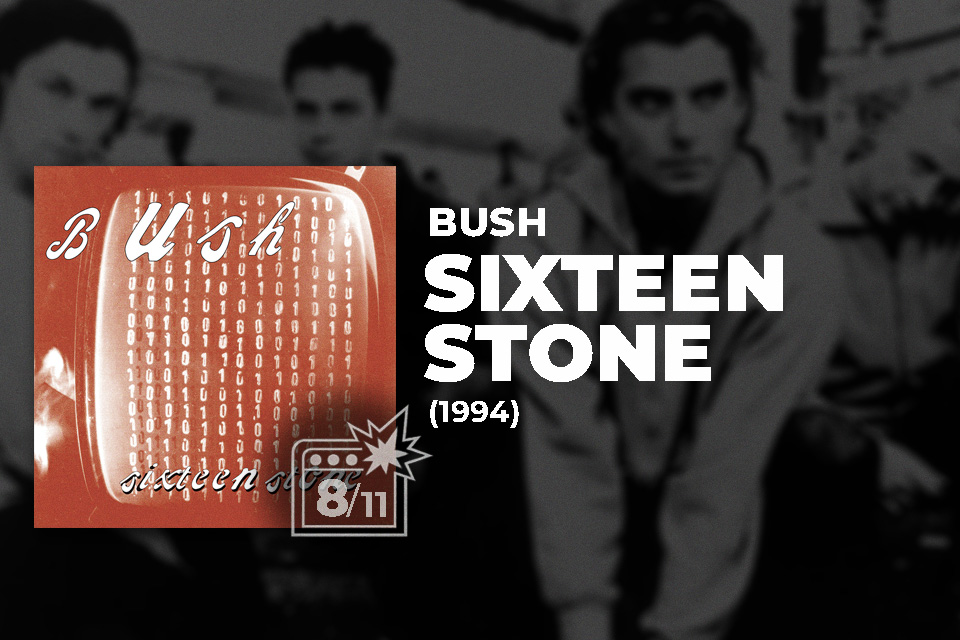
Bush’s Sixteen Stone (1994) is a polarising debut with a monster hit-run — post-grunge punch, big hooks, and a few obvious weak cuts.
Explore the full Bush discography guide
Bush’s catalogue is one of rock’s more fascinating arcs: a huge grunge-era breakthrough, a backlash-fuelled search for credibility, a polished late-’90s peak, and an unexpectedly strong second incarnation.