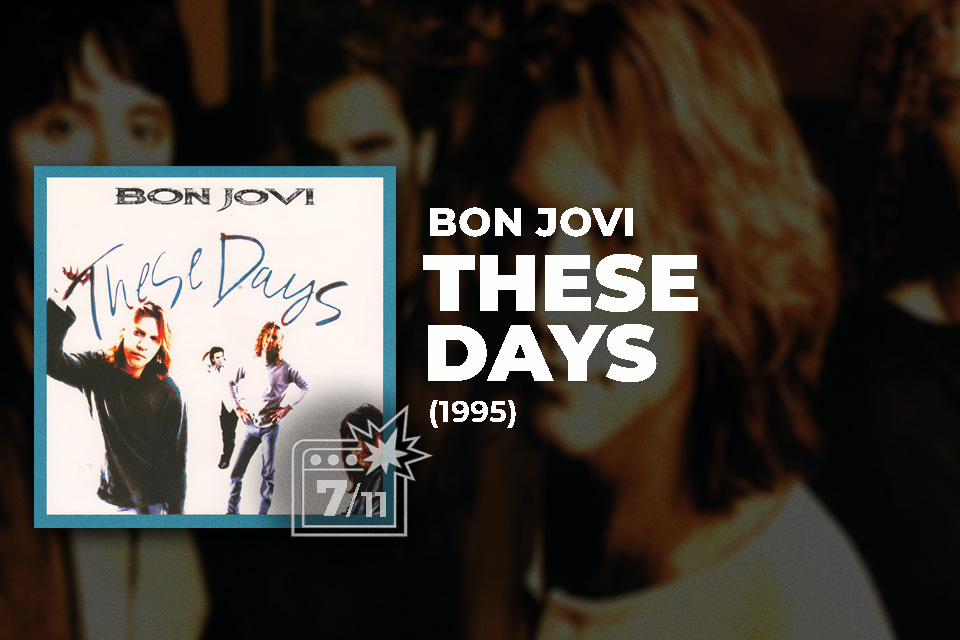
In summary:
One of the few big ’80s bands to survive the grunge reset: uneven overall, but These Days hits genuine peak-level highs.
These Days receives 7/11.
★ ★ ★ ★ ★ ★ ★
Album details
Album Details
Release date: June 27th, 1995
Label: Mercury Records
Producer: Peter Collins, Jon Bon Jovi and Richie Sambora
Musicians:
- Jon Bon Jovi (vocals, guitar)
- Richie Sambora (guitar, backing vocals)
- Hugh McDonald (bass)
- David Bryan (keyboards)
- Tico Torres (drums)
Singles:
- This Ain’t A Love Song
- Something For The Pain
- Lie To Me
- These Days
- Hey God
Chart performance:
- #1 UK Album Chart
- #9 US Billboard 200
- #1 UK Rock And Metal Album Chart
Total sales: 5,000,000
Certification: 3x platinum
Score: ★ ★ ★ ★ ★ ★ ★
Bon Jovi – These Days (1995) Review
In 1995, Bon Jovi had every reason to play it safe.
Cross Road had just confirmed them as a permanent fixture, but the wider rock landscape had turned hostile to anything that smelled like the late ’80s. Plenty of their peers were being laughed off radio, written off by the press, or both.
Instead of panicking, Bon Jovi did something smarter: they adapted.
Sixth album These Days is a darker, more reflective effort than the band’s peak-era fireworks. It’s full of dashed hopes, bruised pride, and hard-earned perspective — not from a group pretending they’re above the chaos, but from one that’s painfully aware of how quickly the world can move on without you.
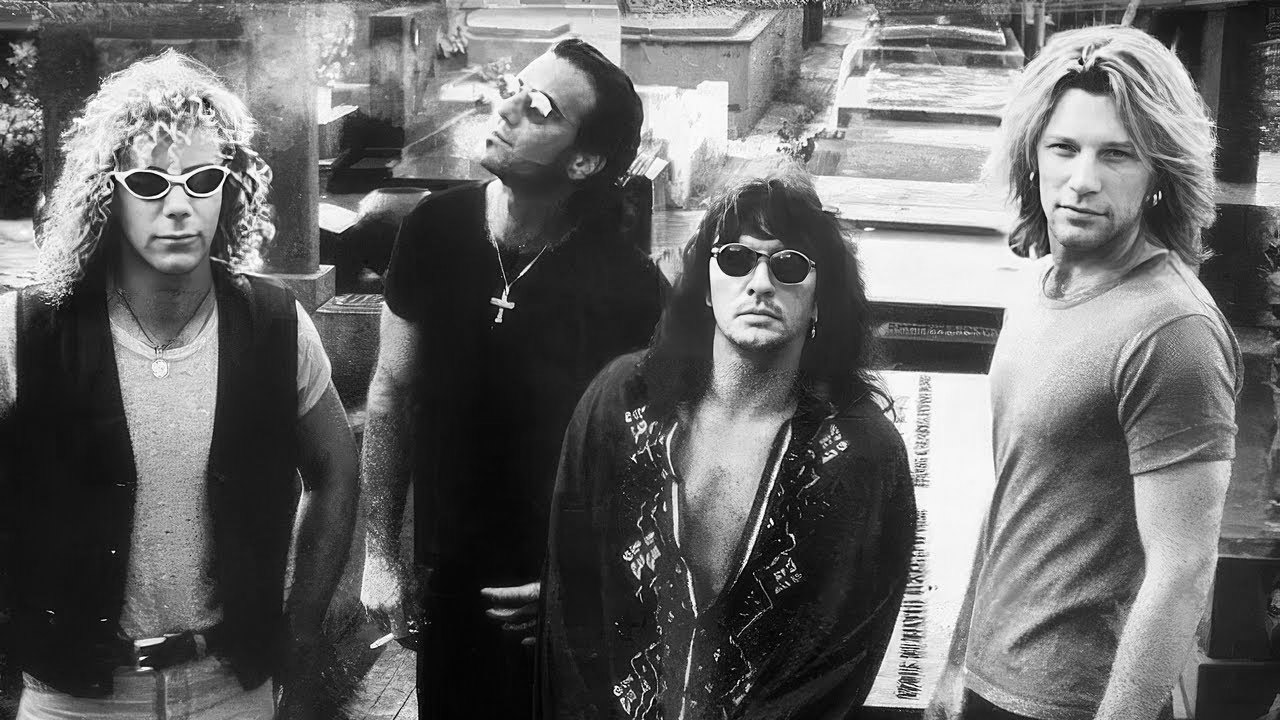
A New Perspective
The best news is that the era’s turbulence gives Jon Bon Jovi a voice that actually suits him.
He writes like someone with miles on the clock — less chest-thump, more lived-in observation — and the album benefits from it.
That tone is established immediately by Hey God, one of the strongest openers they ever wrote. Sambora’s riff tears out of the gates, and Jon delivers a vocal that sounds genuinely unsettled — not theatrical anguish, but the sound of someone trying to hold their footing.
It’s an outstanding piece of work which documents a band trying to survive at all costs.
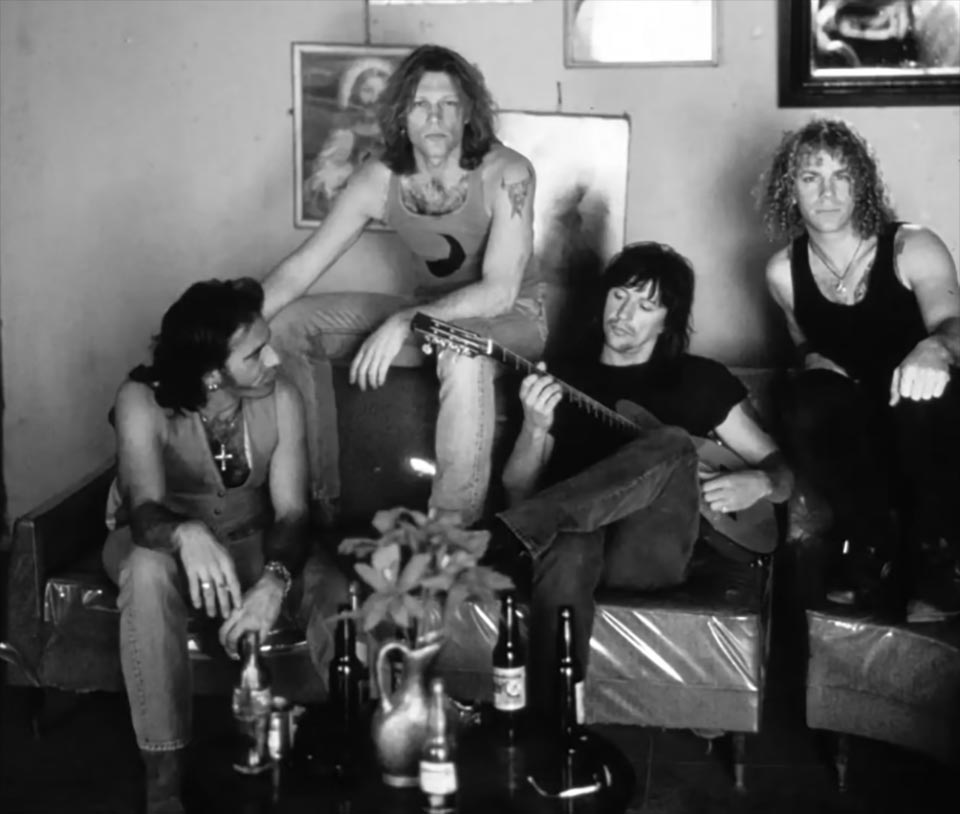
A Worthy Title Track
You wouldn’t believe it from his lyrics, but Jon Bon Jovi is still just 32 years old.
Some would argue that he remenisces so frequently this LP could’ve been titled Those Days, but we suspect this is the result of a group who have endured a lot of change in a very short space of time — let’s not forget that in the nine years since You Give Love A Bad Name hit No. 1 the band had survived the demise of hair metal, the 70s rock revival, the thrash uprising, and the grunge wave.
And it’s a songwriting style which he uses well — see; These Days.
The title track forges his new lyrical tone into the band’s tried-and-tested anthemic formula to give us something which feels altogether more grounded than the material which came before it. It’s heartfelt, somewhat cynical, and remarkably catchy.
The message of this track is made even more powerful in the realisation that Bon Jovi are essentially living it, having remained true to themselves while all of their peers were either losing their minds, selling their souls, or being deleted by a scene which no longer needed them. They are the last men standing from a bygone era, and they’re well aware of it.
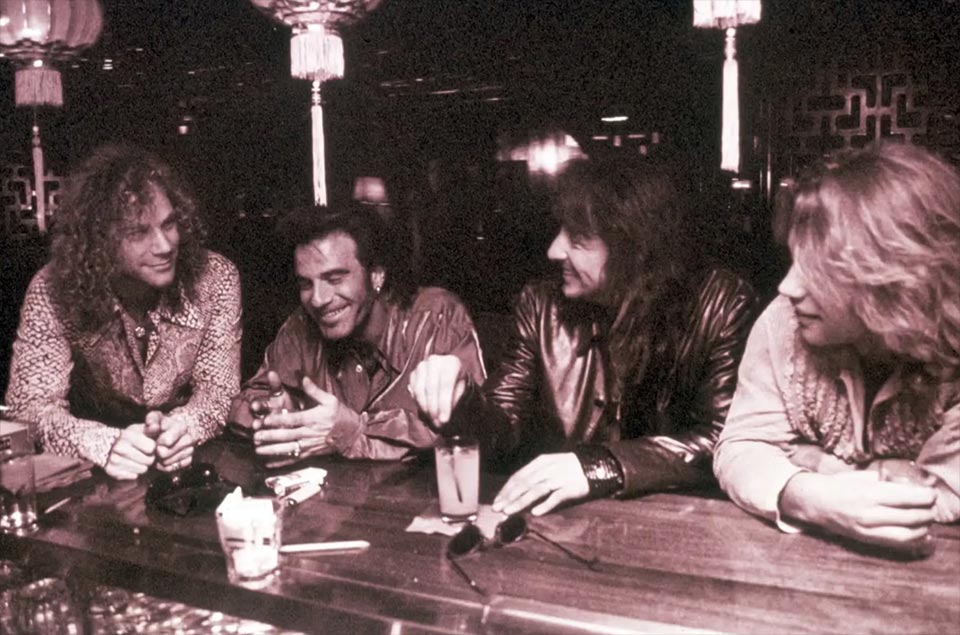
"No one wants to be themselves these days,
There ain't nobdy left but us these days."

THESE DAYS
Times Of Change
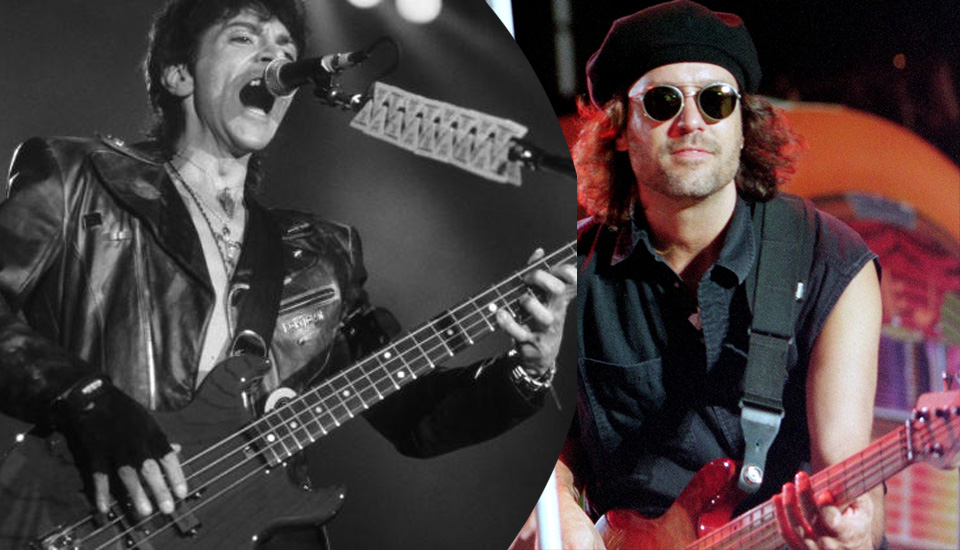
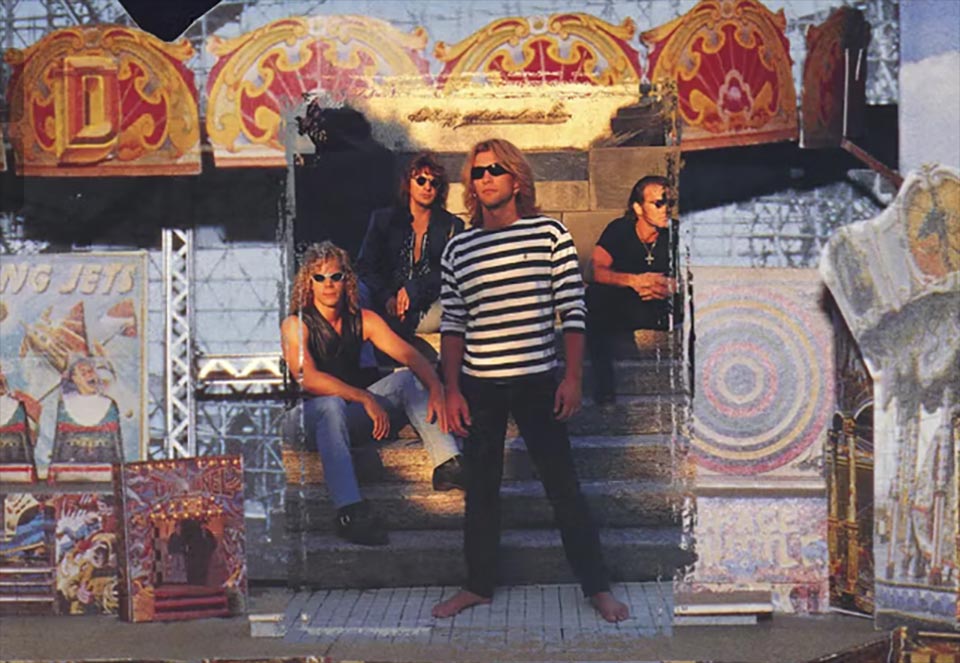
The album also marks a quiet shift in the band’s history: the first record after Alec John Such’s exit, and the point where Hugh McDonald finally becomes the “official” bassist in everything but the publicity photos.
If you’re looking for the panic you’d expect from a first line-up change, you won’t find it.
McDonald had been an active member of the group since the beginning, with the charistmatic John Such being the “face of bass” during live performances. By this point, he had already penned the iconic basslines for songs such as Runaway and Keep The Faith, so These Days doesn’t feel like a band scrambling, but one tightening its grip on its core sound.
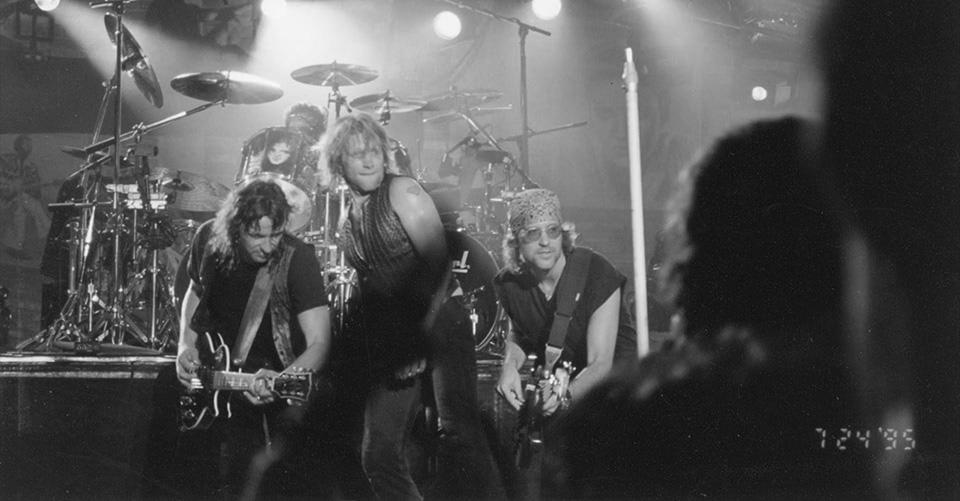
“I loved Alec… we all loved Alec.
But as a unit we were growing as musicians, and his inability to keep up was obvious. We tried everything to help him, but his lifestyle choices put him into a position where he could no longer work.
At first he couldn’t play on the records, but he could still perform live, and I figured that’s fine, we can deal with it —but shortly afterwards he could no longer play onstage either. That’s when we had a problem.”
– Jon Bon Jovi
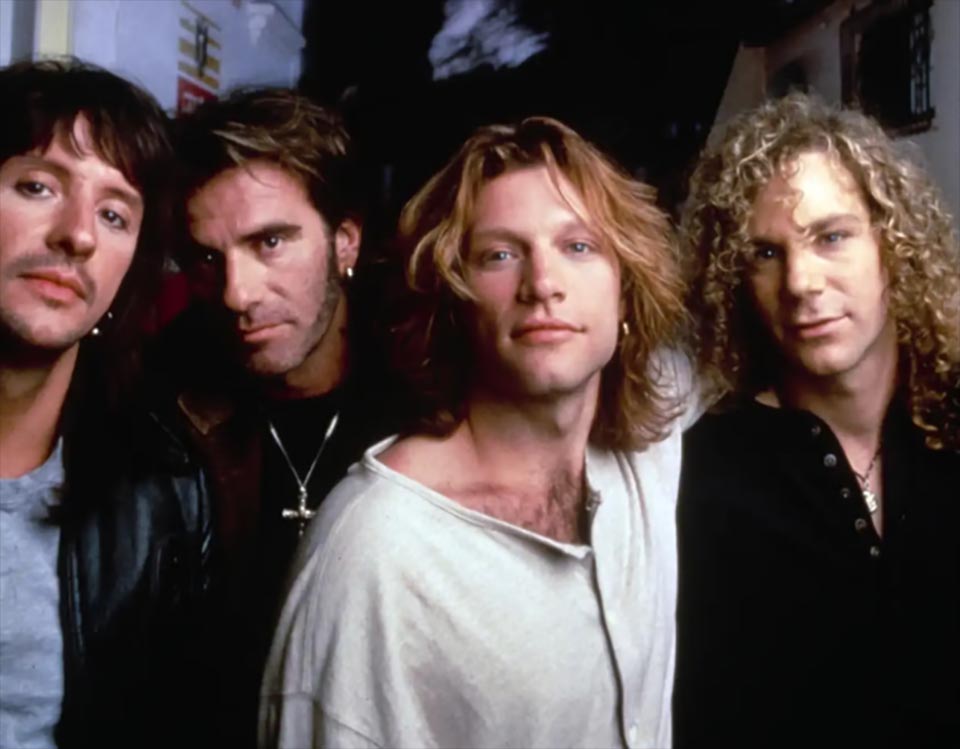
Is “Dated” A Bad Thing?
Peter Collins’ minimalistic production is one of These Days’ defining traits.
It’s easy to understand why Bon Jovi wanted this approach in the mid-’90s: less gloss, fewer studio tricks, more “band in a room”.
And in some ways it’s a win.
The record has aged well precisely because it avoids the most cartoonish production trends of the era.
But that same restraint occasionally robs songs of the final lift. This Ain’t A Love Song (spoiler: it is) and Lie To Me have the bones of massive hits — choruses that want to open the roof — yet the mix often keeps them boxed in. A little more weight, a little more punch, and they’d have sounded unstoppable.
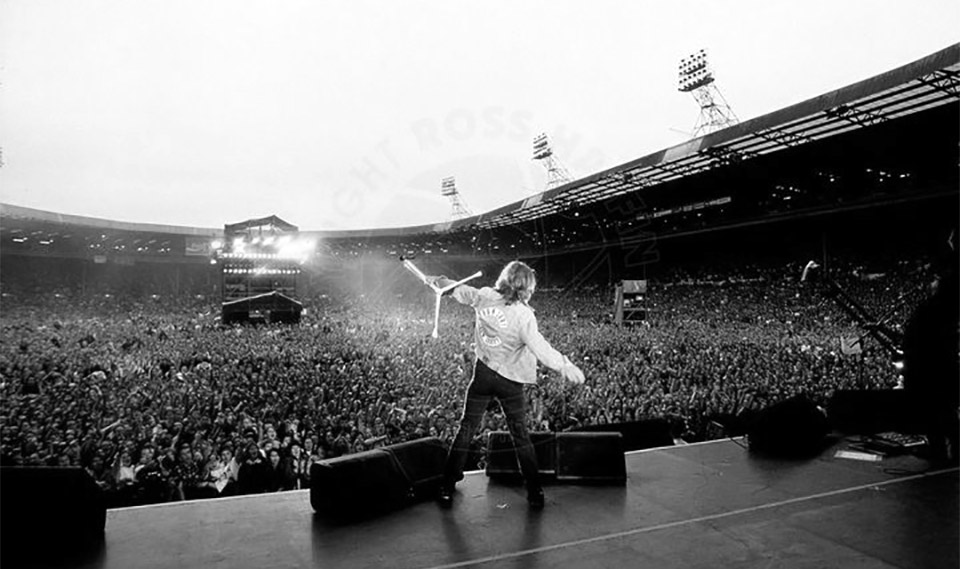
“The Greatest Hits album we put out last year did so well, it gave us such a great feeling going into this one. In my opinion, These Days is probably the best Bon Jovi record to date. The writing is superior, the lyrics are concise and mature, I hope everybody likes it!”
– Richie Sambora
"I lost all trust in my friends,
I watched my heart turn to stone."

SOMETHING TO BELIEVE IN
A Game Of Two Halves
Here’s the frustration: These Days front-loads most of its best ideas.
The opening stretch is a strong run of mood, hooks, and real perspective. But once you hit the deeper waters, the momentum softens. Aside from the vocal performance on Something To Believe In, the back half leans harder into mid-tempo and ballad territory without always delivering the same emotional payoff.
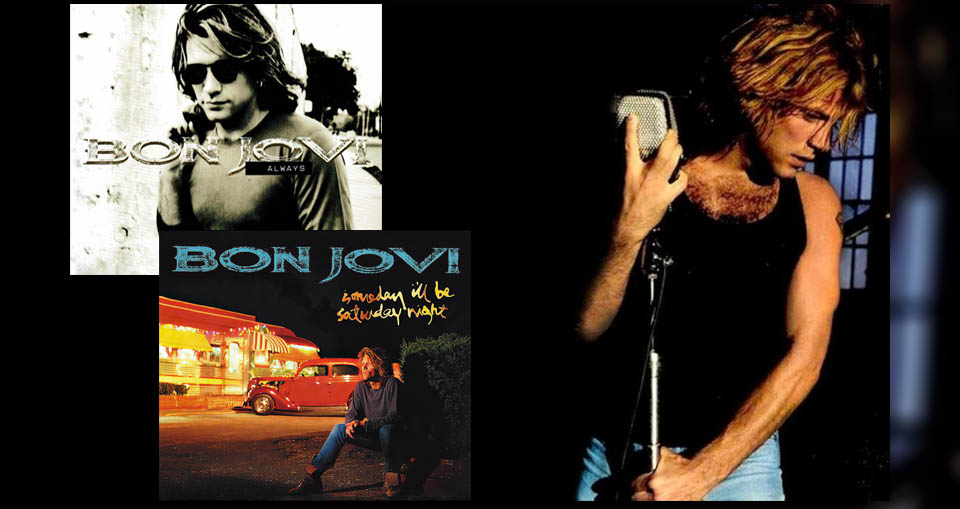
And the maddening part is that the fix is obvious, because the band already had two era-defining his ready to go — Always and Someday I’ll Be Saturday Night. Folding both of these new songs into this record, instead of attaching them to the previous year’s Greatest Hits collection, would have strengthened the pacing and raised the ceiling.
Instead, the tracklist makes room for a handful of ballads that simply don’t hit as hard. The solemn (It’s Hard) Letting You Go, New Jersey outtake Diamond Ring, and Aerosmith-like Heart’s Breaking Even aren’t unlistenable — they’re just not the level you want when the album is asking for your full attention.
“This is our most introspective record so far.
We’re all for giving people hope, but man, sometimes life just hits you. I remember looking out across Broadway, and seeing a guy in an Armani suit stepping over a sleeping homeless guy. That image affected me, like, what the fuck are we doing?
A couple of days later, Richie told me he’d opened his car window at a red light and happened to make eye contact with a homeless lady who seemed to be living under a bridge. He had this unshakable feeling of guilt for weeks, unable to get it out of his head.
That’s basically where Hey God came from.”
– Jon Bon Jovi
"I'll get down on my knees,
I'm gonna try this thing your way,
I seen a dyin' man too proud to beg,
Spit on his own grave."

HEY GOD
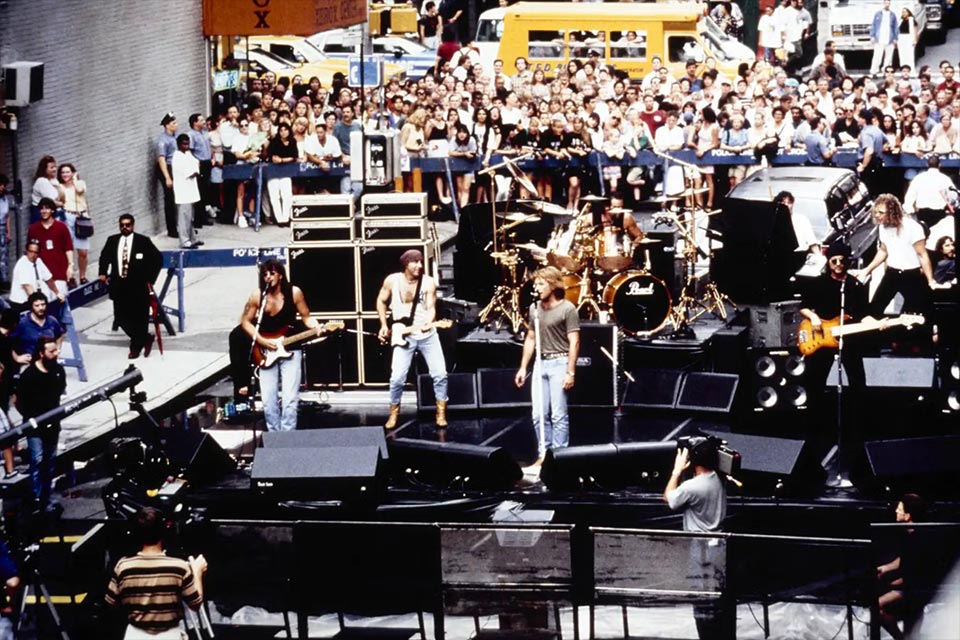
Bon Jovi – These Days
Even with the uneven back half, These Days earns its place in the story.
It’s the record that proved Bon Jovi could survive the ’90s without pretending they were Nirvana, and without turning into a nostalgia act.
Commercially, it landed with force.
In the UK, These Days displaced Michael Jackson’s HIStory from No. 1 and spent a whole month at the top, with a 42-week chart run overall — numbers that don’t happen by accident in a decade as famous for its unforgiving landscape shifts as the music it produced.
It’s also regarded as the final entry in Bon Jovi’s fabled “golden run” — which also includes Slippery When Wet, New Jersey, and Keep The Faith — where the balance of songwriting, identity, and emotional weight consistently clicked.
These Go To Eleven Reworked Tracklist
These Go To Eleven Reworked Tracklist
The best version of These Days is the one that keeps the album’s bruised perspective — but fixes the pacing.
This reworked tracklist keeps the strongest statements, trims the softer late-album drift, and reinserts the era’s essential songs so the record lands with more force. Same mood, cleaner flow, fewer momentum taxes. Had the album been presented with this exact playlist, our score would’ve rise from 7/11 to 8/11.
Here’s how to listen to Bon Jovi: These Days (1995) for maximum impact:
- These Days (6:27) ★
- Something For The Pain (4:48)
- Hey God (6:10) ★
- Damned (4:33)
- Why Aren’t You Dead? (3:31) #
- Someday I’ll Be Saturday Night (4:39) ^
- Always (5:53) ^
- Good Guys Don’t Always Wear White (4:30) #
- Taking it Back (4:18) #
- Lie To Me (5:34)
- Something To Believe In (5:25) ★
- This Ain’t A Love Song (5:06)
- If That’s What It Takes (5:17)
- As My Guitar Lies Bleeding In My Arms (5:41)
- Flesh And Bone (5:01) #
★ Standout track
^ Featured on Cross Road: The Greatest Hits Collection (1994)
# B-side eventually released on 100 Million Fans Can’t Be Wrong (2004)
In summary:
One of the few big ’80s bands to survive the grunge reset: uneven overall, but These Days hits genuine peak-level highs.
These Days receives 7/11.
★ ★ ★ ★ ★ ★ ★
>> These Days is part of our Bon Jovi discography guide.
Related Posts
 Reviews, Bon Jovi
 Bon Jovi return with a solid yet unremarkable follow-up to Slippery When Wet.
 Reviews, Bon Jovi
 Bon Jovi rock into the 90s with one of their very best albums.
 Reviews, Bon Jovi
 Crush (2000) finds Bon Jovi modernising after a long break: a colossal lead single, smart deep cuts, and a back half that loses momentum.

Leave a Reply to "These Go To 11" | Bon Jovi: Crush (2000) Review Cancel reply