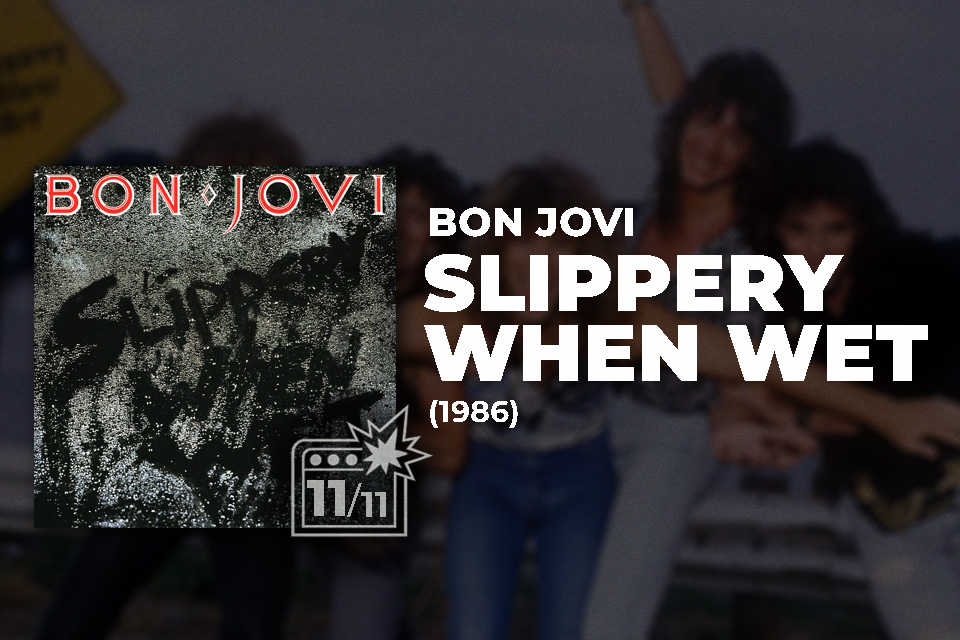
In summary:
A record of mid-’80s rock perfection, delivered by a band whose years on the road taught them exactly how to win.
Slippery When Wet receives 11/11.
★ ★ ★ ★ ★ ★ ★ ★ ★ ★ ★
Album details
Album Details
Release date: August 18th, 1986
Label: Mercury Records
Producer: Bruce Fairbairn
Musicians:
- Jon Bon Jovi (vocals, guitar)
- Richie Sambora (guitar, backing vocals)
- Alec John Such (bass)
- Hugh McDonald (bass)
- David Bryan (keyboards)
- Tico Torres (drums)
Singles:
- You Give Love A Bad Name
- Livin’ On A Prayer
- Wanted Dead Or Alive
- Never Say Goodbye
Chart performance:
- #1 US Billboard 200
- #6 UK Album Chart
Total sales: 28,000,000
Certification: 15x platinum
Score: ★ ★ ★ ★ ★ ★ ★ ★ ★ ★ ★
Bon Jovi – Slippery When Wet (1986) Review
You’ve probably heard the line: a change is as good as a rest.
Bon Jovi needed both. After three straight years of touring and a sophomore album that didn’t land the way it should have, they regrouped, swapped producers, and came back with something sharper, louder, and far more inevitable.
Slippery When Wet is the moment the “promising band” phase ends. It’s twelve tracks of stadium-ready hard rock that doesn’t merely hint at Bon Jovi’s potential — it cashes it in.
Factory Settings
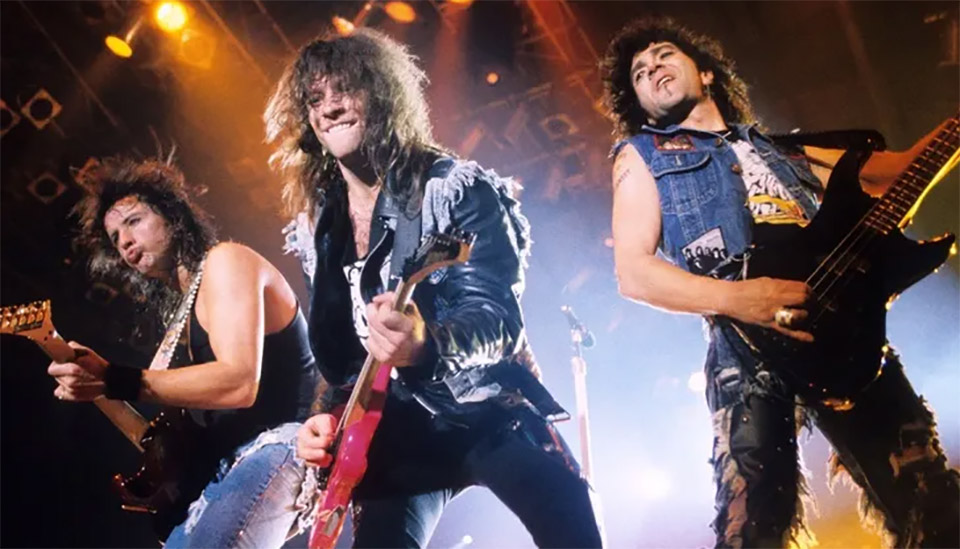
Slippery When Wet is where the Bon Jovi formula locks into place.
Big-hearted lyrics without the cheese overload, riffs that push forward, and choruses designed for mass singalongs; all delivered with a discipline the earlier records only hinted at.
That’s why the record feels definitive — this is the sound the band would spend the next decade trying to refine, already in its full form.

A Point To Prove
The second album was meant to be the leap.
When it didn’t happen, Bon Jovi entered Slippery When Wet with something rarer than ambition: urgency.
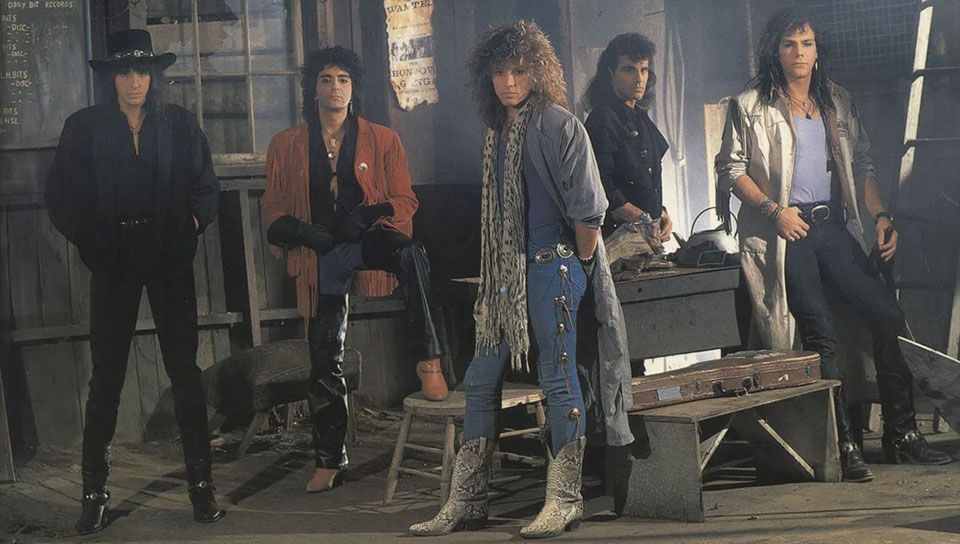
That pressure did them a favour. Under manager Doc McGhee, the band’s image had encouraged the easy “pretty boys” dismissal — a label that ignored the hours on the road and the graft behind the gloss. If anything, it lit a fire. Slippery doesn’t just sound like Bon Jovi trying to prove their music works; it sounds like a band determined to prove they do.
And this time, they didn’t just get noticed — they became unavoidable.
“People seem to think that I’m a pretty boy who just got lucky. I’ve swept studio floors — I’ve grafted for everything.”
– Jon Bon Jovi
Loaded With Hits
It’s hard enough to write one era-defining rock single, but Slippery When Wet delivers three.
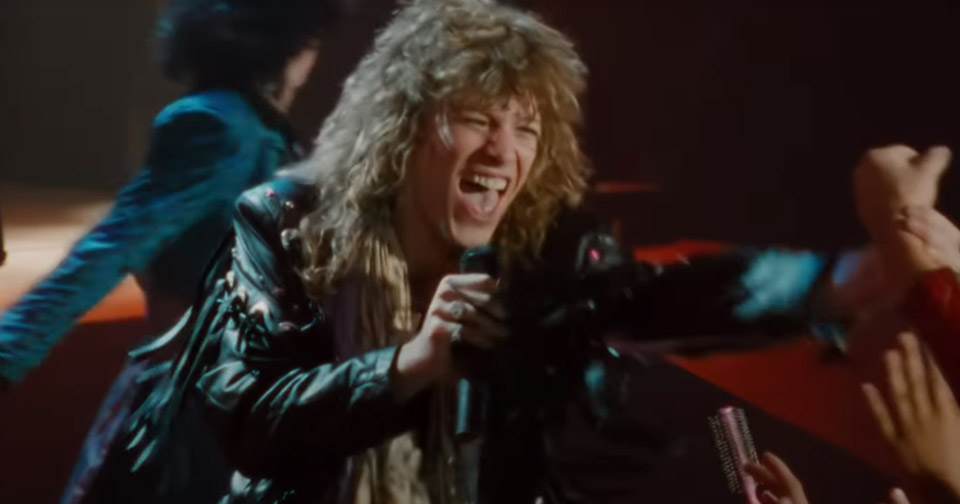
Livin’ On A Prayer is the crown jewel: that talk-box hook, that chorus lift, that sense of mid-’80s rock captured like lightning in a bottle. It’s Bon Jovi at their absolute best — optimism with muscle, engineered to make even a grim day feel salvageable.
Then there’s You Give Love A Bad Name, a perfect piece of radio hard rock and the song that turned the band from “big” into unavoidable.
Finally, Wanted Dead Or Alive completes the trio by leaning into the cowboy mythmaking, powered by one of Richie Sambora’s most iconic lead performances — the kind that doesn’t just decorate the track, it sells the whole persona.
“I enjoyed Bryan Adams’ collaboration with Tina Turner, so I thought about us writing a song to sing with somebody else like that. Then Desmond Child’s name came up and it changed everything. He’s perfect for us — he’s helped us write some great new songs without changing who we are, and helped us to refine our sound by showing us how to wring more out of what we have.”
– Jon Bon Jovi
Seriously…
The best compliment you can pay Slippery When Wet is that the singles aren’t dragging passengers.
Album cuts like Raise Your Hands hit with real intent, and the run through Social Disease and I’d Die For You proves how locked-in the band were at this point: memorable hooks, brisk pacing, and choruses built to lift a room.
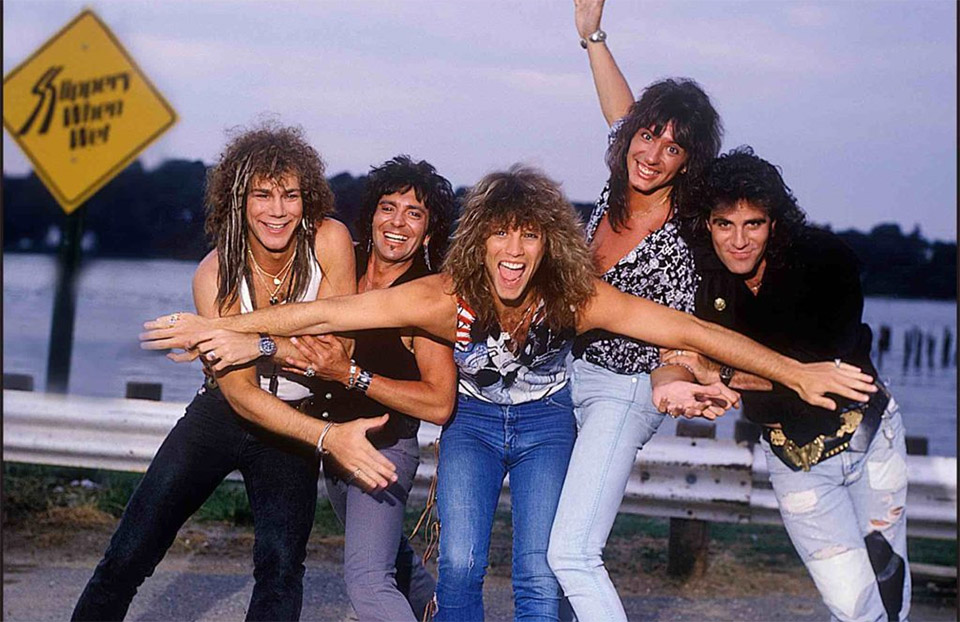
Their confidence wasn’t accidental. By 1986 they had honed their skills with three years of constant touring, often playing six nights per week. The old “too pretty” criticism from the media fell well wide of the mark — indeed, having played more than one thousand gigs together by the age of 24, they were a lot closer to “the real thing” than their drug-fueled rivals who were getting all of the magazine hype for their chaotic off-stage shenanigans.
“There’s a song on this record called Social Disease. We heard that Aerosmith were keen to get hold of it from Desmond (Child). I think it would be ideal for them, but I’m not letting them get it, because it’s even better for us!”
– Jon Bon Jovi
Credit To The Producer
Bruce Fairbairn was hired with a clear brief: make Bon Jovi sound like a headline act.
Given the band’s touring pedigree — and the frustration of routinely outplaying bigger-billed names — the ambition was understandable.
Fairbairn doesn’t just polish the material; he scales it. The guitars hit clean, the drums punch hard, and every chorus arrives lit from below. It’s slick, yes — but it’s slick with purpose. This is the sound of a support band finally being mixed like the main event.
"I've seen a million faces,
And I've rocked 'em all."

WANTED DEAD OR ALIVE

Why It Still Works
What keeps Slippery When Wet alive isn’t nostalgia — it’s structure.
The verses are lean, the choruses arrive fast, and the arrangements don’t waste time showing off. Even at its glossiest, the album is built to move: riff, lift, release, repeat.
That economy is not only what helped it spend 8-weeks at No. 1 on the Billboard 200, but why it still lands today. Plenty of ’80s hard rock is fun in hindsight, but Slippery remains highly effective in real time.
Rock Don’t Roll
Unlike their later work, Slippery When Wet keeps the ballads to a minimum.
Without Love and Never Say Goodbye aren’t bad songs, but they also aren’t top-tier examples of the lane Bon Jovi would later master in the ’90s. Here, they function as breathers rather than centrepieces — which is arguably the smarter call for an album built on pace.
The rest of the album focuses on crunching rock, and only Let It Rock (the opener) falls short of the standard. That said, opening a make-or-break album with a minute of organ is the sort of move you only make if you’re very sure about what’s coming next.
They were right to be sure.
"Your very first kiss was your first kiss goodbye."

YOU GIVE LOVE A BAD NAME
Bon Jovi – Slippery When Wet
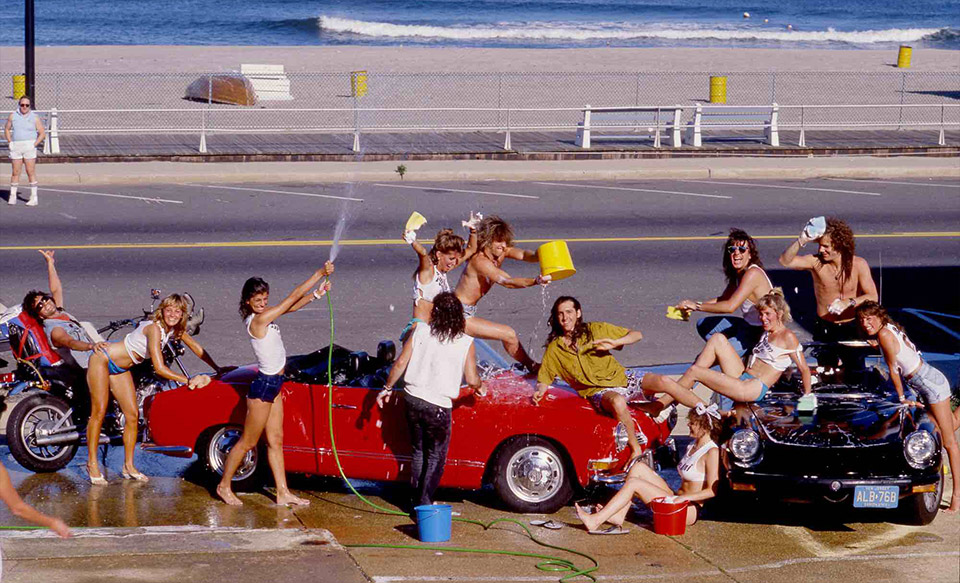
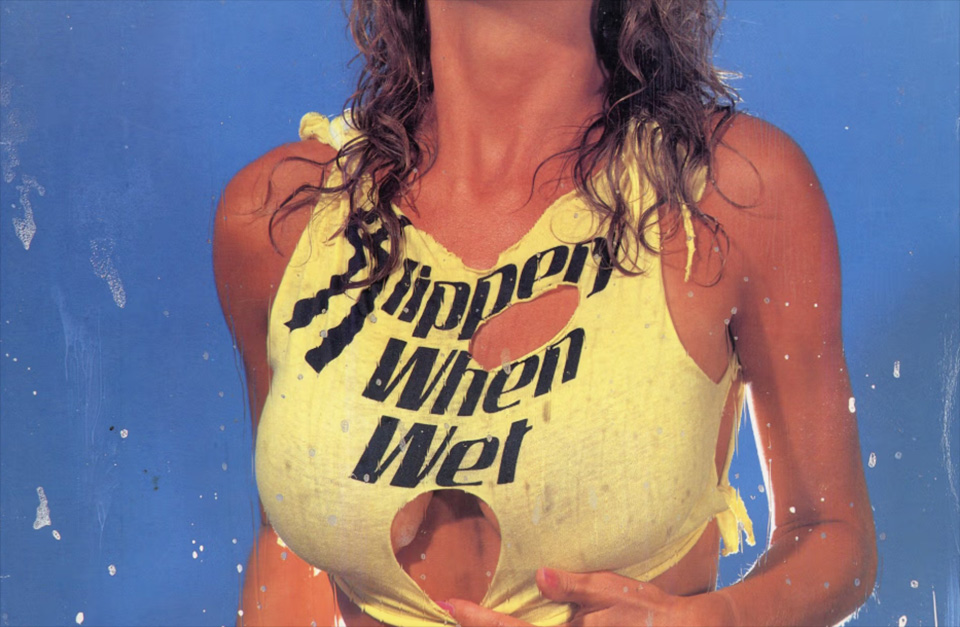
Everything about Slippery When Wet has become part of the mythology — the crunching riffs, the wailing leads, the trio of world-beating singles, even the last-minute cover switch people still misremember as steamy shower glass rather than a water-sprayed black bin bag.
But the real reason it endures isn’t lore; it’s the lack of slack.
Becayse for a blockbuster rock record, it’s unusually disciplined: the singles are monumental, the album cuts keep pace, and the sequencing rarely lets the energy leak out.
It isn’t just iconic — it’s relentless.
The 11/11 Standard
An 11/11 on These Go To Eleven is reserved for albums that feel complete — where the craft holds up track-to-track, the pacing never sags, and the record still works outside of nostalgia or context. It’s the ceiling score because it’s rare for any album to leave so little to argue with.
It gives us great pleasure to announce that Bon Jovi’s Slippery When Wet is the first – and still the only – perfect score on These Go To Eleven!
These Go To Eleven Reworked Tracklist
These Go To Eleven Reworked Tracklist
Slippery When Wet doesn’t need fixing — but it does reward a little curation.
Think of tjhis reworked tracklist as the cleanest, most replayable run through the Slippery era: all killer, minimal ballast, and built for that exact mid-’80s feeling the original bottled so well. A couple of era-adjacent extras are included where they genuinely improve the arc, not just to pad the runtime.
Here’s how you should listen to Bon Jovi: Slippery When Wet (1986) for maximum impact:
- Livin’ On A Prayer (4:11) ★
- You Give Love A Bad Name (3:43) ★
- Raise Your Hands (4:17)
- Without Love (3:31)
- Borderline (4:12) ^
- Wanted Dead Or Alive (5:09) ★
- I’d Die For You (4:31)
- Edge Of A Broken Heart (4:36) ^
- Social Disease (4:18)
- Wild In The Streets (3:56)
- Never Say Goodbye (4:49)
- Let It Rock (5:26)
★ Standout track
^ Featured on the special edition
In summary:
A record of mid-’80s rock perfection, delivered by a band whose years on the road taught them exactly how to win.
Slippery When Wet receives 11/11.
★ ★ ★ ★ ★ ★ ★ ★ ★ ★ ★
>> Slippery When Wet is part of our Bon Jovi discography guide.
Related Posts
 Reviews, Bon Jovi
 Bon Jovi (1984) is a high-energy debut with inconsistent writing, but “Runaway” signals the arena band they were about to become.
 Reviews, Bon Jovi
 Bon Jovi’s second effort is a rushed affair which fails to show their true potential.
 Reviews, Bon Jovi
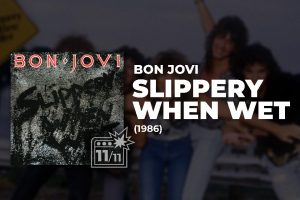
 Bon Jovi hit peak mid-80s form on Slippery When Wet (1986): huge hooks, bigger choruses and a relentless run of stadium-ready hard rock.

Leave a Reply to Bon Jovi – These Days (1995) Review | These Go To Eleven Cancel reply