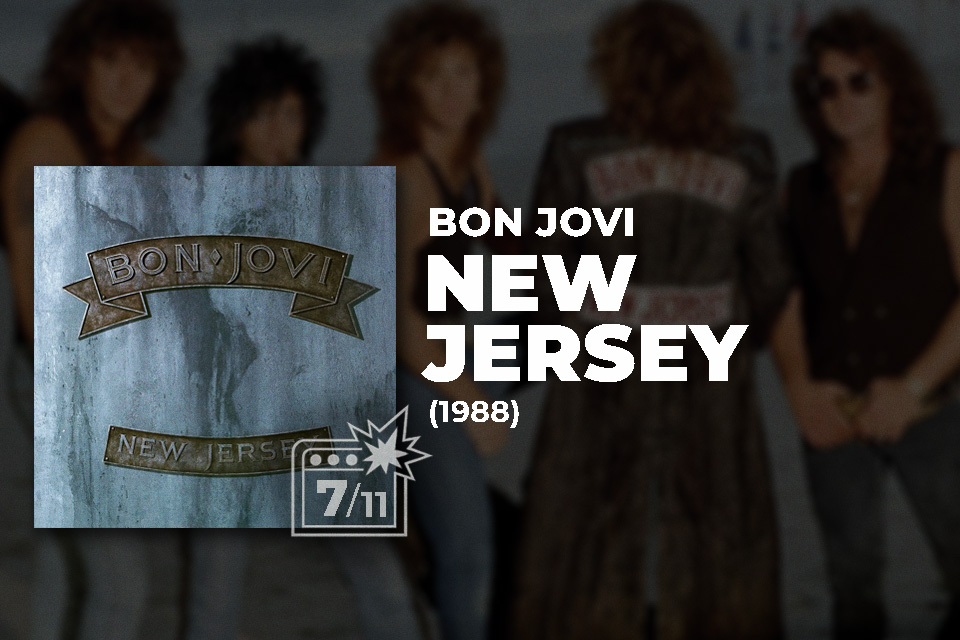
In summary:
Great when all the pieces click — it just doesn’t happen often enough.
New Jersey receives 7/11.
★ ★ ★ ★ ★ ★ ★
Album details
Album Details
Release date: September 19th, 1988
Label: Mercury Records
Producer: Bruce Fairbairn
Musicians:
- Jon Bon Jovi (vocals, guitar)
- Richie Sambora (guitar, backing vocals)
- Alec John Such (bass)
- Hugh McDonald (bass)
- David Bryan (keyboards)
- Tico Torres (drums)
Singles:
- Bad Medicine
- Born To Be My Baby
- I’ll Be There For You
- Lay Your Hands On My
- Living In Sin
Chart performance:
- #1 US Billboard 200
- #1 UK Album Chart
Total sales: 19,000,000
Certification: 7x platinum
Score: ★ ★ ★ ★ ★ ★ ★
Bon Jovi: New Jersey (1988) Review
Bon Jovi were sitting on top of the world in 1988.
Which is exactly why New Jersey is such a strange album to review.
On paper, it’s loaded: huge production, peak-era Sambora guitar work, and a run of singles most bands would build a career around. It’s also historically ridiculous — the last rock album to generate five Top 10 singles on the US Billboard Hot 100, a milestone that still stands decades later.
And yet, it disappoints.
Not because it’s bad — far from it — but because it’s the follow-up to Slippery When Wet, an album that set the bar at a height most bands never even glimpse. When you’re chasing perfection, “good” can feel like a comedown.

Mission Impossible?
We’re not saying New Jersey is a failure.
It has three undeniable cornerstones in Lay Your Hands On Me, Bad Medicine, and I’ll Be There For You, which was more than enough firepower to cement their status as one of the world’s biggest rock acts circa 1988.
Instead, the problem is simpler: Slippery When Wet made Bon Jovi look effortless, New Jersey is where you can hear the effort. There’s a audible sense of tension and strain — between ambition and pressure, between “do it again” and “do it differently” — which runs through the record from beginning to end.

The Singles Steal The Show
If there’s one band who understood hit singles at this point, it’s Bon Jovi.
With huge riffs, relatable melodrama, and choruses engineered for mass singalongs, the trifecta of singles on New Jersey manage to capture the very essence of the late-’80s hard rock scene.
The gospel-soaked drama of Lay Your Hands On Me is the grandest thing they’d done in years: long intro, big lift, arena mood for days. Bad Medicine is the opposite — pure party rock propulsion — and the massive I’ll Be There For You remains one of the band’s best ballads, elevated by Jon and Richie’s dual vocal approach.
In some ways, it’s Bon Jovi’s take on Motley Crue — albeit consdierably more polite, a band that you could introduce to your Grandma without any concerns that they’d throw her TV out of the window or snort powder from her mantelpiece.
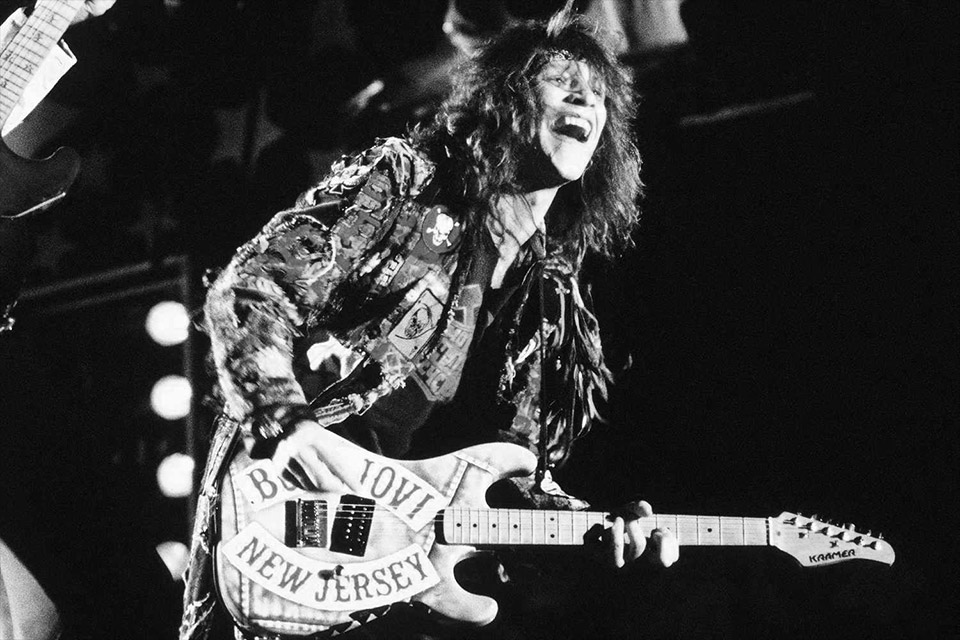
“Born To Be My Baby was recorded acoustically, but Bruce persuaded us to go electric. I believe it could’ve been an even bigger hit for us had it stayed it in its original format.”
– Jon Bon Jovi

Uneven And Unbalanced
New Jersey’s real problems start once you get outside the singles.
A handful of tracks feel like they were assembled under pressure rather than discovered naturally — verses and choruses that don’t quite belong together, glued by key changes that disrupt the flow. Wild Is The Wind and Love Is War are the clearest examples: both have strong components, but the joins certainly show.
And in chasing the “next” mega-moment so aggressively, sometimes the songwriting forgets to breathe. From this perspective, the most frustrating near-miss is Living In Sin — a ballad which features an outstanding chorus of classic Bon Jovi lift, which never quite gets the support structure it deserves.

“I really wanted to make a hit record again – not for monetary reasons, but because it’s such an amazing feeling. We had a fear that we would be incapable of writing anything as good as You Give Love A Bad Name ever again. In fact, we wanted it so badly that Love Is War came out with the exact same chord progression, so we had to change it!”
– Jon Bon Jovi

Fool Me Once…
The inconsistency isn’t a mystery — it’s the cost of keeping the machine running.
They had made the exact same mistake just three years earlier, when they cut the underwhelming follow-up to their 1984 debut in the midst of a gruelling Asian tour which had them playing six nights per week for an entire year.
After Slippery When Wet exploded, Bon Jovi extended the touring, felt label pressure to “strike while the iron was hot”, and carried the weight of expectation straight into the next record. They arrived in the studio with a huge pile of material and an even bigger fear: what if they couldn’t do it again?
This time around, the pressure doesn’t ruin the album — but it does explain why New Jersey sometimes sounds like a band forcing the follow-up rather than enjoying it.

“We needed a rest so bad, but Slippery kept getting bigger so we extended the tour, and then our manager said he’d like us to go straight into the next record. We were young and foolish, and scared of it all ending, so we did the album and then stayed on the road for another two years. This is the record that nearly broke us.”
– Jon Bon Jovi
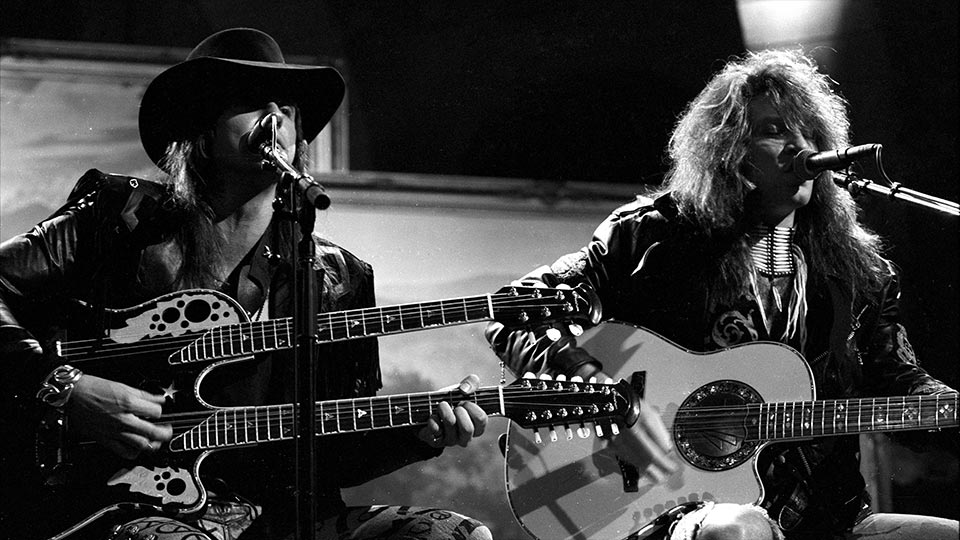
Wait… Cowboys?
Wanted Dead Or Alive seems to have lit a fire under the band — because New Jersey is where Bon Jovi start leaning hard into cowboy imagery.
In small doses it works. The over-sized rocker Stick To Your Guns carries real heft, and Blood On Blood is an effective friendship anthem which, at the time, the band considered the best song of their career.
But the issue here is repetition — there’s only so many times you can ride into town before it starts sounding like fancy dress. Homebound Train never quite becomes what it’s reaching for, Love For Sale is all saloon chatter with diminishing returns, and Ride Cowboy Ride is a simple throwaway.
This is the album’s central problem in miniature: great moments, then a stretch that feels like the band searching for the next big idea while the tape is still rolling.

“We feel like modern day cowboys. In the old days, the cowboys would ride into town, rob the bank, go to a bar, drink the booze, steal the women, take the money and run. We kinda do the same thing!”
– Richie Sambora
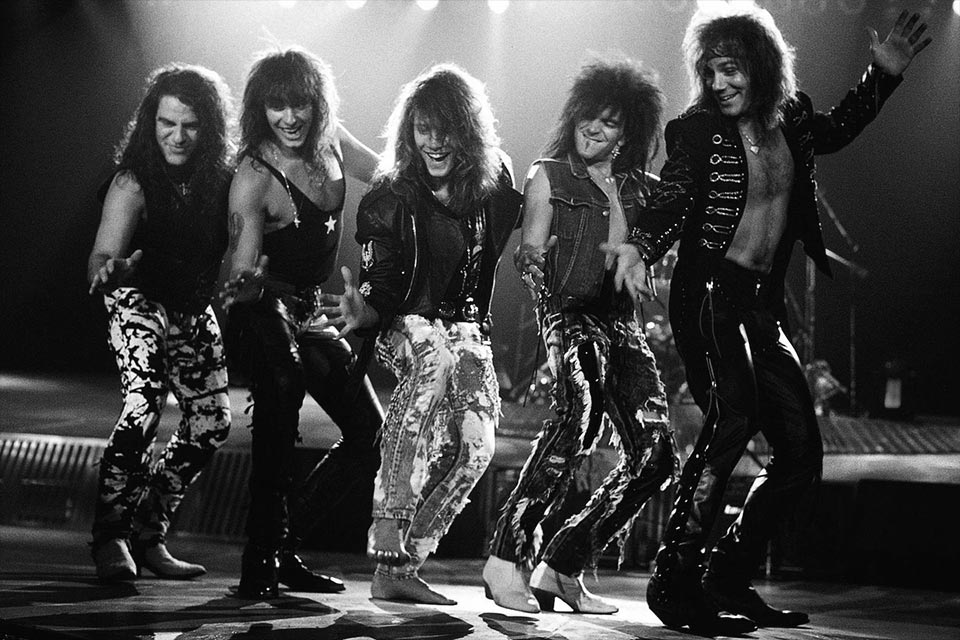
Going Out In Style
In hindsight, New Jersey was the final hoo-rah of hair metal’s mainstream dominance.
Just a few months after release, the ground began to shift.
The first cracks in the landscape began to appear with the surge in popularity of Guns N’ Roses’ seminal debut Appetite For Destruction — a record that carried a raw edge and element of danger that made the so-called “party rock” of their peers look incredibly outdated. Then came the emergence of grunge, which proved to be the final nail in the coffin of hair metal.
Bon Jovi were one of the few bands to survive this seismic shift, and they did it by making a series of smart changes to their sound, but New Jersey captures the final snapshot of them as the genre’s default setting — big hair, bigger choruses, and a production shine you could use as a mirror.
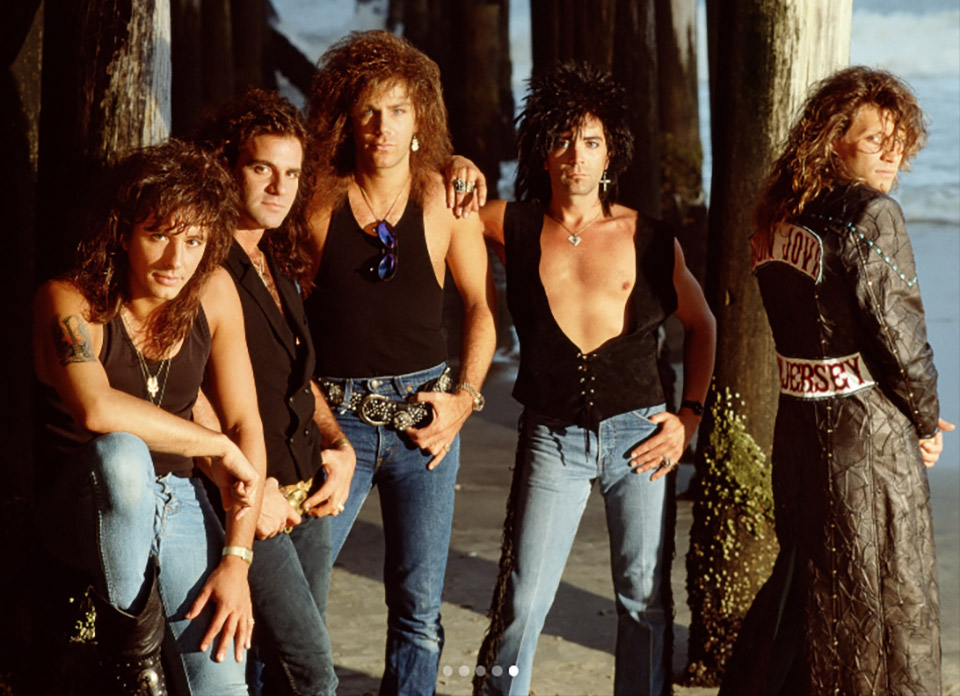
Bon Jovi: New Jersey
It may never escape the shadow of Slippery When Wet, but New Jersey is still a solid record — and an important one.
Indeed, a handful of these songs may have been considered “career highlights” by any other band’s standards.
Yet in the case of Bon Jovi, their baked-in ability to pen radio-hogging hits meant they were just the latest entrants in a long line of unit-shifting singles that would eventually occupy a spot on one of the greatest Greatest Hits collections of all time.
These Go To Eleven Reworked Tracklist
These Go To Eleven Reworked Tracklist
New Jersey has more than enough quality to justify the runtime — it just isn’t ruthless with itself.
This reworked tracklist keeps the undeniable singles and the strongest deep cuts, and sequences the album into a cleaner listen where the momentum doesn’t keep slipping away. Same era, same gloss — tighter impact.
Here’s how to listen to Bon Jovi: New Jersey (1988) for maximum impact:
- Lay Your Hands On Me (5:58) ★
- Blood On Blood (6:16) ★
- Stick To Your Guns (4:45)
- Born To Be My Baby – Acoustic Version (4:53)
- Judgement Day (4:18) ^
- Full Moon High (4:42) ^
- I’ll Be There For You (5:46) ★
- Wild Is The Wind (5:08)
- Living In Sin (4:39)
- Bad Medicine (5:16)
- Homebound Train (5:10)
- Growing Up The Hard Way (5:31) ^
- 99 In The Shade (4:29)
- Love Hurts (4:49) ^
- Now And Forever (5:34) ^
★ Standout track
^ From the super deluxe version (2014)
In summary:
Great when all the pieces click — it just doesn’t happen often enough.
New Jersey receives 7/11.
★ ★ ★ ★ ★ ★ ★
>> New Jersey is part of our Bon Jovi discography guide.
Related Posts
 Reviews, Bon Jovi
 Bon Jovi (1984) is a high-energy debut with inconsistent writing, but “Runaway” signals the arena band they were about to become.
 Reviews, Bon Jovi
 Bon Jovi’s second effort is a rushed affair which fails to show their true potential.
 Reviews, Bon Jovi
 Bon Jovi hit peak mid-80s form on Slippery When Wet (1986): huge hooks, bigger choruses and a relentless run of stadium-ready hard rock.

Leave a Reply to "These Go To 11" | Bon Jovi: The Circle (2009) Album Review Cancel reply