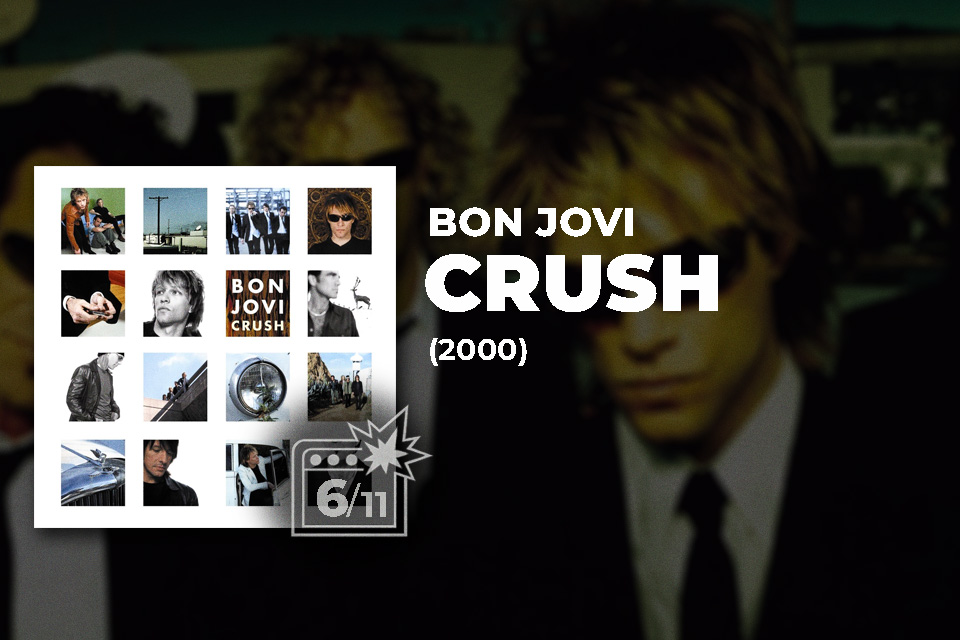
In summary:
A patchy comeback album, anchored by a magnificent lead single.
Crush receives 6/11.
★ ★ ★ ★ ★ ★
Album details
Album Details
Release date: May 29th, 2000
Label: Mercury Records
Producer: Jon Bon Jovi, Richie Sambora and Luke Ebbin
Musicians:
- Jon Bon Jovi (vocals, guitar)
- Richie Sambora (guitar, backing vocals)
- Hugh McDonald (bass)
- David Bryan (keyboards)
- Tico Torres (drums)
Singles:
- It’s My Life
- Say It Isn’t So
- Thank You For Loving Me
Chart performance:
- #1 UK Album Chart
- #9 US Billboard 200
Total sales: 5,400,000
Certification: 2x platinum
Score: ★ ★ ★ ★ ★ ★
Bon Jovi – Crush (2000) Review
“This ain’t a song for the broken-hearted,” warns Jon Bon Jovi.
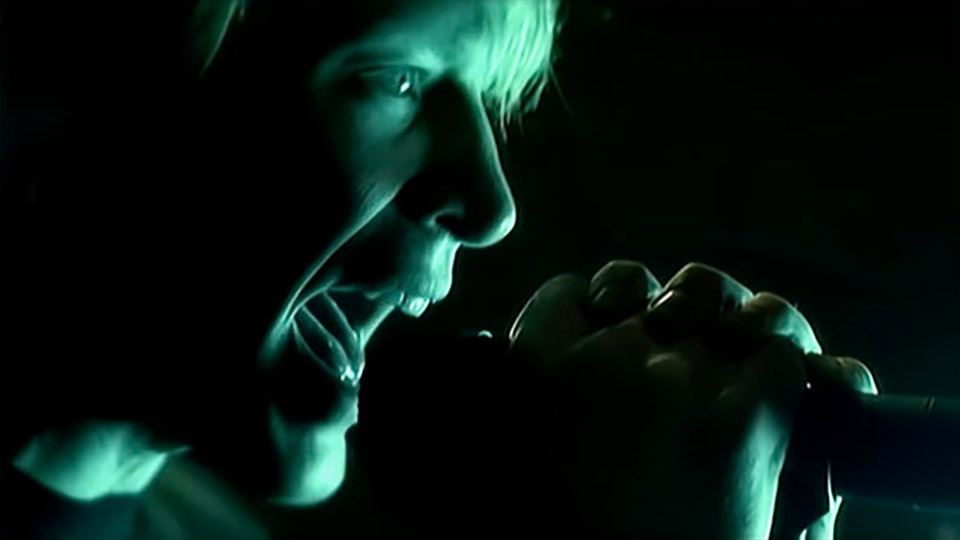
He’s right — because comeback single It’s My Life isn’t designed for the sentimental crowd. It’s built for every rock fan who’d spent the late ’90s growing frustrated as fist-pumping rock anthems got crowded out by the era’s shinier obsessions.
Let’s cut to the chase: it’s magnificent.
That opening voicebox riff, the instant lift of the chorus, the message engineered to survive any amount of radio rotation — it’s Bon Jovi reminding the world what they do better than anbody else on the planet.
Keeping The Faith
Bon Jovi came into Crush in an unusual position.
Their previous record had cemented their status as the world’s biggest rock act, but they had effectively stepped out of the conversation for five years — an eternity in pop culture terms — and re-entry meant competing with an audience that had moved on.
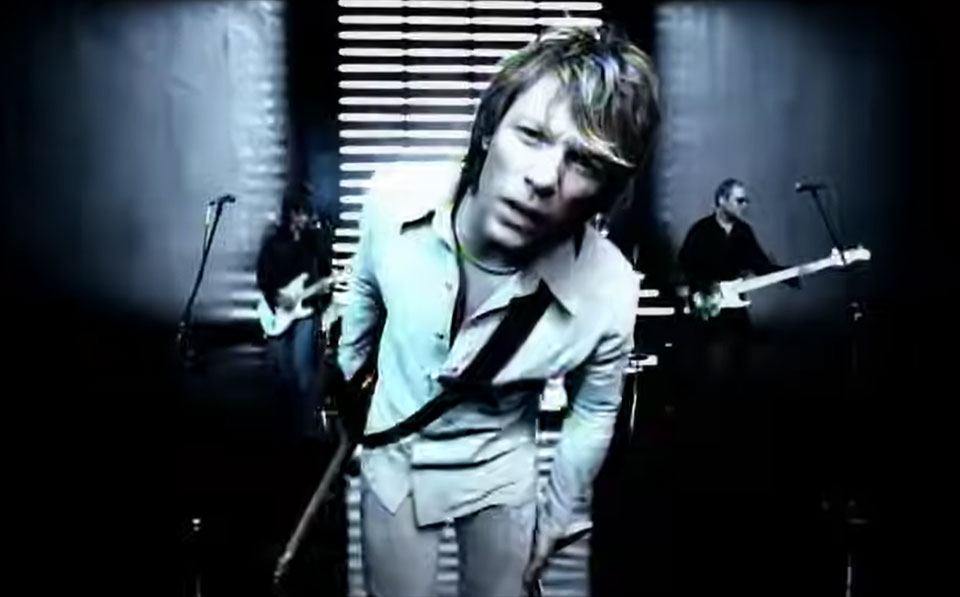
The electric It’s My Life is a masterclass in how to fix that, as it retained all of the band’s classic hallmarks (riff, chorus, uplift) but sold them with an updated sheen and a new-generation marketing push.
Suddenly, Bon Jovi weren’t just “back” — they were everywhere, in a way that didn’t feel like pure nostalgia.
"Hey man it's been a while,
Do you remember me?,
I hit these streets when I was seventeen."

JUST OLDER
Complicated
Crush’s biggest problem is that It’s My Life sets expectations the rest of the album can’t consistently meet.
For all its comeback swagger, the record often leans into a cleaner, more restrained palette — closer to the stripped-back sensibilities of These Days than the arena-thump many listeners expected after that lead single.
Whether you read that as maturity or misjudgement, it creates a real identity clash: the band’s instinct is to unleash, yet the production frequently keeps them on a short leash.
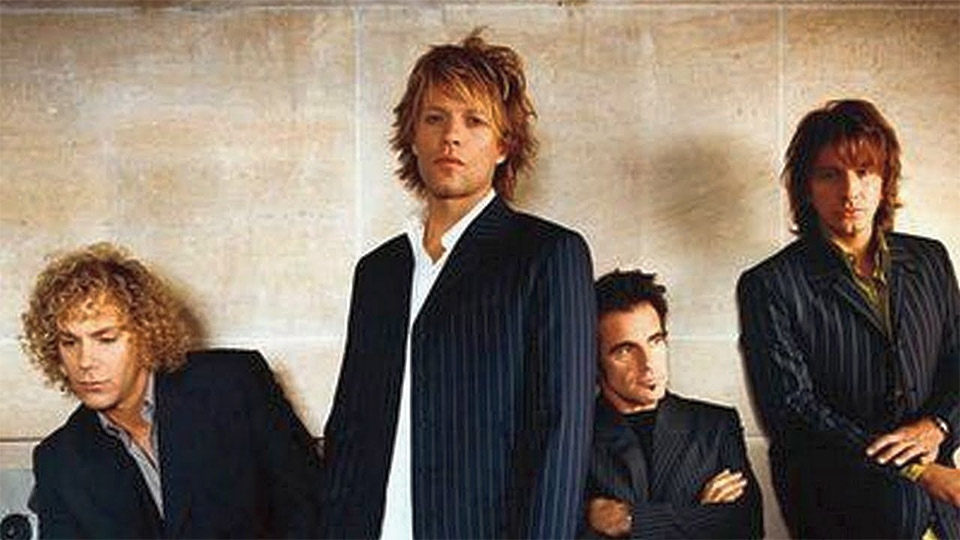
Jon has since framed that contrast as the result of the album’s original blueprint falling apart. The band initially wanted to reunite with Bruce Fairbairn — the producer synonymous with their peak-era firepower — but his death in 1999 forced a rethink, and Crush ultimately landed with Luke Ebbin, brought in specifically to help modernise their sound for the 2000s.
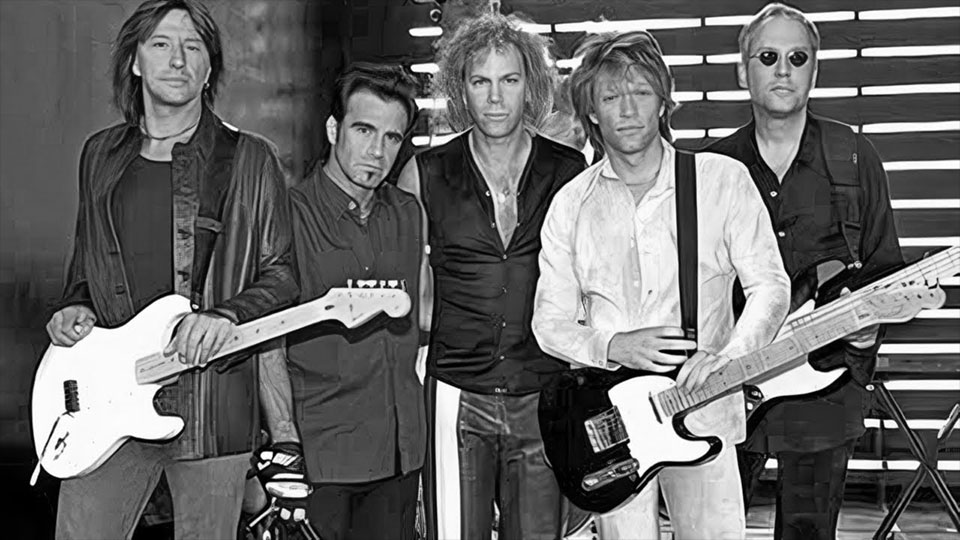
“It’s My Life is so different from the rest of the record because our original intent was to reconnect with Bruce (Fairbairn), who helped us make Slippery When Wet and New Jersey. Nobody can do it quite like him, so when he passed away we decided to pursue a different sound by working with an up-and-coming producer (Luke Ebbin) on the rest of the material.”
– Jon Bon Jovi
Adapt Or Die
To Ebbin’s credit, Crush rarely sounds manufactured.
It has that clean, late-’90s/early-2000s polish without feeling like the band are cosplaying youth.
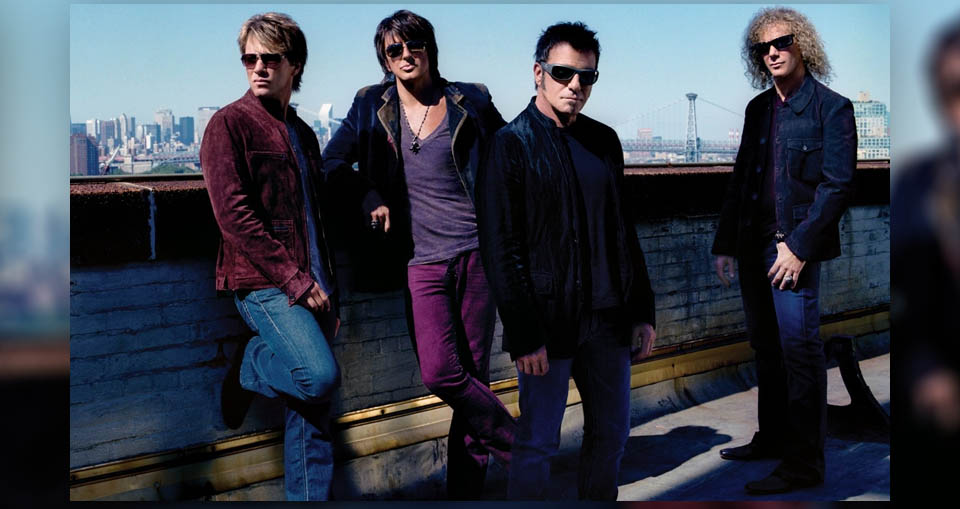
You can hear it in the shamelessly era-specific Captain Crash & The Beauty Queen From Mars — a title that shouldn’t work, attached to a song that absolutely does.
It’s bright, bouncy, and built around a groove Bon Jovi never really showed in their classic run. Sure, it lacks their trademark crunch, but it’s a track that proves beyond all doubt that these New Jersey cowboys were still capable of moving with the times without sounding like they’d hired a focus group.
"A car crash with a suitcase,
And a painted face,
She was one of a kind."

CAPTAIN CRASH & THE BEAUTY QUEEN FROM MARS
New Jersey… Old Habits
Songwriting-wise, Jon continues the more reflective route he’d been taking since the early ’90s — smaller stories, older perspective, and a cynical awareness of how artificial the music industry can be.
It’s a tone that fits Crush well when the songs commit to it. Two Story Town offers real bite, second single Say It Isn’t So nails their overall disillusionment with “the business”, and Just Older is a solid mid-album anchor that carries an important message about body positivity decades ahead of its time.
These tracks show us that a more grounded version of Bon Jovi is fully capable of sounding current in the 2000s.
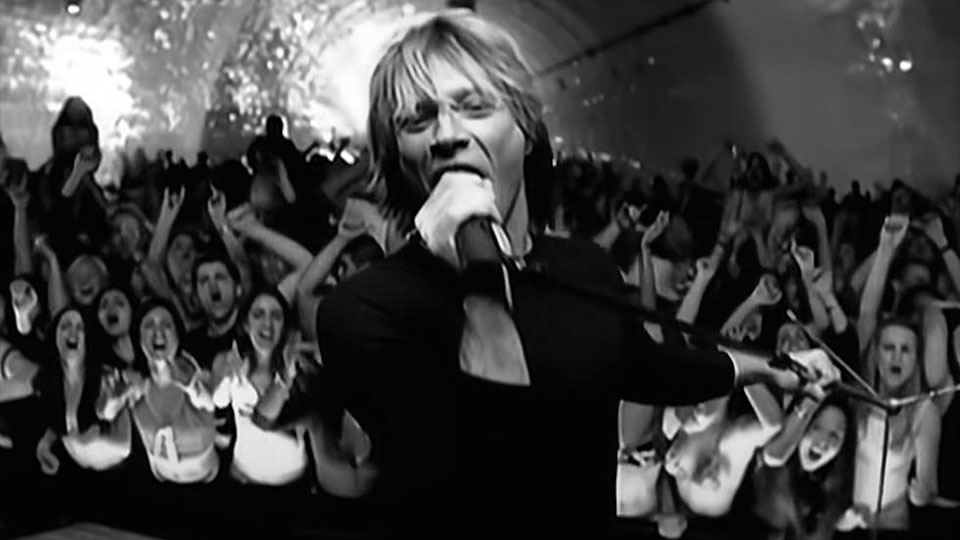
However, Crush also reminds you they can be even better than this when they lean into their built-in strengths. You hear it in the brief moments where they revert to factory settings — most notably the hair-raising final third of Next 100 Years, where Richie Sambora clicks into shred mode and delivers his best solo since Dry County.
Hooks Without The Meat
There are moments where Ebbin’s stripped-back production backfires.
Bon Jovi’s greatest weapon has always been lift — riffs that push forward, choruses that open the ceiling — and Crush sometimes keeps that lift boxed in. One Wild Night is a good example: it’s almost skeletal, a song you can practically hear begging for a meatier mix like the one given to It’s My Life.
This issue raises its head on a few occasions throughout the second half of the record, but I focus on this particular song because it was later re-issued with the aforementioned beefed up production — One Wild Night 2001 — which proved the point.
"Theres a 'For Sale' sign,
On the front door of the city hall."

TWO STORY TOWN
Running Out Of Steam
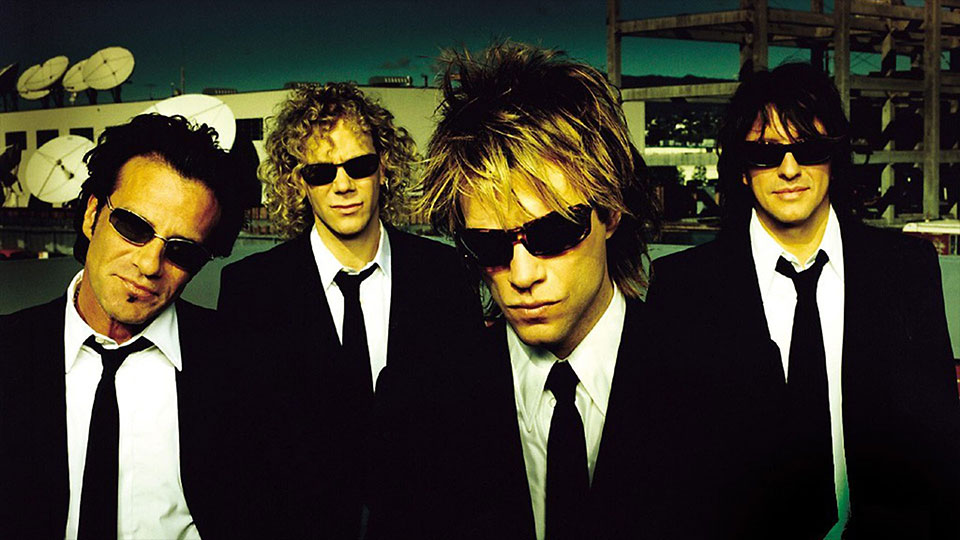
Like a few Bon Jovi albums in this era, Crush runs out of steam in its back half.
A band returning from such a long break — particularly one this skilled at writing crowd-pleasers — shouldn’t have this issue, but they do, and this late dip in form is ultimately what prevents this album from being the full-blooded comeback it threatens to be in its opening stretch.
Don’t get me wrong, tracks like Save The World, Mystery Train, and She’s A Mystery aren’t disasters, but they’re prime examples of the kind of material that would have been cut without mercy during the band’s golden run.
"Superman can't fly,
They did it all with strings."

SAY IT ISN'T SO
Bon Jovi – Crush
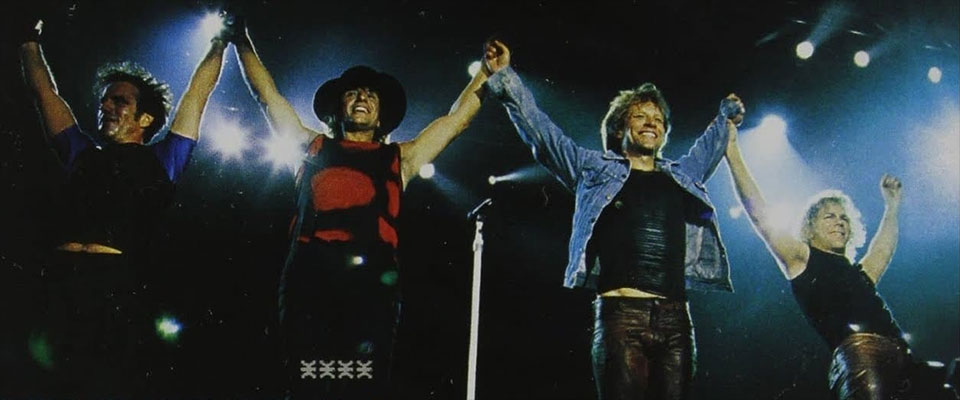
Crush is the sound of a band re-entering the arena, trying to modernise, and determined to survive.
At its best, it’s exceptional — not just because It’s My Life is a career-defining single, but because several deep cuts showcase a band capable of growing up without growing dull.
The financial numbers back up the comeback narrative. The record’s juggernaut-like lead single peaked at No. 3 in the UK and became the soundtrack to an entire generation of kids too young to have witnessed their first run, meanwhile Crush went straight to No. 1 and hung around on the chart for 39 weeks — proof that Bon Jovi weren’t just back, but bankable.
These Go To Eleven Reworked Tracklist
These Go To Eleven Reworked Tracklist
The best version of Crush is the one that keeps the comeback momentum and trims the material that blunts it.
This reworked tracklist isn’t about rewriting history — it’s about sequencing the album into a cleaner, more deliberate listen: front-loading the strongest statements, keeping the reflective mid-section focused, and finishing with the songs that actually earn the closing stretch.
Here’s how to listen to Bon Jovi: Crush (2000) for maximum impact:
- It’s My Life (3:44) ★
- Two Story Town (5:10)
- Just Older (4:29) ★
- Say It Isn’t So (3:33)
- Captain Crash And The Beauty Queen From Mars (4:31)
- Neurotica (4:45) ^
- I Got The Girl (4:36)
- Mystery Train (5:14)
- Mr. Big Time (2:50) +
- One Wild Night (3:43) #
- Thank You For Loving Me (5:09)
- Garageland (3:26) =
- Next 100 Years (6:19) ★
★ Standout track
^ Bonus track on the international version
+ Featured on the soundtrack for Armageddon (1998)
# Alternate version featured on One Wild Night (2001)
= B-side eventually released on 100 Million Fans Can’t Be Wrong (2004)
In summary:
A patchy comeback album, anchored by a magnificent lead single.
Crush receives 6/11.
★ ★ ★ ★ ★ ★
>> Crush is part of our Bon Jovi discography guide.
Related Posts
 Reviews, Bon Jovi
 Bon Jovi rock into the 90s with one of their very best albums.
 Reviews, Bon Jovi
 The final entry in Bon Jovi’s “golden run” shows a group growing older and more cynical.
 Reviews, Bon Jovi
 Largely an extension of Crush, the powerful 9/11 overtones of Bounce make up for a lack of hit singles.

Leave a Reply to Bon Jovi: 100 Million Fans Can't Be Wrong (2004) Review – These Go To Eleven Cancel reply