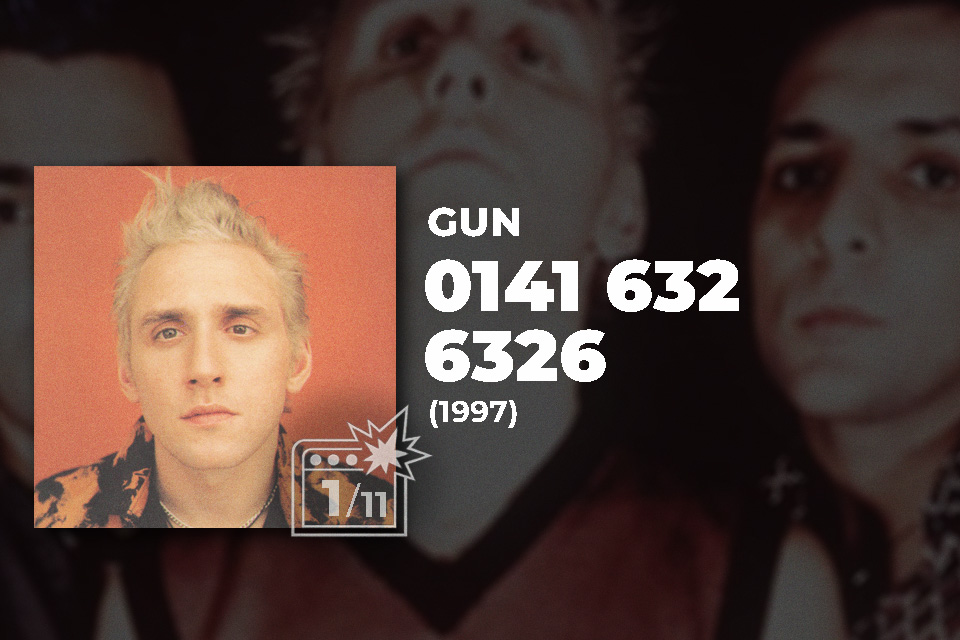
In summary:
A well-intentioned reinvention that traded groove for uncertainty, 0141 632 6326 became the quiet fracture that halted Gun’s original ascent.
0141 632 6326 receives 1/11.
★
Album details
Album Details
Release date: May 5th, 1997
Label: A&M
Producer: Andrew Farriss
Musicians:
- Mark Rankin (vocals)
- Giuliano Gizzi (guitar)
- Dante Gizzi (bass, backing vocals)
- Stuart Kerr (drums)
Singles:
- Crazy You
- My Sweet Jane
Chart performance:
- #5 UK Album Chart
- #8 Scottish Album Chart
Total sales: 14,000
Certification: n/a
Score: ★
Gun – 0141 632 6326 (1997) Review
After the assured confidence of Swagger, Gun returned in 1997 with an album that seemed determined to distance itself from the very qualities that had brought them to the brink of mainstream breakthrough.
0141 632 6326 remains one of the most debated albums in Gun’s discography. It wasn’t born from complacency — it was born from a genuine desire to grow. But in dismantling their established strengths, the band lost something harder to recover than momentum: clarity.
The result was a record that stalled their ascent and exposed fractures that would linger long after the album itself had quietly slipped from view.

Losing Their Swagger
Gun entered 1997 on the back of the strongest year of their career.
Third album Swagger had climbed to #5 on the UK Albums Chart and earned silver certification, while Word Up pushed them further into mainstream consciousness across Europe.
Momentum was firmly on their side.
But success brought a dilemma. Having already evolved significantly from their earlier records — and mindful of a rock landscape still shaped by grunge’s disruptive influence — the band became convinced that further change was necessary.
Standing still, they feared, meant slipping backwards.
Early demos for 0141 632 6326 reportedly carried the same groove-heavy imprint that had powered Swagger. Yet during the recording process, those foundations were gradually dismantled. Under the guidance of producer Andrew Farriss and with Mark Rankin pushing for a broader sonic palette, the material was stripped back and rebuilt in pursuit of something more progressive.
The intention was expansion. The difficulty lay in its execution.
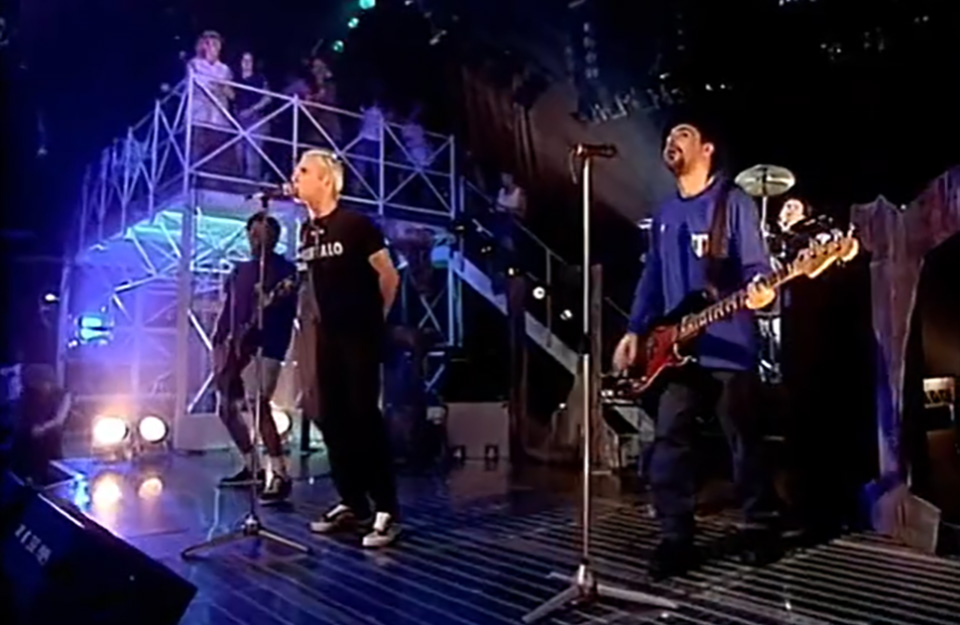
"Crazy is the sound,
Doesn't mean I'm falling down."

ALWAYS FRIENDS

Diverging Visions
Much of the album’s eventual failure can be traced to a pivotal decision: the hiring of producer Andrew Farriss.
Long regarded by the band as a major influence for his work with INXS — an influence audible as far back as Taking On The World — Gun believed Farriss could help them build on the groove-driven success of Word Up. The ambition was clear: to craft an album of rock music you could dance to, doubling down on rhythm without sacrificing impact.
But Farriss had a different vision.
Uninterested in revisiting territory he had already explored, he reportedly pushed the band away from heavier, INXS-leaning material and toward something more progressive. Tracks were stripped back to their bare framework before being rebuilt from the ground up, often in directions that diverged sharply from the band’s established instincts.
Tensions soon followed. The Gizzi brothers — long the architects of Gun’s muscular rhythm section — were said to be uneasy with the shift, even considering withdrawing from the project. Yet with recording costs mounting and Mark Rankin keen to pursue the opportunity of working alongside a longtime musical hero, the sessions continued.
What emerged was not the groove-heavy evolution Gun had envisioned, but a record caught between competing philosophies.

The Sound Of Tension On Record
If the creative friction behind 0141 632 6326 was real, it becomes audible almost immediately.
The opening seconds of second single My Sweet Jane neatly encapsulate the problem. What begins not as a riff, nor a rhythm, but as a glossy, radio-ready arrangement signals a clear departure from the muscular confidence that once defined Gun. This isn’t simply pop influence creeping in — it’s rock material reshaped into pop structures, and the seams are visible.
Where earlier records were driven by hooks carved from guitar and groove, here the guitars feel thinned out or absent entirely. The rhythm section, once the band’s defining weapon, is softened and repositioned. Songs no longer surge forward; they assemble themselves cautiously, as though reconstructed from dismantled parts.
You can almost hear the process behind them — tracks stripped down, rearranged and pieced back together like jigsaw fragments that never quite lock into place. As demonstrated on the disjointed Seventeen, the result is not adventurous so much as uncertain.

High Points Are Scarce
Of the album’s ten tracks, only two offer fleeting reminders of Gun’s instinct for melody.
Lead single Crazy You is the clearest highlight, its chorus carrying a spark that hints at what might have been had 0141 632 6326 committed more fully to its own strengths.
Elsewhere, closing track Always Friends comes closest to recapturing the emotional weight of earlier releases. The bones of a strong song are present — a sturdy riff, a sincere vocal — yet the production once again drains it of urgency. In another era, with the muscular confidence of Swagger behind it, this could have been something genuinely special.

Going Down
Gun’s drastic rebranding extended beyond the music.
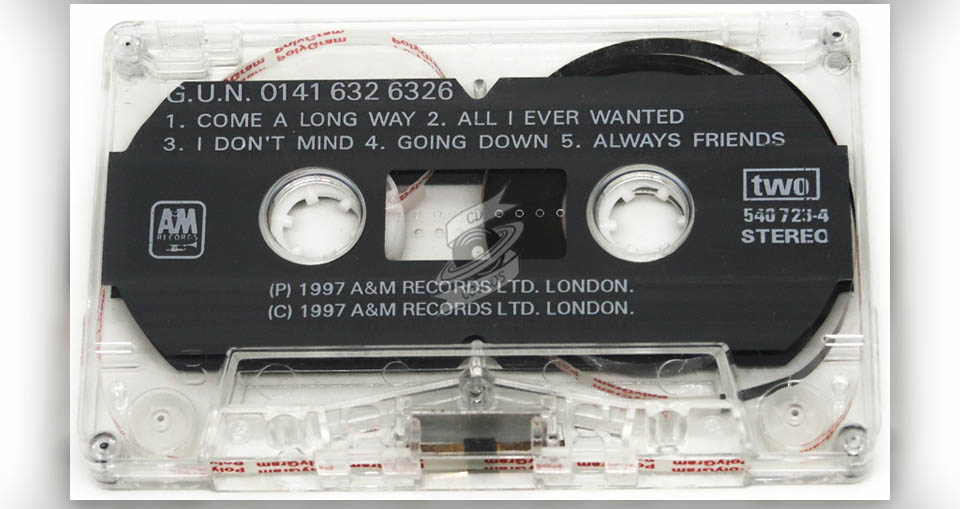
In June 1996 they made the unusual decision to rebrand as G.U.N., citing a desire to distance themselves from the tragic events in Dunblane. In theory it signalled renewel, serving as a clean break between musical eras, but in practice it added to the sense of uncertainty surrounding the project.
Even the album’s title — 0141 632 6326 — felt more like a marketing concept than a musical statement.
The Glasgow telephone number, which redirected callers to the band’s fan club hotline, was a novel idea in an era before social media. But novelty is not memorability, and it further underlined how far removed this version of the band felt from the one which built its reputation.
No Bullets In The G.U.N.
Much of the album’s commercial fate rested on Crazy You.
Positioned as the statement of intent, its modest peak at No. 21 on the UK Singles Chart felt less like consolidation and more like a warning. After the scale of Word Up, the industry — and the band — had expected something louder.
When second single My Sweet Jane scraped in at #52, the writing was on the wall.
The signs were subtle, but they were there — momentum had slowed, the audience hesitated, and the reinvention which was supposed to propel Gun (sorry, G.U.N.) to new heights had instead left them suspended between identities.
The full story behind the making of 0141 632 6326 — including reflections from the band two decades later — is covered in detail in our Rock Stories feature. What becomes clear is that this wasn’t a collapse in ability, but a collision of creative visions.

The Aftermath Of A Storm
The muted public reception to 0141 632 6326 did more than dent sales; it hardened creative divides that had surfaced during recording.
The Gizzi brothers were eager to return to the groove-heavy rock that had defined Gun’s rise to the top, while Mark Rankin remained committed to pushing them into new, less defined territory.
Without a shared vision between the group’s two creative forces it felt like there was nowhere left to go, and what followed was not a dramatic implosion, but something quieter — Gun simply stepped away.
For almost a decade, the band that had once stood on the brink of arena-sized permanence disappeared entirely from view. When they eventually returned in 2012, it was Dante Gizzi who assumed vocal duties — a subtle but telling shift that traced its origins back to this moment of fracture.

Gun: 0141 632 6326
0141 632 6326 is not the sound of a band collapsing, but of one pulling in different directions at a moment when unity mattered most.
In the end, the consequences proved heavier than the record ever was.
The ambition was genuine, but the execution uncertain — and in striving to become something new, Gun briefly lost sight of the version of themselves that had brought them this far.
“11” Re-worked Tracklist
“11” Re-worked Tracklist
Maybe it’s the autism in me, but I’ve always been skilled at shuffling album playlists to create a superior listening experience.
Hey, what can I say? Superman got laser eyes, and I got this!
Here’s how you should listen to Gun: 0141 632 6326 (1997) for maximum effectiveness:
- Crazy You (4:52) ★
- Going Down (3:53) ★
- I Don’t Mind (3:48)
- My Sweet Jane (3:27)
- Rescue You (3:46)
- Always Friends (3:00) ★
- All My Love (3:56)
- All I Ever Wanted (3:19)
- Come A Long Way (3:27)
★ Standout track
In summary:
A well-intentioned reinvention that traded groove for uncertainty, 0141 632 6326 became the quiet fracture that halted Gun’s original ascent.
0141 632 6326 receives 1/11.
★
>> 0141 632 6326 is part of our Gun album review series.
Related Posts
 Reviews, Gun
 Heavier and more self-assured, Gallus confirmed Gun’s staying power in a rapidly changing rock landscape.
 Reviews, Gun
 One of the great British rock records of the 1990s, Swagger finds Gun scaling their sound without sacrificing the grit that made it matter.
 Gun, Rock Stories
 Here’s the untold story of the 1997 album which broke up one of the UK’s top rock bands.

Leave a Reply