The Story Of… How Axl Rose Rebuilt Guns N’ Roses Into Nu-GNR
Guns N’ Roses were on the brink of self-destruction by 1995.
Three years of relentless touring had drained the life out of the classic line-up, relationships were splintering, and the pressure to deliver a blockbuster follow-up to Use Your Illusion was becoming impossible to ignore. The next record was tasked with solidifying their status as the biggest rock band in the world, but instead, it tore them apart.
What followed next was stranger than a normal breakup.
Because as Slash, Duff McKagan and Matt Sorum all fell away, frontman Axl Rose refused to let Guns N’ Roses die. Rather than burying the name and starting over, he attempted to rebuild it around himself: a rotating, experimental, high-tech version of Guns N’ Roses that fans would later dub Nu-GNR.
It was ambitious, chaotic, and often completely unlike the band that had conquered the world — and today, for the first time ever, you’ll read how it happened.

Why Guns N’ Roses Broke Up
The collapse of Guns N’ Roses began, fittingly, with an argument about what Guns N’ Roses should sound like.
By late 1994, Axl Rose had become increasingly drawn to electronic and industrial music, particularly Nine Inch Nails. Slash wanted the opposite. In his view, the band had already stretched far enough on Use Your Illusion and needed to rediscover the direct hard rock attack of Appetite For Destruction.
That disagreement was more than musical. It exposed a widening split in philosophy: Axl wanted evolution, control, and modernity; Slash wanted chemistry, instinct, and the road back to what had made them dangerous in the first place.
“Somehow we’d lost money despite being on tour for three years, so there was pressure to get back into the studio. I was hesitant to begin that process because I could see that Axl wasn’t ready.
When we did eventually discuss it, he wanted to make some dramatic changes to our sound. It was difficult to tell if he was serious, because that’s just what he was like — two years earlier he wanted us to try out some grunge-like stuff, and now it was something else, you know?
I wanted us to make a straight-ahead hard rock record, because we’re great at that.”
– Slash
Then came Sympathy For The Devil.
Slash believed cutting the Rolling Stones cover for Interview With The Vampire might act as a reset — a low-stakes way to get the band playing together again.
Instead, it detonated what little trust remained.
Axl skipped the main session, arrived later with childhood friend Paul Huge, and had Huge’s guitar parts added to the finished version without properly consulting the rest of the band. Whether he saw that as plugging a gap or beginning a transition hardly mattered. Slash saw it for what it looked like: a line had been crossed.
“I can summarise the Guns breakup in three words; Paul fucking Huge.
It really pissed me off that Axl brought in an outside guitar player without telling us — it’s one of the biggest, most personal issues we ever had. Between the two of those guys, I think they ruined what was meant to be a fun way for us to get back in the studio and show respect to The Stones.”
– Slash
“Paul has been there for me since childhood. I figured he could help because we needed a rhythm guitarist. I had asked my bandmates to find a new guitarist but no names had been suggested, so this was a temporary fix.”
– Axl Rose
“None of this would’ve happened if Axl hadn’t fired Gilby for no reason. I disliked Paul Huge from day one. That guy is a phoney. I cannot be clear enough when I say this — he is nothing more than Axl’s friend, and he will never be part of GN’R. Fuck that guy.”
– Slash
They’re Out Ta Get Me
GN’R continued to hold sporadic recording sessions over the next eighteen months in the hope that the fractures could somehow be repaired.
In reality, the relationship between Axl Rose and Slash had already crossed the point of no return.
The final nail was hammered into the coffin at the tail-end of 1996, when Rose detonated fans’ hopes of reconciliation by sending an extraordinary fax to MTV News:
“LIVE!!! From ‘Burning Hills’, California…
Due to overwhelming enthusiasm and that ‘dive in and find the money’ attitude, I’d like to report that there will be NO new GNR tour, NO website, NO fan club, NO new merchandise, and NO new music videos!
There will, however, be a brand new 12–15 song Guns N’ Roses album, and if it does well, it’ll be immediately followed by another.
Also, Slash will NOT be involved in this project — because he hasn’t been musically involved with Guns N’ Roses since April 1994, except for a very unproductive two-week period in the fall of 1995, and NOTHING here is subject to change unless I see a permanent suspension of his ‘pseudo studio musician’ work ethic.”
Yikes.
Rose seems to have regarded the fax as a final written warning. Slash regarded it as public humiliation. Whatever hope the pair had of reconciliation died right there, and the guitarist tendered his resignation soon after.
The original Guns N’ Roses story was over, and in classic Guns fashion, it was followed by radio silence.
Where Do We Go Now?
In early 1997, Matt Sorum still believed the rift could be repaired.
His theory was simple: if he could solve the band’s increasingly awkward rhythm-guitar vacancy, perhaps he could coax Axl and Slash back into the same room and get the old chemistry moving again.
With that in mind, he took Rose to see Robin Finck performing with Cirque du Soleil, convinced the former Nine Inch Nails guitarist could be the missing piece.
At first, the idea looked promising.
Sorum knew Axl admired Finck already, and after seeing him live, Rose came away fully convinced. The catch was that Sorum had imagined Finck and Slash working together, but Axl now had other ideas.
“After our trip to the circus he went to watch one of Robin’s solo gigs. He came back and said, “Wow — that’s our new guitarist!” I was delighted, because I figured we could call Slash, but then Axl shut it down. He said “Nope, he will be playing lead.” It still stings today.”
– Matt Sorum
That was the moment the whole project began to tilt sideways.
Axl’s pursuit of Finck is widely recognised as the first real step towards Nu-GNR, even though Duff McKagan and Matt Sorum were technically still around. Because once the idea of Finck became a possibility, the old version of Guns no longer looked like appealing to Rose.
Sorum was next to go.
Duff McKagan later said the drummer’s exit stemmed from growing frustration that Axl still wasn’t meaningfully moving towards a new record.
“Matt wasn’t part of the original group, so he was always on an ejector seat with Axl.
He’d often threaten to fire him over minor issues, and on this particular day I snapped back at him because I felt hiring and firing band members isn’t up to him. We’re supposed to be a group, after all.
Of course, Axl fired him anyway — and it was all because Matt told him he was wrong.
In retrospect, the truth is Matt was right and Axl was wrong indeed.”
– Duff McKagan
The situation deteriorated further when Paul Huge allegedly made a derogatory remark about Slash in the studio. Sorum snapped.
“I jumped up and said, “Hey, fucker! You don’t say anything about Slash when I’m in the room!”
Unfortunately for me, Paul is one of Axl’s oldest buddies, so my reaction just made things ten times worse.
Paul followed me out into the parking lot and asked me to go back inside, but I shouted, “I can’t, dickhead, he’s just fucking fired me over you and your big mouth. I hope you feel great about breaking up one of the best rock bands in the world.”
I understand why Slash couldn’t stand him — that man is a joke.”
– Matt Sorum
So now Axl needed a new drummer too.
He began auditioning replacements immediately, starting with another Nine Inch Nails alumnus, Chris Vrenna, who spent a couple of weeks around the camp before deciding he wanted no part of it.
“Yeah, something wasn’t right. We jammed for a couple of weeks, but fuck, Paul Huge coming in seemed to change the atmosphere quite a bit. It seemed like he and Duff weren’t getting along at all, and I didn’t want to become a part of that.”
– Chris Vrenna
Instead of taking Duff’s advice and repairing the damage with Slash and Sorum, Rose leaned harder into the idea of replacements.
That, in turn, pushed Duff closer to the exit.
Axl made approaches to other drummers, including Dave Abbruzzese and Joey Castillo, while the wider GN’R machine continued to stall. Long-time producer Mike Clink drifted away. Momentum evaporated. And eventually Duff decided he’d had enough.
“It was one of the hardest decisions of my life, but it just wasn’t fun anymore.
I had only stayed for so long to act as a bridge for Axl and Slash to come back together. When it became clear that he wasn’t returning, I just felt like I was done.
I felt bad for Axl. He was shocked. But, in a way, the fact that he still couldn’t understand why only confirmed that I had made the right choice.
We had lunch a few days later, I guess he thought I would’ve calmed down or whatever, but I really gave him both barrels. I told him straight up, “I can’t be a part of this band with you acting like a fucking dictator! You hired that prick (Huge) without asking any of us, and you can see how much that decision has torn us apart, but you don’t give enough of a shit to put it right!””
– Duff McKagan
Unfortunately, Axl didn’t heed Duff’s warning.
“His response was to offer to double my money for the next record — seriously, how could he still not get it?
Our meeting ended with me yelling “You can keep all the money!” and I walked out of the restaurant and didn’t speak to him again for ten years.
I don’t regret my decision to leave but, looking back, I do regret cutting Axl off like that. My actions caused him a lot of emotional damage — growing up all he knew was loss, so me walking out on him really hurt. That’s one of my biggest regrets in life.”
– Duff McKagan

The Wheels Already Set In Motion
By late 1997, the classic band was gone in all but name.
All that remained of the old camp was Axl Rose, Dizzy Reed, and the ever-contentious Paul Huge.
In place of the familiar gang chemistry that had once defined Guns N’ Roses, something colder and more uncertain was beginning to take shape.
Drummer Chris Vrenna was still watching the drama unfold from afar, and he took it upon himself to ask Rose the obvious question: why keep calling this Guns N’ Roses at all?
“I’ve always been a GN’R fan, so I was bummed to learn that Duff had left.
He is such a cool guy, and he was like the last remaining thread back to Appetite for Destruction.
I spoke to Axl about the situation. I asked him if he would consider dropping the Guns N’ Roses name, you know, considering he was working with new musicians and moving in a totally different direction with the sound.
He told me that he had no intention of dropping the name, because Slash and Duff walking out wasn’t a valid reason for him to destroy everything he had worked so hard to build.”
– Chris Vrenna
That mindset tells you almost everything about Axl’s circa 1997.
He wasn’t rebuilding Guns N’ Roses as a tribute to what had been lost. He was rebuilding it because he refused to let the name be buried by the men who had walked away from him.
And for a brief moment, it looked like his plan might work.
Robin Finck accepted Rose’s invitation. Josh Freese came in on drums. Freese then recommended Tommy Stinson for bass, and suddenly Axl had the beginnings of a new line-up.
“I was flat broke, because I never made any real money from The Replacements, so when my buddy Josh (Freese) told me that Axl was looking for a new bass player I jokingly asked him to pass on my details — and he did!
I never thought they’d actually call me, because GN’R is such a huge band.
Axl asked if I would visit the studio, so I hung up the phone and sprinted to my local record store and bought a second-hand copy of Appetite for Destruction (because I couldn’t afford a new one!), and then learned five of the songs off by heart, and somehow I managed to land the job.
It’s funny because prior to this day GN’R was never really my thing, musically, but I ended up staying there for sixteen years and Axl became one of my closest friends. — and it was all just a lucky shot!”
– Tommy Stinson
With that, the first recognisable version of Nu-GNR came into view:
- Axl Rose – vocals
- Robin Finck – lead guitar
- Paul Huge – rhythm guitar
- Tommy Stinson – bass
- Dizzy Reed – keyboards
- Josh Freese – drums
It was a serious line-up on paper, even if it didn’t feel especially stable.
Punk-influenced Stinson clashed with Paul Huge almost immediately, and his description of those early tensions says a great deal about the weird power structure now surrounding the band.
“I could see why the old band members had an issues with Paul Huge. Obviously it’s Axl’s band, so we’d be hammering out ideas and taking them to him, but this guy was trying to give the impression that he was like second in command or something, just because he’d been there slightly longer than us. He walked around the studio with the whole GN’R attitude, but he’d never made a record, never been on tour, never even played a gig! Thankfully I learned how to get past it and drown out the noise.”
– Tommy Stinson
Despite the wobbly foundations, Geffen were thrilled.
From their point of view, Guns N’ Roses remained one of their biggest assets even while being inactive, and the sight of a functioning line-up was enough to make them put serious money back on the table. They handed Rose a $1 million advance to get the album moving, with another $1 million promised upon completion.
It looked, finally, like the machine was in motion.
Axl seemed energised by that faith. He agreed to contribute to the soundtrack of What Dreams May Come, with a new track called This I Love earmarked for the film. But even here, the old pattern returned — the movie came and went, and the new song never surfaced.
Producer Youth later said that while the band was capable of working, Rose himself was nowhere near ready.
“I visited Axl at his home, and even had him singing. It was a real breakthrough, because at that point he hadn’t sang for eighteen months. I asked if we could try recording some vocals at our next meeting, but he told me to back off. He wasn’t ready for it.
It seemed like he was suffering from depression, and starting to work at 9pm and living a hermit lifestyle was only making it worse. The record label then started to get antsy with me about deadlines, so I pulled out of the project because I had a gut feeling that Axl might never come back.”
– Youth
That tension — between a line-up that could function and a frontman who still couldn’t fully step back into the role — became the defining problem of Nu-GNR.
And it only became more severe once Geffen, desperate to keep the Guns brand moving, pivoted to Live Era ’87–’93.
What should have been a routine archival release turned into another legal and emotional drain, with Axl battling Slash and Duff through lawyers over the track listing, the show choices, and even alterations to the vocals. The project soaked up much of 1998, stalling Nu-GNR’s progress, and driving Robin Finck out of the door.
“We wrote lots of great songs in my two years with Guns, but I got bored of waiting for Axl to put vocals to them. I wanted to get out and play live, but we were nowhere near that stage. It seemed like nothing was getting finished — and as an artist, there’s only so long you can with with song titles like ‘Instrumental #30’, you know?”
– Robin Finck
This is the point where Nu-GNR stopped feeling like a rock band and started feeling like a corporation.
Still burned by the departures of Slash and Duff, Rose increasingly structured the project like a business. His musicians worked on fixed-term contracts. Songs were broken apart and endlessly revised inside a high-tech studio environment. Rose himself stayed away, reviewing giant piles of riffs, loops, and arrangement ideas from home, occasionally appearing by video link or making sudden visits to keep people on edge.
He wasn’t just chasing songs anymore. He was chasing control.
And from his point of view, that probably felt necessary. The original Guns N’ Roses had imploded around him. Nu-GNR would be built in a way that made that kind of betrayal impossible.
It also made the whole enterprise feel strangely mechanical.
The End of Days
In retrospect, Finck’s unexpected exit could have been the right moment to stop, breathe, and ask whether this was really still Guns N’ Roses.
But in typical Axl fashion, he doubled down.
Now determined to prove that he could actually finish something, he signed a last-minute deal to include a new song on the soundtrack of the Arnold Schwarzennegger movie End Of Days — and to everybody’s surprise, he delivered.
Oh My God, released in November 1999, was the first new GN’R material since 1991’s Use Your Illusion. It offered long-suffering fans their first proper glimpse of his new bold direction — industrial-edged, abrasive, and miles away from the old Appetite swagger.
The track features some venomous vocals and solid guitar work from the now-departed Robin Finck — an issue that would become symptomatic with Nu-GNR’s revolving door policy in years to come.
The response to the song was mixed. Critics admired the sheer nerve — not only to switch to industrial rock, but to do it well. However, most of the band’s fanbase refused to accept the radical shift in style, citing it as evidence that Nu-GNR was nothing more than an Axl Rose vanity project.
Then, as the dust of the new release settled, Rose made his boldest move yet.
He landed Buckethead.
“Axl walked in with a big smile and said, “Buckethead!!!”
He was over the moon when I told him I’ve known Bucket since ’91 (laughs). So I set up a meeting, and those two hit it off immediately. I’ve never seen anything like it. He doesn’t connect with many people, but I guess something about Axl made him feel comfortable, or understood.
Around three weeks later he was in Guns N’ Roses and Axl was his hero.”
– Josh Freese
And with that, Nu-GNR became something else again.
Not a patched-up version, and not a temporary placeholder, but a very real, fully new creature.
A New Lease of Life
For those unfamiliar with Buckethead, Axl had just pulled off an extraordinary coup.
Guns N’ Roses had featured some exceptional guitarists already, but Buckethead belonged to a different category entirely: less a conventional rock player than a full-blown virtuoso who seemed capable of treating even the most demanding material.
The idea of someone this technically absurd joining GN’R was enough on its own to make the rock press sit up.
Megadeth frontman Dave Mustaine was among those taken aback:
“I’ve always loved the way Slash plays, but when you see a guy like Buckethead… wow. He is probably twice the player of me and Slash combined, and he does it all with a fucking bucket on his head!”
– Dave Mustaine
But it wasn’t just Buckethead’s playing that fascinated Rose.
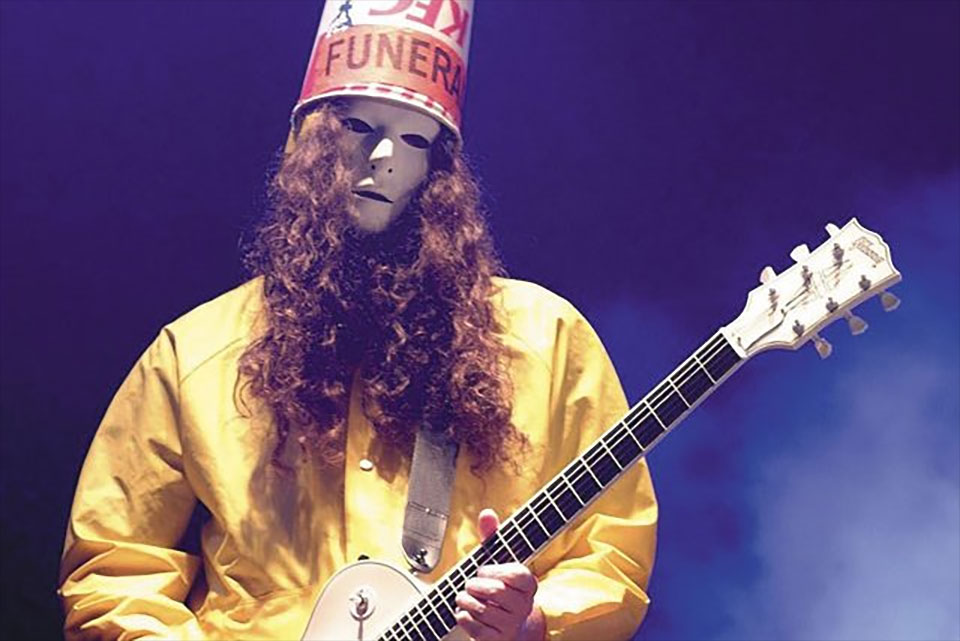
The guitarist came wrapped in his own mythology: a six-foot-six figure hidden behind an expressionless white mask and an upturned KFC bucket, communicating largely through awkward gestures, eerie silences, and a general aura of beautiful weirdness.
He looked like a horror-film villain, he behaved like a malfunctioning robot, and he loved Disneyland — naturally, Axl was smitten.
According to the lore, Rose flew Buckethead to Florida, and the axeman is believed to have signed his GN’R contract inside Disney’s Haunted Mansion.
That is, somehow, one of the more normal details in this story.
Because in typical Guns style, the exceptional news of Buckethead’s arrival was immediately followed by another familiar setback. Key drummer Josh Freese — the same man who had helped Axl assemble much of the early Nu-GNR line-up and also wrote the melody for the title track of the long-gestating Chinese Democracy — had decided not to renew his contract.
His reasons sounded painfully familiar.
“My two-and-a-half year contract was up, and I would’ve happily signed a new deal because I loved working with Axl, but there were no signs that we would be releasing the record or going on tour anytime soon.
Like Robin, who also left on good terms, I informed Axl that I’ll happily come back if he needs me for anything once the record is out, but I can’t sit around any longer.”
– Josh Freese
That line tells you almost everything about Guns N’ Roses at the turn of the millennium: the musicians could see the potential, they just couldn’t see the finish line.
Freese had decided to leave in order to create A Perfect Circle with Billy Howerdel (below), whom Axl had hired as a Pro Tools engineer. Within three months, their new outfit were touring in support of Nine Inch Nails, thanks to fellow GNR-alumni Robin Finck.
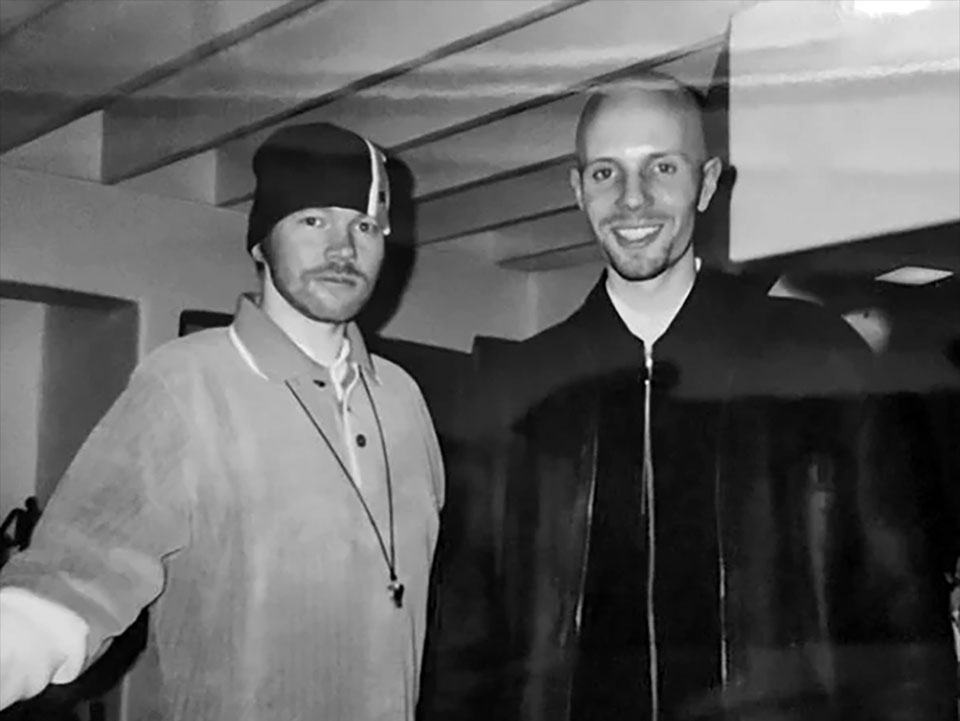
“In 1997, my buddy Robin Finck asked if I’d help Guns N’ Roses program guitar sounds. I was hired as a studio engineer, and I spent two-and-a-half years there. I was always fully planning to pursue my own band, but it meant a lot to me that Axl believed in my abilities and handed me this shot. It was an interesting, educational time, and Axl was one of the most supportive people when it came to believing in what would become A Perfect Circle. He was a generous, empathetic, and inspirational man.”
– Billy Howerdel
The irony is that Freese left on remarkably good terms.
Rather than walk out with a trail of destruction behind him, he handed Rose a shortlist of possible replacements. Sitting at the top was former Primus drummer Brian “Brain” Mantia — who also happened to be one of Buckethead’s closest allies.
Brain took one look at the setup and understood why people kept getting sucked into Axl’s orbit.
“Man, the studio they were using was insane, better than anything I’d ever seen before. If you imagine a hotel where the penthouse is the tenth floor — this was the eleventh floor!
Axl seemed nice, but I got the feeling that he’d been through a lot of shit.
I guess he’d gotten used to people joining and then leaving because of how long it was taking to make the new album, so he seemed a bit down. During my audition he gave me permission to do any side projects that I wanted to do, as long as I didn’t leave him while he worked through whatever he was going through. When he said that, I just felt for the guy. Honestly, though, as soon as saw their setup I knew this was the only place I wanted to be!”
– Brain
Brain’s arrival mattered for more than just replacing Freese.
It gave the project another shot of momentum, and it arrived just as the problematic Paul Huge’s influence was beginning to recede.
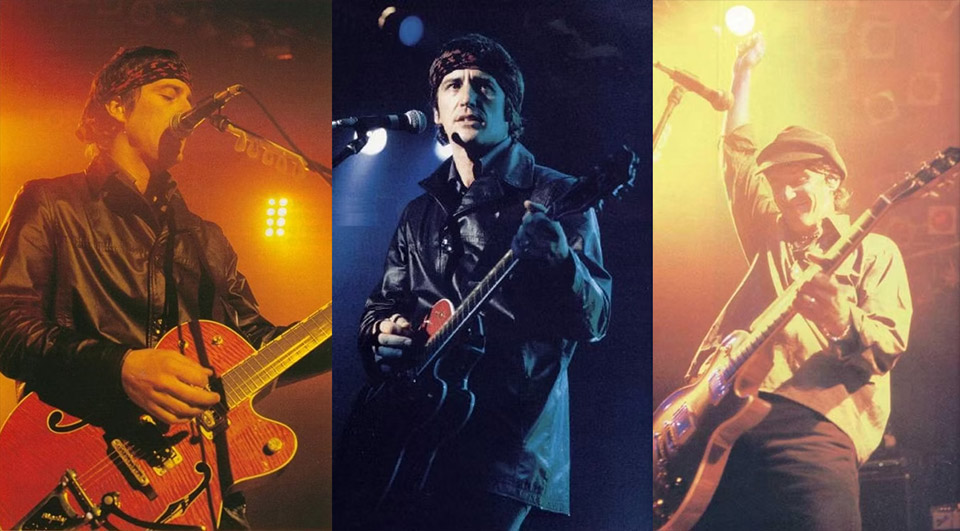
That shift became even more significant when Rose made another surprise move: he brought Robin Finck back into the fold, creating a formidable and deeply unorthodox guitar pairing with Buckethead.
Riding the Wave
Riding the wave of renewed momentum, Axl made a move that nobody saw coming.
He tried to re-hire Izzy Stradlin.
Stradlin’s decision to quit the band in 1991 in favour of a quieter life is often referenced as the moment the old Guns N’ Roses began to spiral out of control.
This move showed that Rose still understood the symbolic weight of the old band, even while building something radically different. Stradlin had remained on better terms with him than most of the classic line-up, and Axl clearly knew that getting Izzy back into the room would send a powerful message about the legitimacy of the Nu-GNR project.
Unfortunately, Izzy wasn’t interested in stepping back into the spotlight.
“Yes, Axl phoned in early 2000 and asked if I’d be interested in taking a look at things. He wasn’t trying to re-form the old band, because I was the only one he called. I declined the invitation in any event, I’m happy.”
– Izzy Stradlin
Even so, by 2000 Nu-GNR finally resembled the stable, credible unit Rose had been chasing all along.
For the first time, he had a line-up that felt less like a stopgap and more like a real band:
- Axl Rose – vocals
- Buckethead and Robin Finck – guitars
- Paul Huge – rhythm guitar
- Tommy Stinson – bass
- Dizzy Reed – keyboards
- Brian “Brain” Mantia – drums
It had taken three years to get there but, at long last, Axl Rose had a version of Guns N’ Roses that appeared capable of making his vision a reality.

We Come In From The Cold
After disappearing from public view in early 1994, Axl Rose became remarkably good at not being seen.
So good, in fact, that ex-Gunner Gilby Clarke failed to recognise him at one of his own gigs.
“One of the guys in my band said the man in the baseball cap at the bar looked like Axl. We walked over there, tapped him on the shoulder, and I was like, ‘Nope, that’s not him!’, and he answers, ‘Hey Gilby, how you doing?!’ (laughs). We had a great talk. He was so full of life when discussing his plans for his new band. It made me happy to see him happy.”
– Gilby Glarke
That encounter mattered.
Not because Axl climbed onstage to sing Dead Flowers — though he did, to the surprise of everyone in the room — but because it offered the first real sign in years that he was still out there, still engaged, and still serious.
For a frontman who, by this point, was more myth than man, it felt like the first flicker of a return to the public eye.

Welcome (Back) to the Jungle
With all of the hiring and firing behind him, Rose was ready to unveil the new band.
He chose Rock In Rio III.
A more cautious artist might have picked a theatre run, a secret club residency, or a handful of low-stakes warm-ups. Axl, naturally, chose one of the biggest festival stages on earth. Even by his standards, it was absurdly ambitious — with roughly 200,000 people expected in attendance, the pressure could hardly have been greater.
To shake off the rust, he booked a warm-up appearance at the House of Blues in Las Vegas on New Year’s Eve 2000.
This would become a key date in Guns N’ Roses history; the first performance of so-called “Nu-GNR”.
Venue manager Kevin Morrow remembers how surreal it all felt:
“We had already booked Goo Goo Dolls as our New Year entertainment, and to tell you the truth, when I got a call from someone claiming to be Guns N’ Roses management I thought it was a prank! Upon realising we arranged for them to go on stage after the New Year celebrations, at around 2am.”
– Kevin Morrow
And with that, the eagle had landed.
A sold-out crowd witnessed the birth of Axl’s Frankenstein-like reincarnation of Guns N’ Roses as they tore through the old hit like men possessed. This concert took on near-mythical status among fans for nearly two decades after the event, because no actual footage of Axl’s re-emergence seemed to exist — until the band finally released it in 2024.
With this “public rehearsal”, Nu-GNR no longer felt hypothetical.

We Go On Stage Around Nine
Six years is not considered a long time in today’s world.
Indeed, both Beyonce and Janet Jackson have left similar gaps between records.
But in the pre-social media world, it hit differently.
Because when Axl Rose decided to shut up shop in 1994 there were zero Instagram posts, zero public sightings, zero low-stakes reminders that a star still existed in the background. He went from being one of the most recognisable faces on the planet to simply disappearing — and the years of silence that followed made his absence feel like decades.
So when the new-look band finally arrived in Rio for their official comeback gig, the media swarm was immediate.
The fixation was on Axl Rose — what he looked like, how he would behave, whether he’d even get onstage. That says something about the size of the void he left behind in 1994 — this was a bill featuring major international stars, but more than that, and perhaps more than the fesitval itself, it was Rose who remained the true object of fascination.
And when he finally appeared, he confounded expectations.
Instead of the brooding, combustible figure many had spent years imagining, he seemed relaxed, healthy, even amused by the frenzy. He posed for photographs, chatted with reporters, and gave off none of the visible tension Geffen feared might trigger one of his famous meltdowns.

As showtime drew nearer, the atmosphere within the mammoth Rio crowd was a volatile cocktakil of excitement and dread.
Will Axl show up nowadays?
What does he look like?
Who on earth is Buckethead?
And how can Guns N’ Roses possibly exist without Slash?
All of their fears seemed to dissipate at around 2am, when the long-missed staccato riff of Welcome to the Jungle began cutting its way thought the night sky. Axl’s reputation was such that even at this point sections of the Rio crowd still doubted whether he would actually arrive on stage — and then he did so in the only way that felt appropriate:
“Do you know where the fuck you are?”
It was the perfect return.
The scream seemed to go on forever, compressing years of frustration, rumour and disbelief into one ridiculous, cathartic burst of pure theatre. It’s a moment that lives on in rock history — not only a release for Rose himself, but for everyone in attendance who had spent the latter ’90s wondering whether this would ever happen again.
After that, Nu-GNR went on to play a mostly great two-and-a-half-hour set, and by the end of the night it was obvious that, as ambitious as it was, Axl’s big comeback had worked far better than anyone had any right to expect.

MTV’s Kurt Loder summed up the mood:
“About ten minutes into their set, it became clear that the new Guns N’ Roses is a rock ‘n’ roll event — the sort a lot of people, myself included, have been waiting for. The reigning rap-rock and nu-metal outfits of this era, such as Korn and Limp Bizkit, manage to get by on pure sonic wallop, but so-called Nu-GNR already play with a level of precision and passion that’s unlikely to be matched anytime soon, which is astounding when you consider that they’ve only had a month of rehearsals.”
– Kurt Loder

Hey, You Caught Me In A Coma
In the glowing aftermath of Rock In Rio, Nu-GNR were set to remain in South America and launch a world tour.
Then Axl pulled the plug.
Of course, had he issued a straightforward statement explaining that the Rio performance had taken a serious toll on his voice, most fans would probably have understood — after all, he hadn’t performed for six years.
Instead, he simply disappeared again.
The result was disastrous. A band that had looked thrillingly alive in January 2001 suddenly collapsed back into itself — and this latest silence would drag on for almost two years.

I’m Pretty Tied Up
This unexpected period of inactivity put enormous strain on the new band, especially Buckethead.
The guitarist had already struggled with Geffen’s corporate machinery and with producer Roy Thomas Baker, whose instincts were far more traditional than Buckethead’s. Tom Zutaut later claimed the clashes became so severe that Buckethead briefly quit in mid-2001.
“Buckethead quit four months after Rio. He had lots of creative differences with Roy Thomas Baker, because Roy wanted him to play in a more traditional style. Anyone who knows Buckethead knows that’s just not his style, nor is it why Axl hired him.”
– Tom Zutaut
Axl responded in the only way he knew how: by trying to solve the problem personally.
According to Zutaut, he fired Baker, then took another trip to Disneyland with Buckethead to reassure him that he didn’t want him to change his playing style, and promised that the new record and a supporting tour were finally about to happen.
And then came perhaps the most perfectly Nu-GNR detail of them all — Rose agreed to build a chicken coop in the recording studio.
Yes, really.
Zutaut’s explanation remains one of those rock stories that somehow becomes more believable the longer you sit with it:
“Despite his intimidating appearance, Buckethead is very child-like.
It broke his heart to storm out over Roy Thomas Baker’s criticism, because Axl was his hero and he didn’t want to let him down.
When Axl discovered what happened he immediately fired Roy and flew Buckethead to Disneyland. He reassured him that he doesn’t want him to tame his style, and promised that Chinese Democracy and a world tour will soon go ahead.
And then he did one of the crazier things I’ve ever seen him do — and that’s no mean feat with Axl — he agreed to build Buckethead a chicken coop inside the recording studio!”
– Tom Zutaut
It gets worse.
“Buckethead always carried a little toy chicken around, and he told Axl that if he had a coop it might make him feel safer, and possibly help him to write even better music.
As weird as it sounds, it did actually work!
Of course, it eventually blew up in Axl’s face. One night he came to the studio and Buckethead was watching hardcore porn in there. He tried saying it was inspiring him to create edgier music, but Axl hates that kind of thing — you can’t forget his upbringing. He totally lost it with him and made it very clear that his behaviour had no place in his band.
I saw Axl have many, many outbursts during the original Guns N’ Roses, but this was genuinely the only time I saw him lose his temper with any of the new guys.”
– Tom Zutaut
Despite being shake up by what he had just witnessed, and that he was still not fully recovered from Rock In Rio, Axl nevertheless kept his promise to Buckethead and scheduled a small tour for the latter half of 2001.
Unfortunately, the enigmatic guitarist went AWOL on the eve of the first show.
He later posted a cryptic message on his website, claiming to have suffered from a “sudden mystery illness”, although Zutaut believes that the telling off from Rose had left Buckethead feeling embarassed.
Moving Pieces
Axl was furious at Buckethead’s disappearing act.
So much so, that the collapse of the impromptu tour triggered another round of internal bloodletting.
During the two months Buckethead remained away from the studio, Rose blocked Roy Thomas Baker from returning, fired long-term manager Tom Zutaut, and finally cut ties with childhood friend Paul Huge.
That last move mattered.
Huge had loomed over the Nu-GNR story from the very beginning, poisoning relationships and symbolising everything that had gone wrong with the old band’s final years. His exit did not magically fix the project, but it did remove one of its most corrosive fault lines.
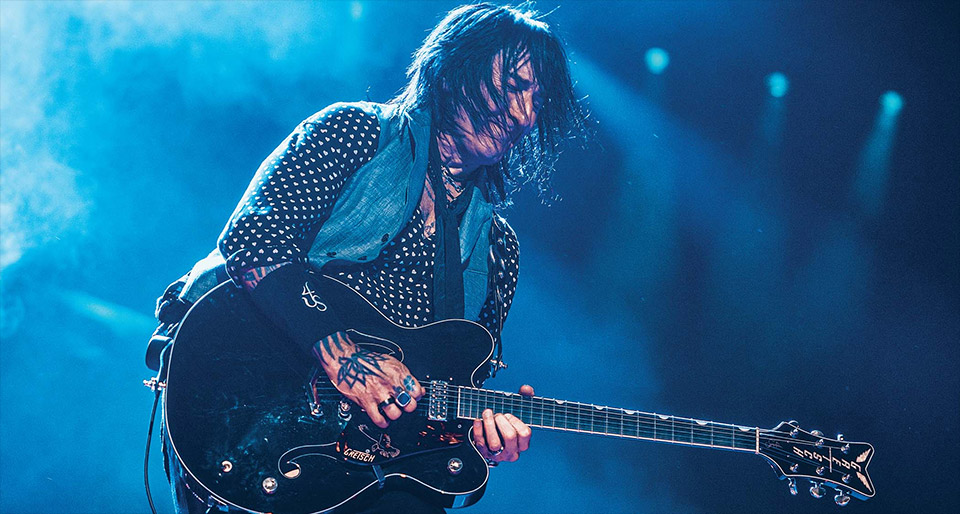
Rose also made another smart move — he hired Richard Fortus (above) as a third guitarist. The consumate professional, Fortus brought a level of stability and insurance that the project had been lacking from day one — and his presence also meant that if Buckethead was to vanish again, Nu-GNR would not be left exposed.

Don’t Watch That Much TV
Once Buckethead returned, Axl was keen to get moving again.
His voice still hadn’t fully recovered from Rock In Rio — now almost eighteen months in the past — but he clearly felt there was no more time to waste and he wanted to appease his unhappy axeman.
So in this haste, Guns N’ Roses accepted a high-profile invitation to close the 2002 MTV Video Music Awards.
It was a disaster.
The unrecovered Rose looked out of breath, out of tune, and just slightly disconnected from everything happening around him. With hindsight, the performance is uncomfortable to watch because you can hear the early traces of the vocal damage that would later become a defining problem — the thinning rasp, the instability, and the high, pinched tone that would haunt him in later years.

The cruel twist is that the rest of the band played well.
Everyone had spent years wondering whether Axl’s bizarre new line-up could handle the old material, only for the frontman himself to emerge as the weak link in an otherwise muscular performance. Buckethead, in particular, looked absurdly overqualified, tearing through Paradise City as if Slash’s frenetic outtro was no more than a finger exercise — and at one point even having the audacity to ad-lib on top of it.
And yet, despite Rose’s poor performance, it was the band who absorbed most of the backlash.
That was partly because Axl had done such a poor job of explaining what this version of Guns N’ Roses actually was. Casual viewers tuning in to MTV were not prepared for cornrows, an oversized NFL shirt, a visibly altered face, and a line-up that looked as though it had been assembled from several entirely different bands. Tommy Stinson’s punk scruffiness, Robin Finck’s gothic futurism, and Buckethead’s serial-killer surrealism made Nu-GNR look less like a natural continuation of Guns N’ Roses and more like a deliberate provocation.
Axl loved that “freak-show” quality.
Most fans did not.

He Lost His Mind Today
To his credit, Rose didn’t retreat after the MTV humiliation.
Instead, he took Nu-GNR on the road for their first full tour, determined to prove that the VMAs had merely been a bad night rather than a fatal verdict.
And for a while, that argument held up.
The European shows were widely praised, Leeds Festival helped restore confidence in his live abilities, and Richard Fortus quickly established himself as a vital part of the band’s sound. With Fortus supporting Buckethead and Finck, the Nu-GNR core became a veritable wall of noise — less dangerous in the old street-gang sense, perhaps, but much more devastating in sheer sonic force.
Then came Vancouver.
A show was cancelled barely an hour before stage time, provoking a riot that saw thousands of furious fans tear through the arena and surrounding area. The organisers blamed Axl. Axl blamed the organisers.
“The band were already inside the arena, and I was flying there. I told the organisers that my plane had been delayed, but that I would still make it, and they immediately put out an announcement over the PA system saying that the concert had been cancelled.”
– Axl Rose
Whether that explanation satisfied anyone is another matter.
To make matters worse for the frontman, his new band’s stellar performances at earlier gigs had piqued the interest of ex-Gunners Slash and Duff, only for this scenario to look horribly familiar — another late-arriving Axl crisis, another riot, another example of exactly the behaviour they had spent years trying to escape.
“I was really pulling for them when I saw that on the news. However, it’s something that you could see coming. We’ve been there too many times to say anything different.”
– Duff McKagan
“It’s a mess, simple as that. And it’s sort of par for the course with Axl. I mean, he finally got out there after all these years of nothing, and he had two choices; either prove us wrong, or screw it up. He screwed it up.”
– Slash
The Vancouver riot badly damaged what had otherwise been a strong tour. Subsequent US dates were played in front of patchy crowds, and the old doubts about Rose’s reliability came flooding back.
Even then, Nu-GNR refused to die quietly.
The band rallied with a clutch of excellent performances, culminating in a triumphant Madison Square Garden show that made it feel as though they might steady the ship after all.
Spin captured the mood perfectly:
“On December 5th, 2002, there was a tangible feeling in the air that the very existence of GN’R hung in the balance. Their no-show in Vancouver meant that a poor performance here at MSG would surely spell doom. So we’re pleased to announce that they absolutely rocked the joint — and, to everybody’s surprise, they even went on early!
Against seemingly unfathomable odds, the reinvented Guns N’ Roses were remarkably fucking awesome.”
– Spin Magazine
And then Axl no-showed Philadelphia.
Another riot ensued, forcing Geffen and the promoters to pull the plug on the remainder of the tour and scrap all dates planned for the following year. Once again, a version of Guns N’ Roses that had looked capable of real momentum found itself back in the ditch through sheer instability.
Remarkably, not everyone in the camp hated the chaos.
Drummer Brain, in particular, seemed to thrive on it.
“I was in the hotel with Buckethead when we heard Axl wasn’t coming.
It was starting to get pretty crazy out there, we could see people throwing chairs and causing damage.
That was life in GN’R, though. I tried to not let it stress me out, because I knew what I was signing up for. If anything, in some ways I actually enjoyed the pressure of working with a guy like Axl, who brought so much chaos to everything!”
– Brain
Brain’s infamous Starbucks story sums up his experience in Guns:
“One time, I believe back in ’02 or ’03, we were due onstage in half an hour and nobody knew where he was. They eventually got his agent on the phone, and it turns out he’s in another city! His agent told the management that Axl is refusing to get on his helicopter until the man in Starbucks gets his cup of coffee right, and we’re all sat there like schoolboys listening in to the conversation.
And the funniest part, the bit that really made me lose it, is that you can hear Axl arguing with this person in the background! They’re telling him he needs to move aside, because I guess there’s a queue building up because he keeps asking for his drink to be re-done, and Axl yells back, ‘Oh, you’ve got a queue? I’ve got ten thousand people waiting on me, motherfucker, and I’m not movin’ till you get this right!’
Ah man, I’ve never really met anyone else like him.”
– Brain
That last line may be the most concise summary of Axl Rose ever recorded.

Hope You Guessed My Name
The riots, cancellations and vanished 2003 dates left Nu-GNR rolling into 2004 with a serious credibility problem.
Axl, for his part, seemed genuinely wounded that fans still hadn’t embraced the new line-up after all this time.
He pointed out that replacement players like Matt Sorum and Gilby Clarke had been accepted quickly enough in the old band, and struggled to understand why the same goodwill had not been extended here.
But the difference was obvious.
When Sorum and Clarke joined Guns N’ Roses, their legitimacy was reinforced almost immediately because the band was still active, visible, and releasing material. Sorum had Use Your Illusion. Clarke had the The Spaghetti Incident?, and both had heavy involvement in the live machine.
The members of Nu-GNR had no such luxury.
By 2004, fans had watched multiple musicians come and go without a proper new album to justify any of them. The stop-start chaos, the endless delays, and the ever-changing faces had turned what might have been an exciting reinvention into something far less flattering: Axl’s hired Guns.
And the harsh truth is that, by then, he had only himself to blame.

Kicking the Bucket
Deflated by another year of inactivity, Buckethead finally walked.
True to form, he didn’t offer a clean resignation or even much of an explanation.
He simply stopped showing up, cut off contact, and left Geffen’s lawyers trying to work out what had happened. One of the strangest details in the entire Nu-GNR saga is that, when questioned about breaking his contract, Buckethead is said to have responded with awkward head movements and a sock puppet perched on his hand.
By this point, even Guns N’ Roses had to draw the line somewhere.
“The last time I spoke to Bucket, he had purchased a bootleg DVD of our Rio ’01 gig and told me how much he loved being in this band and how great he thought each of our performances were on that particular night.
Unfortunately, he then did another disappearing act, and robbed us of the opportunity to become the first artist to headline Rock In Rio three times.
Buckethead has been consistently inconsistent since day one, and his transient lifestyle means that even his closest allies struggle to get in contact with him when he goes underground.”
– Axl Rose
Rose then questioned the guitarist’s motivations.
“Unfortunately, I have it on good authority that he was using his involvement in the GN’R record as nothing more than a means to further his solo career, and attempting to secure himself a lucrative deal with Sanctuary Records — an avenue that I personally made available to him through my industry connections. So, yeah, nice guy!
His behavour has put us in an untenable position, because we feel we have afforded Buckethead every possible accomodation — to the point where we, or more precisely I, have perhaps done GN’R a disservice — so we’re stuggling to see why he has done this to us.
Either way, we appreciate his contributions, and we continue to move forward.”
– Axl Rose
There would be no Disneyland rescue mission and no attempt to smooth things over this time around.
Instead, Axl cut ties and went looking for another guitarist, eventually approaching Ron “Bumblefoot” Thal — an established virtuoso with serious technical pedigree and a résumé that already carried weight in shred circles.
On paper, it made perfect sense.
Unfortunately for him, Thal saw the chaos and wisely kept his distance.
“My life was pretty good, and I was keeping busy with lots of different projects. I wanted to work with Axl but I knew if I joined Guns N’ Roses it would consume everything — and, honestly, the way their management team were acting seemed pretty toxic, so I just left that situation well alone.”
– Ron “Bumblefoot” Thal
Thal’s words do a good job of capturing how Nu-GNR looked from the outside circa 2004. This was no longer an ambitious, overlong recording project. It had become a cautionary tale.
And what Axl didn’t realise, is that time was running out…

The Big Machine
It had been six long years since Axl hired Robin Finck and began assembling his new version of Guns N’ Roses.
That’s the same length of time as the gap between Appetite for Destruction’s release that the end of the sprawling Use Your Illusion world tour — and yet still things were stalling.
Meanwhile, former Gunners Slash, Duff McKagan and Matt Sorum had just announced a comeback.
In early 2004 they formed Velvet Revolver alongside Scott Weiland, and the timing could not have been worse for Axl Rose. Their whole proposition — a lean, straight-ahead hard rock supergroup built from recognisable names and immediate chemistry — landed exactly where Nu-GNR had failed to.
Fans who felt alienated by Axl’s industrial detours embraced it immediately.
Velvet Revolver’s debut album Contraband went Top 10 in several countries and restored Slash, Duff and Matt to the top tier of rock without them needing to explain a thing.
That success appeared to needle Rose.
During a rare television appearance in 2005, he claimed that Slash had repurposed material originally intended for the never-made Guns N’ Roses album of 1996. The song in question was Fall To Pieces — one of Velvet Revolver’s biggest tracks, and one that indeed felt emotionally close enough to late-period GN’R to make the accusation sting a little.
Was he right?
Maybe. Maybe not.
Slash never properly confirmed it either way, but Scott Weiland was less interested in nuance than in bloodsport.
“Get in the ring? More like go to the gym, motherfucker! Or go get a new hairstyle you botox-faced, wig-wearin’ fuck! You’re nothing more than a frightened little man who once believed he was king, but unfortunately now you’re just a memory of the asshole you used to be!”
– Scott Weiland
Subtle, Scott was not.

Sensing how much publicity could be wrung from the situation, Weiland attempted to keep the act going — even dressing up as Rose for a Halloween performance. For a while, it worked. Velvet Revolver looked cool. Nu-GNR looked ridiculous. And by mid-2005, that imbalance had become impossible to ignore.
Because the truth was this:
Nu-GNR had become an industry joke — not due to a lack of talent, not because Axl lacked vision, but because everything surrounding the band had become impossible to defend.
The stop-start schedule. The revolving line-up. The endless producer changes. The widening gap between the classic GN’R image and whatever this new thing was supposed to be. And, above all, the absence of a finished album.
People were no longer waiting excitedly for Axl Rose’s grand design to reveal itself.
They were laughing at it.

Nothing illustrates that better than The Offspring cheekily trying to name their own album Chinese Democracy, then marketing it with the line: “Hey Axl, you snooze you lose!”
That was the level Nu-GNR had fallen to.
And then, just when the whole project seemed beyond saving, the story twisted again.
A Note, Ignored
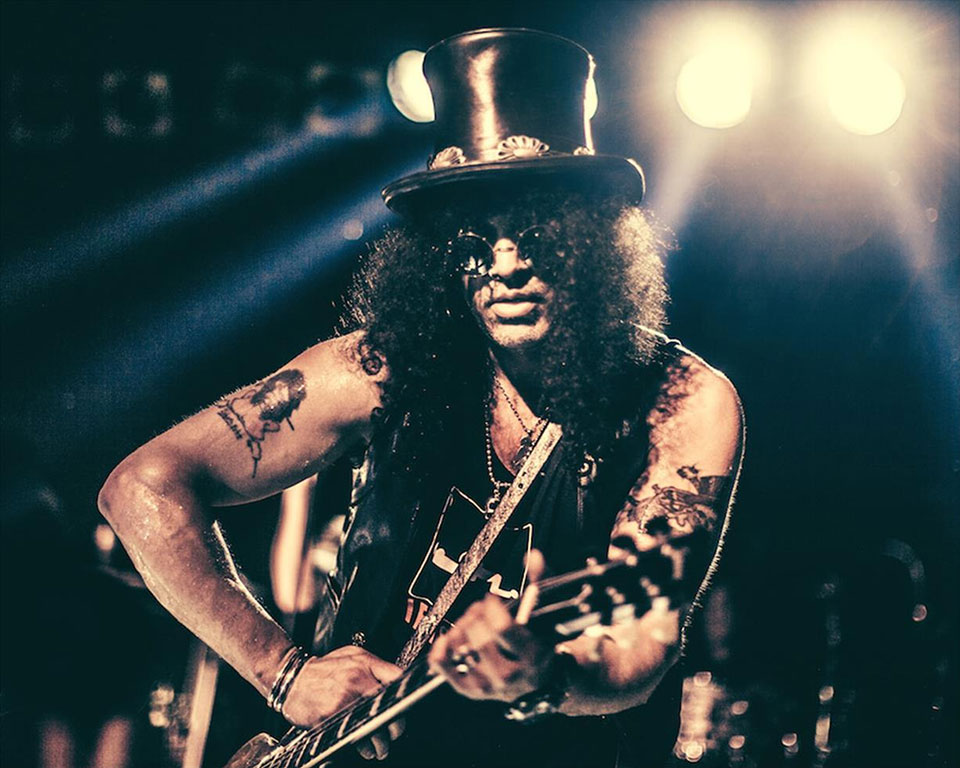
During Velvet Revolver’s own internal decline, Scott Weiland’s increasingly erratic behaviour became so exhausting that Slash began to look at Axl with different eyes.
Weiland’s obsession with baiting Rose no longer felt funny to his bandmates — if anything, it threatened to poison whatever chance remained of saving their relationship in the future.
So Slash did something remarkable.
He went to Axl’s house.
“Yes, I went to see Axl. I’d had a lot to drink, and I wanted to hash everything out to see if we could get the old GN’R back together again.
We’ve had our problems, but I love the guy.
I called at the front gate of his home but he wasn’t there, so I wrote a note which said something like, ‘Let’s work this out, call me – Slash’ and I handed it to his assistant. Unfortunately, I never heard back from him.”
– Slash
That is one of the most astonishing details in the entire post-breakup saga, because it reveals how close the impossible came to happening.
Axl’s long-time assistant Beta Lebeis later claimed Slash was very drunk, stood outside ranting about the chaos in Velvet Revolver, and made it clear that he wanted to fix things with Axl and put the old band back together.
According to her, Rose’s response was simple:
He threw the note away.
That one gesture tells you almost everything about the emotional state of Nu-GNR by the mid-2000s. This was not just a band trapped in delays and dysfunction. It was a project sustained, at least in part, by Axl’s refusal to let the old story have the ending everyone else wanted.
After Velvet Revolver’s implosion, even Scott Weiland would soften.
“Well, I guess it’s ironic that my recently ex-bandmates are regurgitating the same stories about me that they once did with Axl Rose, huh?
I heard all the same crazy tales from them — their old singer was demonised, and I used to think that Axl must’ve been such a troll to work with. But, having now been through this myself, let’s just say I’ve got an entirely different opinion of him today.”
– Scott Weiland
That doesn’t rewrite history.
But it does complicate it.
And that, more than anything else, is what makes the Nu-GNR story so compelling: the deeper you dig, the harder it becomes to keep pretending it was ever as simple as “Axl lost his mind.”

On the Nightrain
Watching his former bandmates thrive in Velvet Revolver seemed to light a fire under Axl Rose.
Across 2006 and 2007, he found a level of consistency that many had assumed was gone for good, and Nu-GNR suddenly began to resemble one of the strongest live acts in rock.
The turning point came on the festival circuit: the band’s appearance at Rock am Ring in June 2006 remains one of the most important shows of the era, and their performance at Download the same week did a huge amount to win over a deeply sceptical British crowd.
For once, the conversation was no longer about whether this version of Guns N’ Roses could survive. It was about how good they had quietly become.
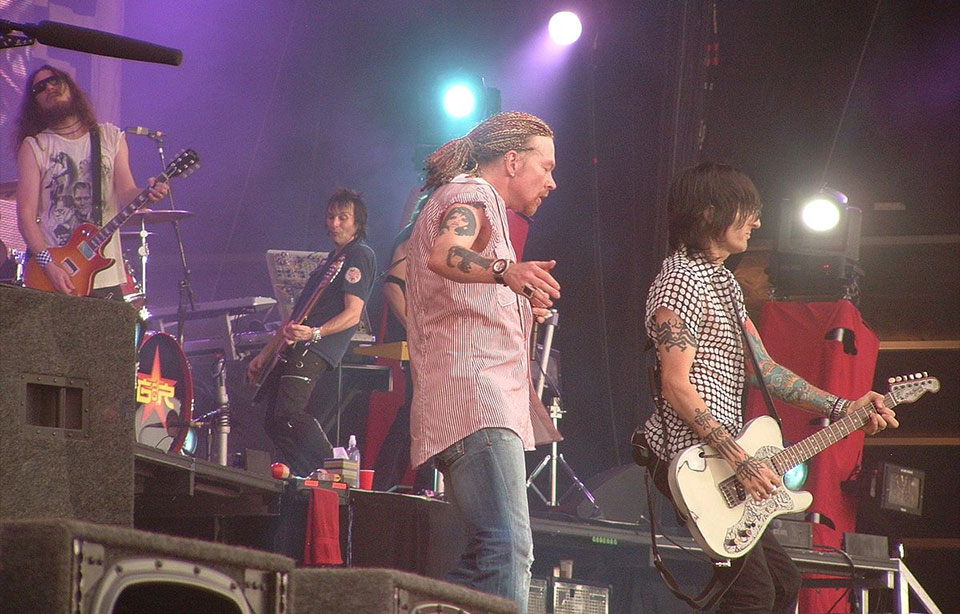
The line-up had evolved, too.
Drummer Brain had decided to step away on paternity leave, and Richard Fortus suggested bringing in Frank Ferrer. Initially only a temporary move, it became permanent shortly afterwards when Brain expressed a desire to remain at home long-term. Also, after years of circling the project, Ron “Bumblefoot” Thal finally joined to fill the void left by Buckethead, restoring Axl’s preferred three-guitar setup and allowing Fortus to drop back into his preferred suport role.
Bumblefoot later admitted that the settling-in process was rougher than he expected:
“Axl was always nice to me, but the others weren’t very accomodating.
I guess they had gotten used to playing with two guitarists or whatever.
They would exclude me from conversations, make me travel alone, stuff like that. Eventually, one of them really crossed a line, and I got a little bit violent. I think that’s when they realized they couldn’t push me around or make me quit. They stopped being jerks after that.
Either way, though, my loyalty was solely to Axl. He had pursued me for more than two years, and given me a lucrative contract that still allowed me to do side-projects. I was keen to repay the faith he had placed in me, you know?
Of course, I definitely underestimated the size of the shows we would be playing! I figured we’d be doing like House of Blues venues, but three days after joining we jetted off to Europe to play in front of 100,000 fans!”
– Ron “Bumblefoot” Thal
Thal’s words hint at a subtle change in the narrative; by 2006, Nu-GNR no longer felt like a rehearsal room science project. It was a functioning stadium band, and they were finally getting rave reviews everywhere they went.
And then, in late 2007, Axl did something even more unexpected: he began releasing music again.
A guest appearances on Sebastian Bach’s solo album marked his first official studio work since Oh My God in 1999, and the positive reaction clearly gave him fresh confidence. Soon after, new track Shackler’s Revenge was lined up for the videogame Rock Band 2, and If the World was used over the end credits of Ridley Scott’s Body of Lies.
For a fanbase trained to expect delay, silence, and collapse, this sudden burst of activity felt almost suspicious.
And then, against every instinct developed over the previous decade… HE DROPPED THE ALBUM.

Chinese Democracy is Released
Chinese Democracy finally arrived on 23 November 2008.
By that point it had become less an album than a punchline, a rumour, a money pit, and a cultural dare.
Fourteen years in the making, it remains the first and only full studio statement from Nu-GNR — the record that had consumed half a generation and nearly collapsed under the weight of its own mythology before anyone could hear it.
And when it did arrive, the first thing it confirmed was that Axl had been telling the truth all along.
This was never going to be a back-to-basics hard rock revival. Where Appetite For Destruction felt feral and immediate, and Use Your Illusion sounded like a great rock band discovering the possibilities of scale, Chinese Democracy sounded like one man chasing an exact idea through endless layers of technology, money, revision, and control. It is meticulous to the point of obsession — a record polished, re-polished, and reconstructed until it resembled the exact version Axl had been hearing in his head since the mid-’90s.
That, inevitably, made it divisive.
Some critics admired Rose’s refusal to trade on nostalgia. Others heard a hugely expensive, overworked monument to self-indulgence.
The Lincoln Journal was among those willing to meet the album on its own terms:
“Despite all of the pressure, Axl Rose has succeeded in making a very decent record. It’s one that easily links up to the band’s previous efforts, and features some truly amazing moments. But it also trips over itself at times — because despite numerous examples of Rose lashing out at anyone with the temerity to confront him, lyrics like “Don’t you try to stop us now” (Scraped) don’t ring true from a man who has spent more than a decade stopping himself.”
– The Lincoln Journal
Rolling Stone was another:
“His long march towards Chinese Democracy was never about paranoia or control, it was about saying ‘I won’t’ when everyone insisted ‘You must.’ You can debate whether any rock record is truly worth such a wait, or that level of self-indulgence, but perhaps the most rock and roll thing about Chinese Democracy is that Axl Rose really doesn’t give a fuck whether any of us like it or not…”
– Rolling Stone
That feels about right.
Because whatever else Chinese Democracy is, it is not timid.
To its credit, the album contains some sublime moments. This I Love finally emerged after years in limbo, complete with one of Robin Finck’s most emotional guitar performances. Street Of Dreams and If the World gave Rose room to show off the strange elasticity his voice still possessed in the studio, while There Was A Time exploded into one of the album’s most thrilling stretches, driven by what is perhaps the best vocal performance of Rose’s career and a Buckethead solo so outrageous it briefly sets the record on fire.
And despite the constant line-up changes, Axl made sure all of them were featured — current members, departed members, Josh Freese’s original drum architecture, Buckethead’s wild lead work, Finck’s bending solos, Brain’s feel, everybody.
In a way, Chinese Democracy became less a snapshot of one band than a shrine to the entire Nu-GNR experiment.
Even Slash seemed to appreciate it:
““It’s great to hear Axl’s voice again after all this time. I’m happy he got to make the album he wanted to make, and I can see now, that if this is what he was hearing inside his head back in ’95, it probably goes a long way to explaining why there was such tension between us, right? Because back then, musically, I was in a totally different space.”
– Slash
Slash’s words confirm what had been clear to many fans for years: Axl Rose had not spent the best part of a decade sabotaging Guns N’ Roses out of spite or indecision alone. He had spent it trying, obsessively and often destructively, to drag the band toward a sound that only he could fully hear.
And when Chinese Democracy finally arrived, the strangest part about it was this:
He had actually done it.

Sick of This Life — Not That You’d Care
Despite finally releasing Chinese Democracy, Axl Rose was in no mood to celebrate.
He was furious that Geffen/Interscope had refused his request for another two weeks to fine-tune the album’s artwork — seriously — and he responded in the most self-destructive way imaginable: by refusing to promote the record at all.
No interviews.
No major public appearances.
No music videos.
Nothing.
For an album that had spent fourteen years building near-mythical anticipation, this was a spectacular act of self-sabotage. Instead of capitalising on the attention Chinese Democracy had generated, Rose allowed the moment to drift away. Six months of inactivity followed, and lead guitarist Robin Finck had finally had enough.
“There was no real involvement from Geffen / Interscope throughout the process of making this album. Everyone in the band hates the record company as much as I do, because they never helped us — from recording, to marketing, to artwork.
So I have no sympathy for them with regards to the current state of the music industry and all the piracy, because they have brought it upon themselves.”
– Axl Rose
Finck’s departure mattered — not just because he had been a key fixture of Nu-GNR from the beginning, but because it once again reinforced the same old pattern: every time momentum started to gather, something gave way.

I Am Unstoppable
Bt late 2009, Axl snapped out of his funk and took the band on the road.
Determined to maintain the band’s three-guitar approach, he plugged the gap left by Robin Finck with DJ Ashba from Sixx:A.M.
Ashba brought a very different energy to the group — less haunted than Buckethead, less gothic than Finck, and more openly excited by the sheer scale of what Guns N’ Roses represented. That enthusiasm seemed to rub off on Rose, who attacked the early part of the Chinese Democracy world tour with far more purpose than many expected.
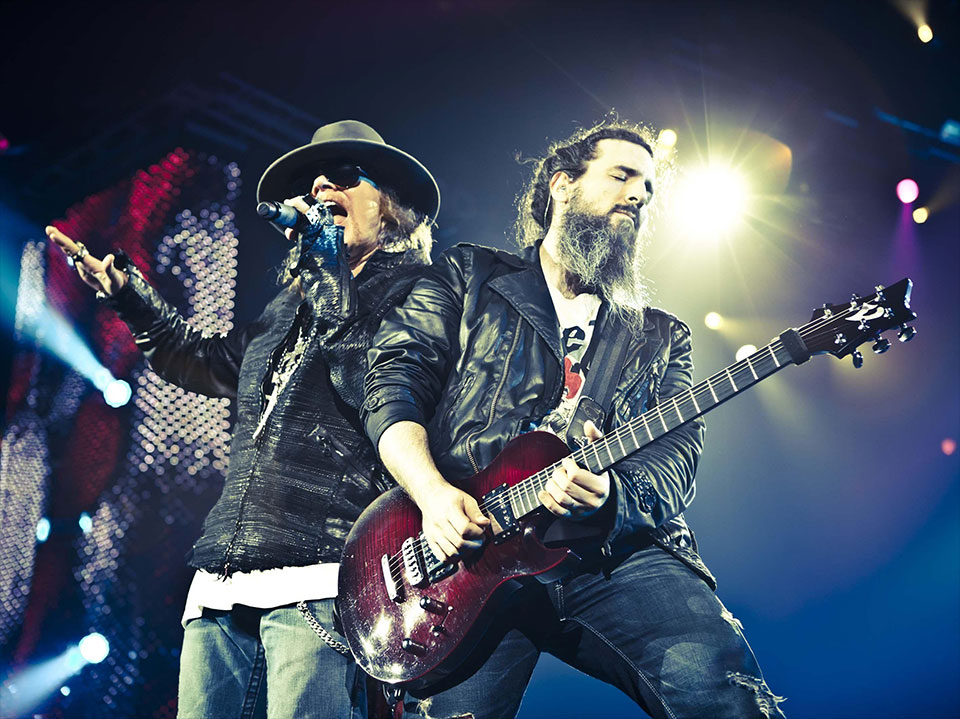
Nu-GNR became a serious live machine. They toured relentlessly, played some excellent shows, and gave Chinese Democracy the onstage life it had been denied during release week. More importantly, Rose still seemed fully committed to this version of Guns N’ Roses. His loyalty was perhaps most clearly demonstrated when he famously declined his own Rock & Roll Hall of Fame induction.
It was a deeply Axl move — part principle, part pettiness, part solidarity — but to the musicians around him it meant something very real.
They knew the Rock Hall was quietly hoping for a classic-line-up reunion photo-op, and they knew Rose had chosen not to give them one.
“That really meant something to us.
See, you’ve gotta realise, Axl could’ve bailed on us at any moment and been paid a stack of money to get his old band back together.
Instead, he chose to stay in the trenches with us and fight to get our record made. He got lots of terrible press along the way, I mean wow, I’ll never forget that. I’ve got nothing but nice things to say about Axl Rose, and my time within Guns N’ Roses will be fondly remembered.”
– Tommy Stinson
Unfortunately, time was catching up with Axl.
The damage done to his voice several years ago was becoming increasingly difficult to disguise, and by the time the band’s Las Vegas residency wound down, the sense of strain was obvious.
Despite lasting far longer than most people had expected, Nu-GNR was not going to survive forever.
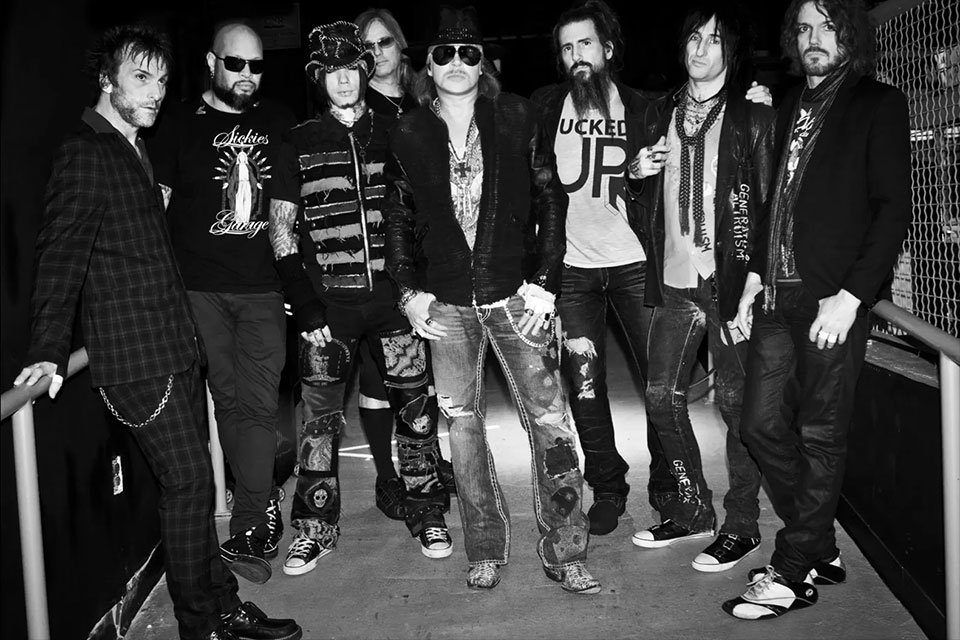
Dead Era 13-15
Once the touring stopped, the project came apart at the seams.
Axl wanted time off to let his voice recover, and he still spoke of releasing a second and even third album from the Chinese Democracy sessions — but before any of that could come to fruition, Nu-GNR was hit by a run of exits that effectively killed it off.
First Tommy Stinson decided he was done. Then Ron “Bumblefoot” Thal left to focus on other work. And when Sixx:A.M. began gathering real momentum, DJ Ashba chose that path instead.
Suddenly, the band was down to Axl Rose, Richard Fortus, Frank Ferrer and Dizzy Reed.
At that point, the problem wasn’t simply that the line-up was changing again. It was that the audience had no appetite left for another rebuild. Fans had spent years waiting for Chinese Democracy, then more years waiting for whatever was meant to come next. By the middle of the 2010s, very few people still believed Rose would ever finish the promised follow-ups, and fewer still wanted to watch him assemble another version of Guns N’ Roses.
Unlike the classic line-up, Nu-GNR hadn’t collapsed in a dramatic explosion.
It had simply run out of road.
And yet, in the Axlverse, you never really know what’s coming next…
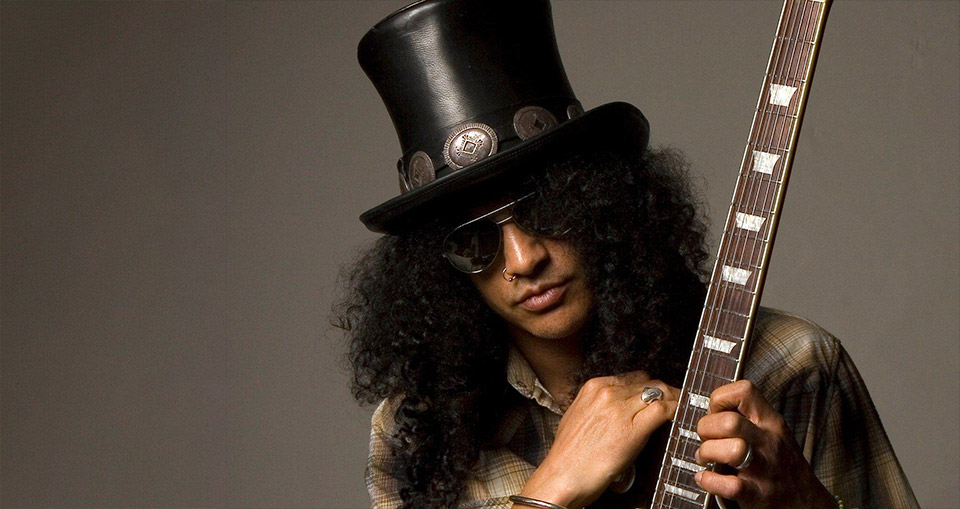
A Note, Answered
Rumours of a calssic Guns N’ Roses reunion had circulated forever, but by early 2015 something felt different.
The noise was everywhere.
And when the impossible finally happened, even hardened fans struggled to believe it.
First, Slash announced on his social media pages that he was returning to Guns N’ Roses. A few moments later, Duff McKagan announced that he was coming with him.
And, much like Axl’s wild decision to introduce Nu-GNR on the grand stage of Rock In Rio all those years ago, this hybrid of old and new (which still featured remaining members Richard Fortus, Frank Ferrer, and Dizzy Reed) would be unleashed infront of 125,000 fans at the upcoming Coachella festival.
Just like that, the one ending Axl had resisted for almost two decades was upon us.
Not every old face returned. Izzy Stradlin and Steven Adler remained outside the full-time line-up, and Rose drafted in Melissa Reese — on former drummer Brain’s recommendation — partly to help thicken the arrangements and partly to give the ageing Rose more support onstage.
In keeping with the chaos that had always defined them, Guns N’ Roses chose to host a warm-up gig at the Troubador on 1 April 2016. Note the date. Because despite fans’ elation, there remained a genuine sense of uneasiness — a feeling that if anyone was brazen enough to give one last middle finger to the world by playing the greatest April Fool’s prank in rock history, it was Axl Rose.
Perhaps even more surprising is that he didn’t.
The reunion turned out to be very real — as was the onstage chemistry, and the looks of happiness etched across the faces of the newly reformed Gunners.

What was initially presented as a limited run of dates to celebrate the 30th anniversary of Appetite for Destruction morphed into the colossal Not In This Lifetime tour, one of the most lucrative concert runs in rock history. That title — borrowed from Axl’s own once-furious insistence that he would never reunite with Slash — told its own story.
The reunited band has remained functional and toured relentlessly for more than a decade since then. They have also occasionally dipped into the Chinese Democracy archives, re-working a selection of songs that were originally intended for the never-realised follow-ups (these include the experimental Absurd, Atlas, Perhaps, and The General, as well as Slash-tastic versions of straight-ahead rockers Hardskool and Nothin’).

And that is perhaps the strangest final twist of all.
For years, Nu-GNR was dismissed as a mistake, a vanity project, or a grotesque detour on the road back to the “real” band.
But that’s too simple.
Nu-GNR was the bridge.
It kept the name alive. It helped Axl realise Chinese Democracy. It gave him a way to keep moving forward when the old story had turned to ash around him. And even if the project never fulfilled its own maddening level of promise, it still mattered — not just as a footnote to the reunion, but as one of the strangest, most ambitious, and most misunderstood chapters any major rock band has ever produced.
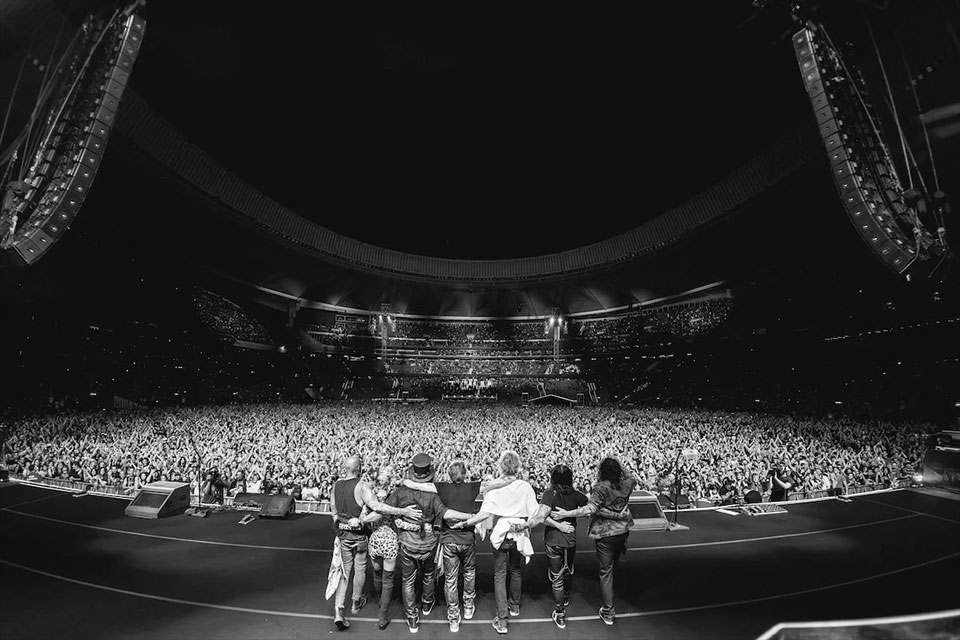
Nu-GNR — Final Word
Ultimately, Nu-GNR failed.
It failed to deliver quickly. It failed to hold a stable line-up. It failed to win over fans in the way Axl had hoped. And it failed, repeatedly, to seize the momentum of its own best moments.
But it was never empty.
There was too much talent, too much ambition, too much chaos, and too much obsession for that. Nu-GNR was occasionally brilliant, and frequently infuriating. And in the end it stands as the clearest possible expression of both Axl Rose’s greatest strength and his greatest weakness: his absolute refusal to let anybody else decide what Guns N’ Roses is.