
These Go To Eleven Says:
This 4-disc collection of outtakes and B-sides contains some real bangers, but its monstrous size will only appeal to superfans and collectors.
★ ★ ★ ★ ★ ★
STANDOUTS The Radio Saved My Life Tonight · Good Guys Don’t Always Wear White · Garageland
6/11
Flawed
Album details & credits
- Title
- 100 Million Fans Can’t Be Wrong
- Artist
- Bon Jovi
- Released
- November 16, 2004
- Label
- Mercury Records
- Produced by
- Pat Leonard, Obie O’Brien, Andy Johns, Jon Bon Jovi and Richie Sambora
- Key personnel
- Jon Bon Jovi (vocals, guitar) · Richie Sambora (guitar, backing vocals) · Alec John Such (bass) · Hugh McDonald (bass) · David Bryan (keyboards) · Tico Torres (drums)
- Singles
- The Radio Saved My Life Tonight
- Chart performance
- No. 53 on Billboard 200 Chart · No. 90 on UK Album Chart
- Total sales
- 800,000
- Certification
- Gold
- Score
- ★ ★ ★ ★ ★ ★
Bon Jovi – 100 Million Fans Can’t Be Wrong (2004) Review
Love them or loathe them, Bon Jovi have never made a habit of doing the bare minimum.
Most bands would mark a twentieth anniversary — and a headline-friendly “100 million” sales milestone — with a tidy Greatest Hits collection and a victory lap tour.
The New Jersey giants chose to go in a vastly different direction. First with This Left Feels Right, where they reworked a handful of classic tracks into moody acoustic performances, and twelve months later came 100 Million Fans Can’t Be Wrong; a sprawling four-disc archive loaded with soundtrack cuts, alternate versions, B-sides, and vault strays scattered across three decades.
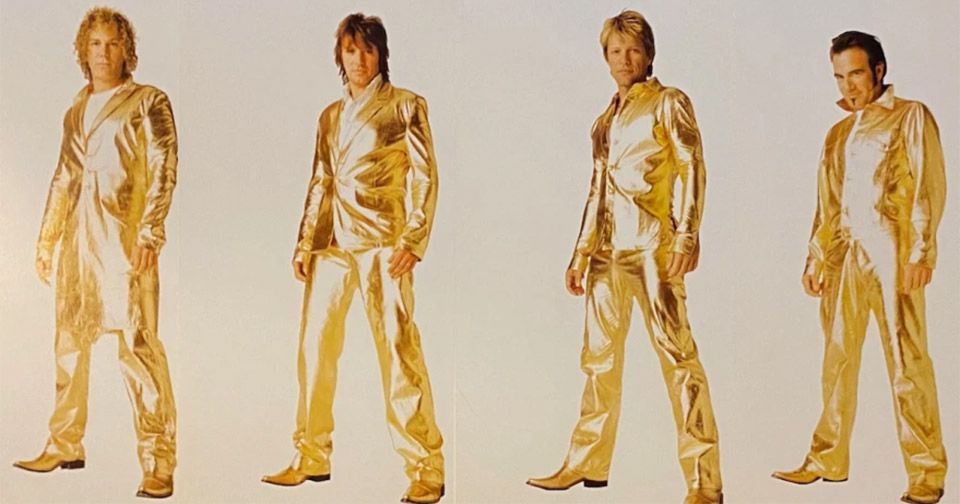
It isn’t subtle. It isn’t streamlined. But, as the gold suits suggest, it is very, very Bon Jovi.
The Good, The Bad, And The Unnecessary
Here’s the thing about 100 Million Fans Can’t Be Wrong: the scale is both the point and the problem.
It’s confirmation that Bon Jovi’s much fabled “vault” wasn’t a music industry myth — this band really did operate at a volume most of their contemporaries couldn’t match.
And because this compilation arrived in the pre-YouTube era, much of it was genuinely “new” to a their fanbase — especially those weren’t familiar with hunting down imports, special edition, and limited-run singles.
It’s hard to fault a band who provide this kind of dedication to their listeners.
But fifty-one tracks is less a “collection” than an ecosystem, and quality inevitably dilutes quality. There are demo versions of Always and Livin’ On A Prayer which will only really appeal to completists, and more than a handful of acoustic sketches that drift by without revealing much beyond “yes, this existed at one point.” Fascinating in a museum sense, perhaps. Essential? Not quite.
Still, persistence is rewarded. Because buried in the rough are a good eight to ten tracks that are far stronger than mere curios. Fully-formed, hooky, energetic — the kind of material that, in a different timeline, could have bolstered various studio albums and changed how we remember certain eras.
Finding The Gems
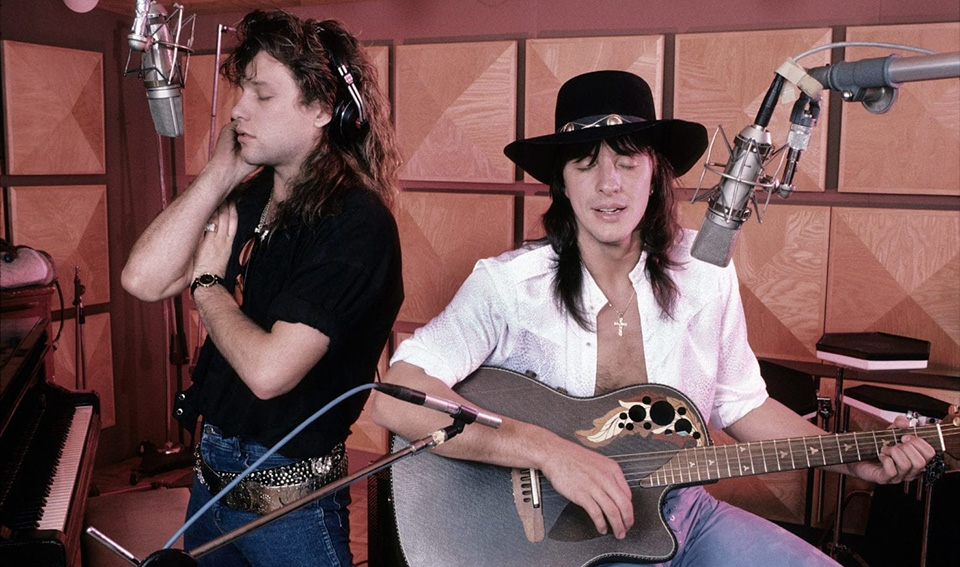
If there’s one track that justifies the price of admission, it’s Good Guys Don’t Always Wear White.
This barnstorming rock cut, whihc features an exceptional vocal performance from Jon Bon Jovi, was originaly written for the soundtrack to The Cowboy Way as a favour to his Young Guns II pal Keifer Sutherland. However, when the movie bombed at the box office, its soundtrack disappeared from shelves. The song was reportedly earmarked for use on 1995’s These Days, too, but was cut at the eleventh hour as the band felt it didn’t fit the record’s mood.
And then it simply… vanished.
It serves as an audible question mark, as we ponder how many other great moments never became “Bon Jovi canon” purely because of timing and context. For example, the previously unreleased Slippery When Wet outtake Edge Of A Broken Heart does a fine job of showing just how hot the band’s hand was back in 1986. Strong enough to have carried a single release on its own, it’s quietly maddening that it took almost two decades to be given a proper platform.
This is the real selling point of 100 Million Fans — not the sheer volume, but the handful of songs that finally getting the spotlight they always deserved.
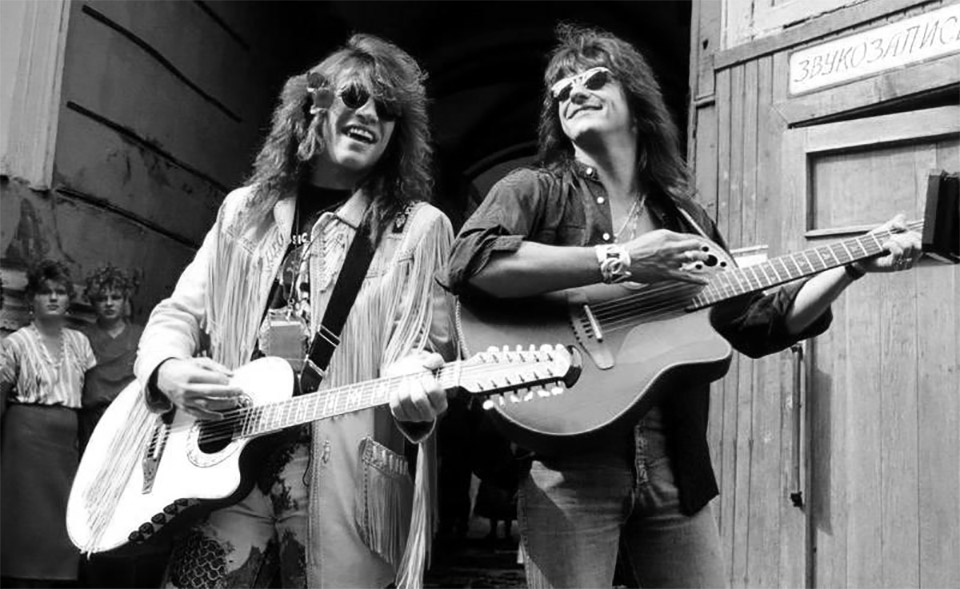
“Edge Of A Broken Heart is a regret of mine. It coulda, woulda, shoulda been on Slippery When Wet had cooler heads prevailed at the time. By releasing it now, consider this my formal apology.”
– Jon Bon Jovi

Digging Deeper
Beyond the standouts, there are more diamonds than you’d expect.
The infectiously catchy Bryan Adams-esque rocker Garageland serves as a quiet reminder that, beneath the superstardom and corporate machinery, this is largely the same group of musicians who have been having fun together since the days when Jon Bon Jovi would sweep the floors of his uncle’s recording studio in exchange for a scrap of free time in the booth.
Elswehere, you’ll find Flesh And Bone and Taking It Back which, despite lacking a solid verse structure, manage to successfully double down on the kind of soaring choruses that made Bon Jovi a stadium-level proposition in the first place.
Early-90s outtake The Radio Saved My Life Tonight captures a band mid-transition, as they began stripping bombast from their arsenal and leaning into a sturdier, more grounded strain of rock at a time when the industry was changing fast as a result of the grunge wave. It works as a neat bridge between 1992’s Keep The Faith and the aforementioned These Days, while perhaps never fully belonging to either record.
Finally, bouncy 1995 effort Why Aren’t You Dead? catches the New Jersey rockers in a rare spiteful mood — it’s petty, it’s perfect, and It delivers one of the most gloriously abrupt lines of their career:
"You said you couldn't live without me, so why aren't you dead?"

Why Aren't You Dead?
Adaptation
Bon Jovi’s longevity isn’t just down to hooks and haircuts — it’s their ability to recalibrate without completely severing the thread.
The pivot from ’80s gloss (synth sheen, big-sky melodrama) to a leaner, more narrative-driven approach in the early ’90s didn’t merely refresh the sound; it kept them commercially viable at a point when hard rock was being squeezed.
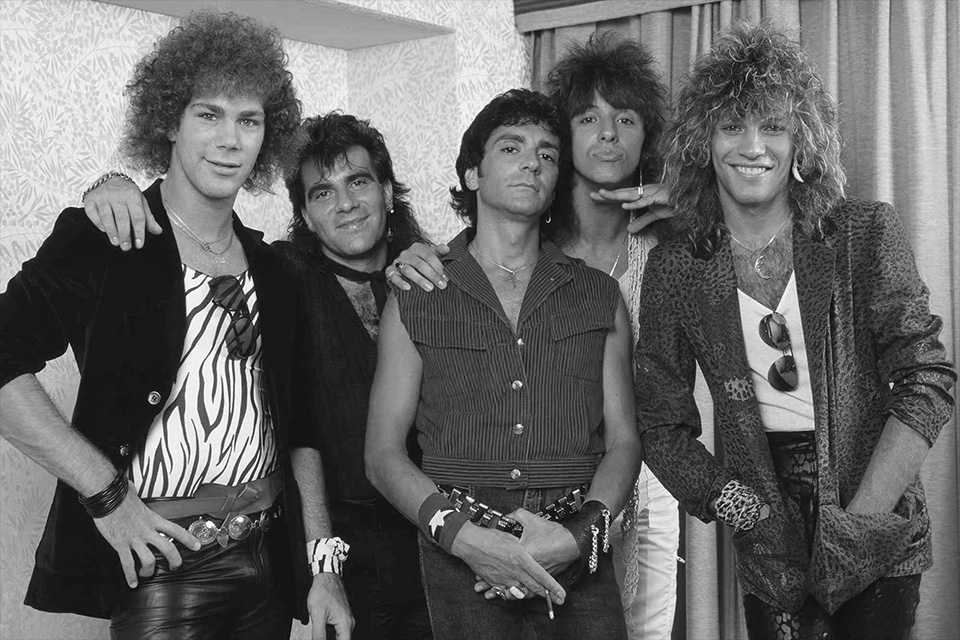
What makes 100 Million Fans Can’t Be Wrong more interesting than a simple rarities dump is that you can hear those adjustments being made in real-time. Across the four discs, the material maps out five different phases of the band’s evolution — the early years (1983-1985), the hair metal peak (1986-1989), the harder-edged transition (1990-1994), their experiments with a stripped-back sound (1995-2000), and the It’s My Life era (2001-2004).
Even when the quality dips, this sprawling boxset functions as a working timeline of how often Bon Jovi’s factory settings were tested in the face of changing tides.

Bon Jovi – 100 Million Fans Can’t Be Wrong
Bon Jovi don’t just have a catalogue — they have a shadow catalogue.
Taken as an archive, 100 Million Fans Can’t Be Wrong is generous to the point of self-sabotage.
After all, fifty-one tracks means that highlights are inevitably surrounded by sketches, demos, and “nice to have” detours that feel more like documentation than songs you’ll actually return to.
Yet the highlights are very real, and when these outtakes land — especially the material from the 1990s, where it feels like the writing is tighter and the performances lean harder into grit and momentum — this doesn’t sound like leftovers. Instead, it sounds like a band leaving perfectly usable rock songs on the cutting-room floor because the main albums simply ran out of space.
FINAL VERDICT:
This 4-disc collection of outtakes and B-sides contains some real bangers, but its monstrous size will only appeal to superfans and collectors.
★ ★ ★ ★ ★ ★
6/11
Flawed
See Our Reworked Tracklist
These Go To Eleven
Reworked Tracklist
Our reworked tracklist strips the album down to a single-disc collection that’ll have you asking “How did this get cut?!”. It removes quality dilution from the equation and, had this tighter version been released, our score woud’ve risen from 6/11 to 7/11.
Here’s how to listen to Bon Jovi: 100,000,000 Fans Can’t Be Wrong (2004) for maximum impact:
- Good Guys Don’t Always Wear White (4:29) ★
- Edge Of A Broken Heart (4:34)
- Thief Of Hearts (4:15)
- Garageland (3:25) ★
- Why Aren’t You Dead? (3:30)
- Taking It Back (4:16)
- Flesh & Bone (5:00)
- The Radio Saved My Life Tonight (5:07) ★
- Maybe Someday (4:22)
- Open All Night (5:47)
- Rich Man Living In A Poor Man’s House (4:20)
- Sympathy (5:23)
- Real Life (3:50)
- Love Ain’t Nothing But A Four Letter Word – Demo Version (4:07)
★ Standout track
STANDOUTS The Radio Saved My Life Tonight · Good Guys Don’t Always Wear White · Garageland
MORE READING 100 Million Fans Can’t Be Wrong (2004) is part of our Bon Jovi review series.
Further reading
Continue the Bon Jovi story.
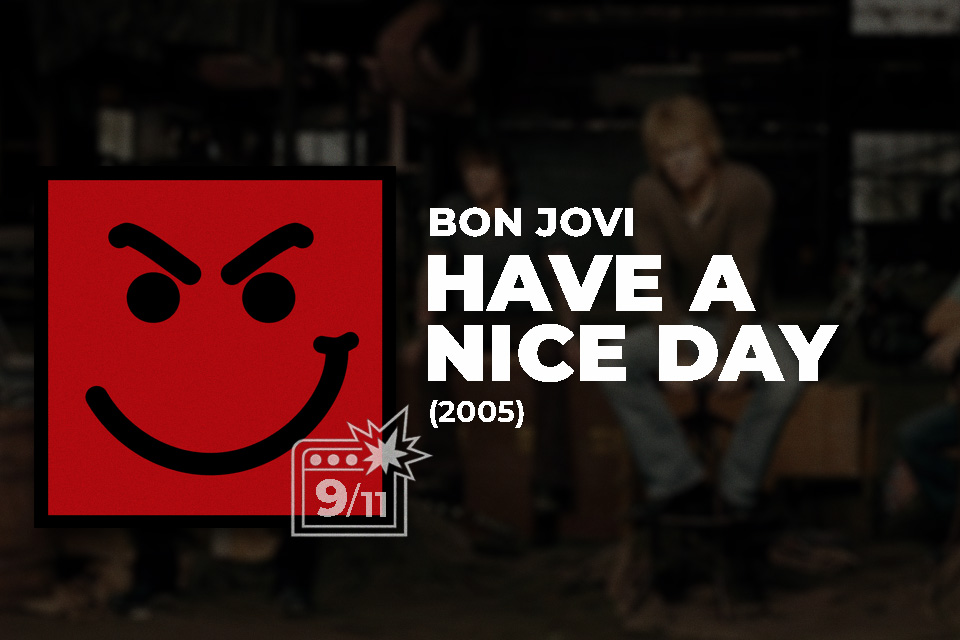
Bon Jovi’s best work in over a decade.
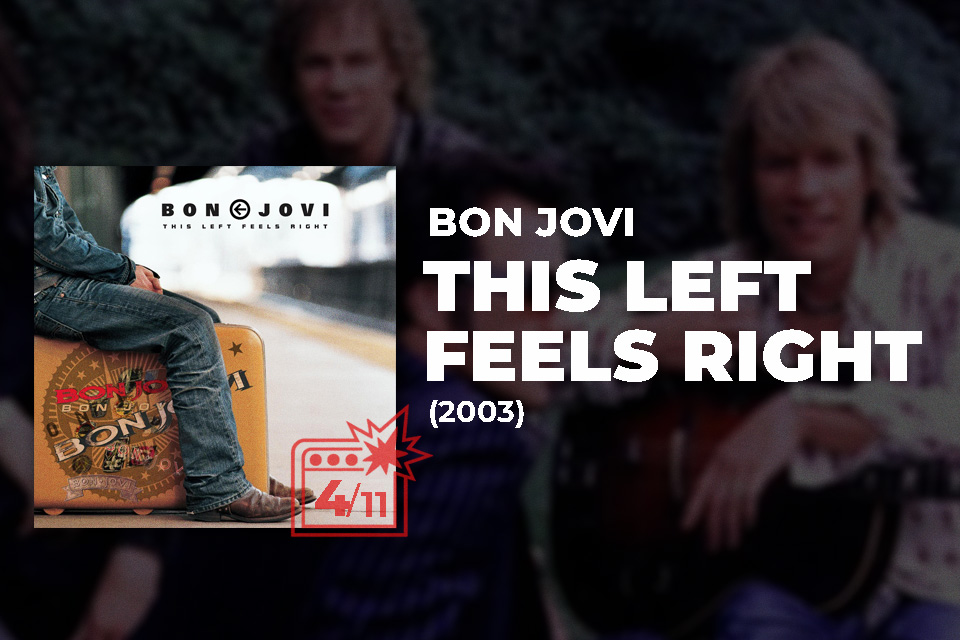
Re-imagined versions of their classic hits seemed like a cool idea at the time…
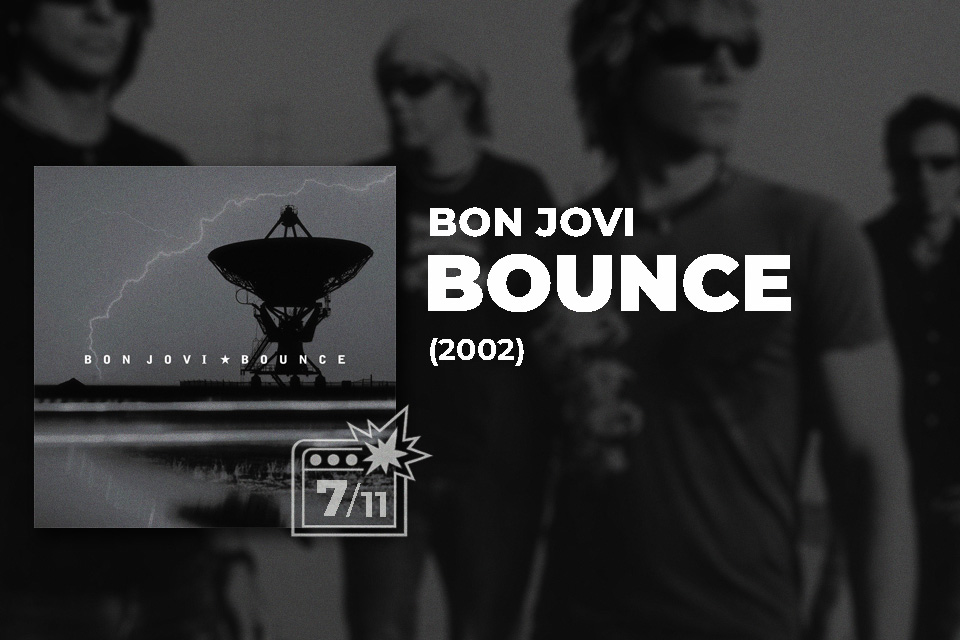
Largely an extension of Crush, the powerful 9/11 overtones of Bounce make up for a lack of hit singles.

Explore the full Bon Jovi album guide
Few bands have navigated reinvention quite like Bon Jovi. From their mid-’80s breakthrough to the country detour of the 2000s and post-Sambora rebuild, their catalogue charts the evolution of arena rock across five decades.