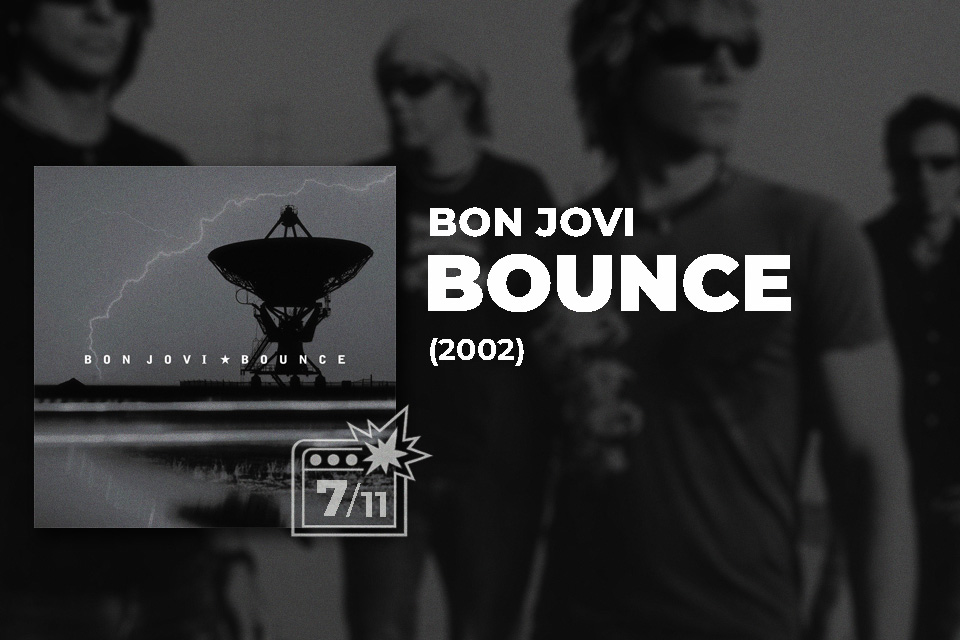
These Go To Eleven Says:
A heavy, post-9/11-shaded arena record with real moments — but too much ballast and a lack of top-tier ballads stop it soaring.
★ ★ ★ ★ ★ ★ ★
STANDOUTS Undivided · Everyday · Bounce
7/11
Solid
Album details & credits
- Title
- Bounce
- Artist
- Bon Jovi
- Released
- October 8, 2002
- Label
- Mercury Records
- Produced by
- Luke Ebbin, Jon Bon Jovi and Richie Sambora
- Key personnel
- Jon Bon Jovi (vocals, guitar) · Richie Sambora (guitar, backing vocals) · Hugh McDonald (bass) · David Bryan (keyboards) · Tico Torres (drums)
- Singles
- Everyday · Misunderstood · Bounce · The Distance · All About Lovin’ You
- Chart performance
- No. 2 on Billboard 200 Chart · No. 2 on UK Album Chart
- Total sales
- 3,000,000
- Certification
- Platinum
- Score
- ★ ★ ★ ★ ★ ★ ★
Bon Jovi – Bounce (2002) Review
After reclaiming their throne with Crush, US rockers Bon Jovi put the pedal to the metal.
Eigth studio album Bounce took the biggest moments from its predecessor and attempted to push them even further — heavier guitars, bigger declarations, more arena-ready melodrama.
This is Bon Jovi written in capital letters with a thick marker pen.
But the catch with maximalism is that it has a flip side — Bounce hits hard, but it doesn’t always hit clean.

Another Hit For The Collection
Bon Jovi have always been a singles machine.
By this point in their career, it is to be expected that each new record brings with it a massive radio-hogging hit that’ll eventually occupy a spot on what will surely be one of the best Greatest Hits collections of all time.
In the Bounce era, that job fell to Everyday.
This track is three minutes of chorus-first, fist-pumping arena rock; brisk, hooky, and powered by the same “keep going” lyrics that Bon Jovi could probably sell in their sleep. Although it never achieved the cultural heights of previous smash It’s My Life, it is catchy enough to warrant repeat listens. It also did the job commercially, peaking at No. 5 in the UK — an “unexpected smash” only if you’ve forgotten how reliable this bard are at turning this exact formula into radio gold.
“I like the fact that the word ‘bounce’ means different things to different people. For me it’s about when adversity strikes — you fucking bounce back, no questions asked.”
– David Bryan
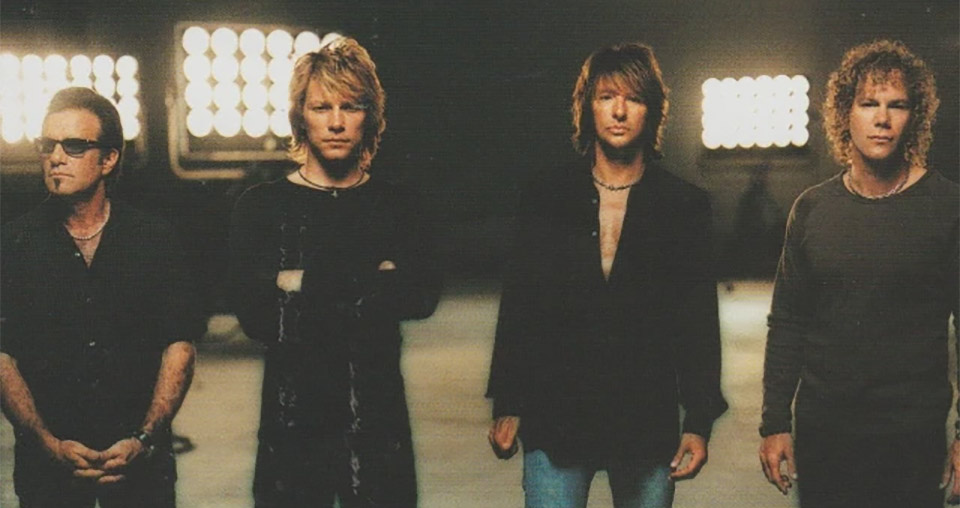
Challenging Times
Several of Bounce’s building blocks were already on the table during the tail-end of the Crush era.
Then the 9/11 tragedy occurred, just a stone’s throw away from the band’s beloved New Jersey, and this record’s emotional centre of gravity took a sudden left turn.
Instead of focusing on the MTV-sized optimism of days gone by, Jon Bon Jovi began leaning harder into resilience, urgency, and a stark display of raw nerves in the face of the worst atrocity the US had witnessed in a generation.
As a result of this unplanned shift, Bounce is a record that earns its title beyond just marketing. Indeed, it really does bounce — glossy arena-sized rock one minute, jagged emotional moments the next. It’s not subtle in the slightest, and it isn’t always smooth in transition, but it creates an audible “time capsule” of a band who became the voice of hope at a time when their fellow Americans needed them the most.
“It’s always been our way, to try to find the optimism in everything, you know? We wrote Keep The Faith after the riots in LA, and we wrote songs like Everyday and Bounce after what happened at the World Trade Center. This is just how we’re hard-wired, as people, that when things affect us on an emotional level we have to find a way to push through the hurt and the shock and be optimistic that things are gonna get better.”
– Jon Bon Jovi
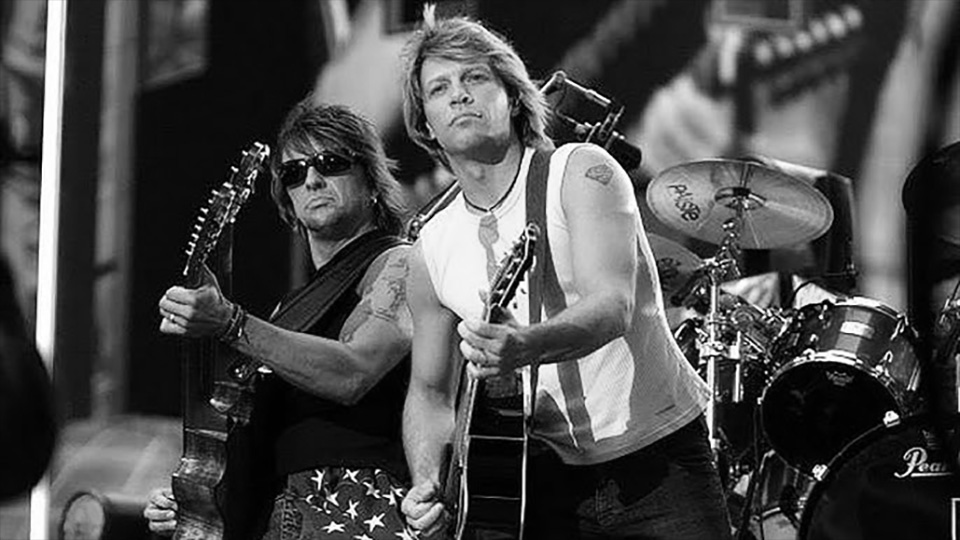
Come Together
Lyrically, Jon Bon Jovi is locked-in.
Where the band’s mid-90s output often circled small personal reckonings (age, disillusion, fatigue), Bounce does something different. Its songs are written by an artist attempting to process a moment, rather than manufacture a vibe, with a clear attempt to capture the immediate post-9/11 atmpsphere — uncertainty, shock, anger — and redirect that energy into something that future generations can look back on in years to come.
And when it works, it really does work.
Barnstorming opener Undivided is the clearest example: a tense affair that manages to bottle the rage of the nation during the first two weeks after the attacks, without ever tipping into macho chest-thumping. Bon Jovi’s interesting chess move here is that the song doesn’t try to sound like vengeance at all; instead, it leans into unity and restraint — Jon taking a reactive national mood and attempting to bend it toward something closer to resolve and, as the record’s title suggests, “bouncing back.”
It’s the album’s standout moment.
"How many hands, how many hearts, how many dreams been torn apart? Enough."

Undivided
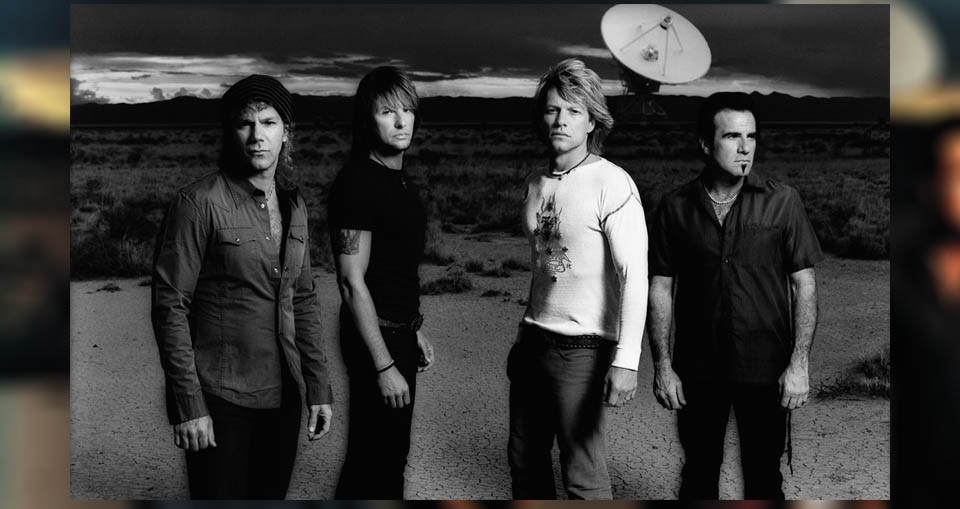
The Return Of Desmond Child
Bon Jovi fans will be more than familiar with the work of songwriter Desmond Child.
The rockers’ favourite hit-maker has previously helped them pen a slew of hits (Livin’ On A Prayer, You Give Love A Bad Name, Keep The Faith, This Ain’t A Love Song), and after sitting out 2000’s Crush, he makes a welcome return to the fold here.
Child has a knack for bringing out the best in Bon Jovi, pushing the band to fully realize the ideas they draft in the rehearsal room. Although his input on this project doesn’t yield anything to rival their classic hits, he successfully sharpens their songwriting focus by encouraging them to explore unconventional narratives and angles.
The most oddly specific example of this is the ballad Open All Night — written as a dialogue between TV lawyer Ally McBeal and Jon’s character Victor Morrison, which could either be interpreted as next-level world-building or the most Bon Jovi way to promote a television cameo.
Elsewhere, the bouncy Misunderstood puts the band on more familiar ground; a tale of contrition, consequences, and the sense of a frontman realising what he’s missed at home while living at touring speed.
Finally, the ridiculously deep Hook Me Up goes somewhere you wouldn’t expect from a band who could so easily push the autopilot button and get away with it. Inspired by a newspaper article about a young Palestinian man trapped in occupied territory as he attempts to signal for help via a battered ham radio, this chugging rocker is written from the perspective of the soldier as he lays in the rubble posing as a casualty of war.
Let’s be honest: Bon Jovi don’t need to go to these lengths, but the fact that they do speaks volumes.
Dry County
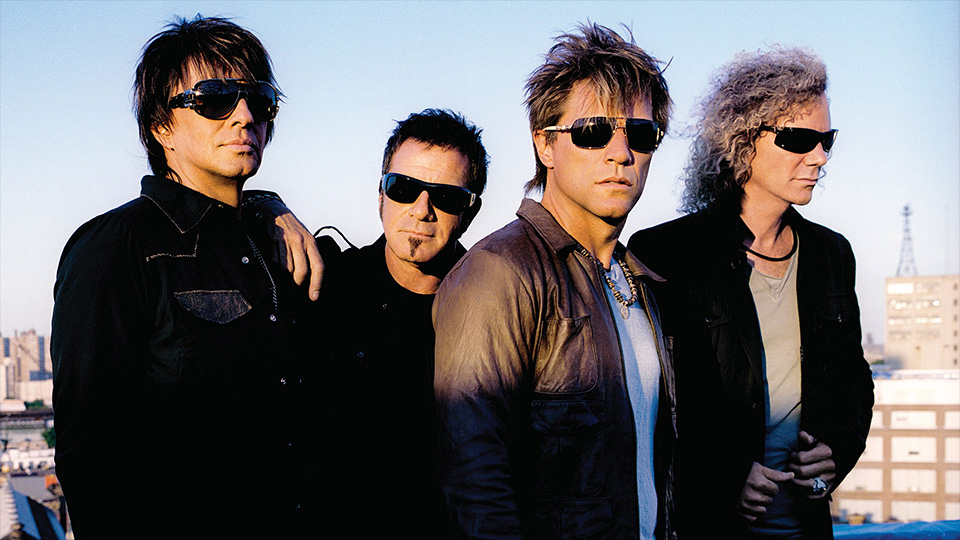
One of Bounce’s quieter and perhaps unexpected problems is that it fails to deliver an elite power ballad.
The likes of Love Me Back To Life, Right Side Of Wrong, and Thank You For Loving Me aren’t terrible — they’re competent, well-sung, and perfectly serviceable.
However, “serviceable” isn’t the Bon Jovi standard in this lane. Because when they’re truly firing on all cylinders, their balladry often becomes the star of the show, via any one of a myriad of songwriting tricks they’ve learned how to master over the years; an emotion-laced lyric (Always), a soaring guitar solo (Bed Of Roses), or a vocal dynamic that sets it apart (I’ll Be There For You).
These elite pay-offs never arrive on Bounce, and for a collection that leans so heavily into ballad-like material — roughly half the tracklist — it becomes a momentum tax the record can’t afford.
Riff Raff
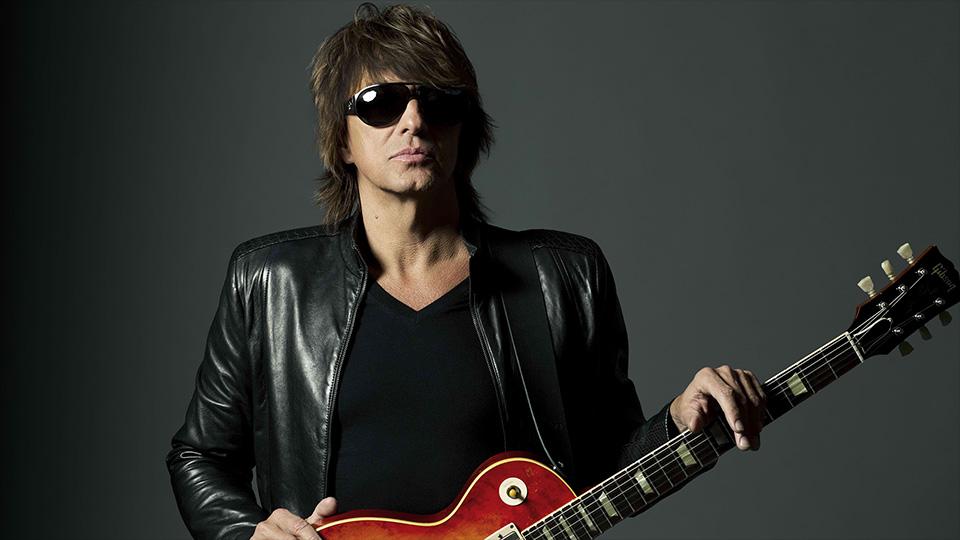
Richie Sambora’s bizarre new guitar tone is one of Bounce’s biggest talking points.
Coming off the Crush era, the legendary axeman pushes for a thick, modern crunch, throwing ultra-heavy riffs at almost everything that moves. You can hear his intent: make the record hit harder, sound bigger, feel more “now”.
The problem is that, outside of Undivided, the material doesn’t need this treatment. Indeed, on several tracks his wall of guitar distortion sits so far forward in the mix that the finer details of the arrangements, such as David Bryan’s keyboard textures, sound like they’re trying to breathe through a letterbox.
Sure, it adds weight — but weight isn’t the same thing as force, and Bounce sometimes mistakes one for the other.
“The track Undivided is about 9/11. It happened at the end of our first week back in the studio, and it was impossible for us to ignore those feelings. That’s why, despite some of the difficult subject matter, there’s an underlying optimism running through this record. It’s how we grew up, that’s our outlook on life.”
– Richie Sambora
Bon Jovi – Bounce
Bounce can be considered a worthy successor to Crush.
Despite lacking the power or uber-hit It’s My Life, this record often feels punchier, louder, and moder determined to make every chorus feel like it’s aimed at the back row of a stadium.
What separates it from the band’s usual template is the context. The post-9/11 shadow that hangs over Bounce gives it an added weight — not across every track, and not always with perfect subtlety, but enough to make its best moments feel tethered to a specific time rather than floating in generic uplift.
It also a record which confirms something Bon Jovi have long understood: their brand of glossy blue-collar rock didn’t need to chase the musical weather in order to be functional. They were still a very capable commercial weapon circa 2002, despite the emergence of nu-metal and alt-rock, and Bounce was built to reinforce their status as the rightful rulers of their domain.
FINAL VERDICT:
A heavy, post-9/11-shaded arena record with real moments — but too much ballast and a lack of top-tier ballads stop it soaring.
★ ★ ★ ★ ★ ★ ★
7/11
Solid
See Our Reworked Tracklist
These Go To Eleven
Reworked Tracklist
This reworked tracklist pulls the focus onto the songs that carry the album’s emotional weight and its best arena craft, while trimming the material that drags the pacing. Same era, same intent — just a cleaner hit.
Here’s how we recommend listening to Bon Jovi: Bounce (2002) for maximum impact:
- The Distance (4:48)
- Hook Me Up (3:54)
- Undivided (3:53) ★
- Right Side Of Wrong (5:50)
- Misunderstood (3:30)
- Bounce (3:11) ★
- Everyday (3:00) ★
- All About Lovin’ You (3:46)
- Love Me Back To Life (4:09)
- No Regrets (4:02) ^
- Standing (3:50) ^
- Lucky (3:47) ^
- Another Reason To Believe (3:30) ^
★ Standout track
^ Featured on the special edition
– Excluded tracks: You Had Me From Hello (3:49), Open All Night (4:22), Joey (4:54), Postcards From The Wasteland (4:25)
STANDOUTS Undivided · Everyday · Bounce
MORE READING Bounce (2002) is part of our Bon Jovi review series.
Further reading
Continue the Bon Jovi story.
Bon Jovi’s best work in over a decade.
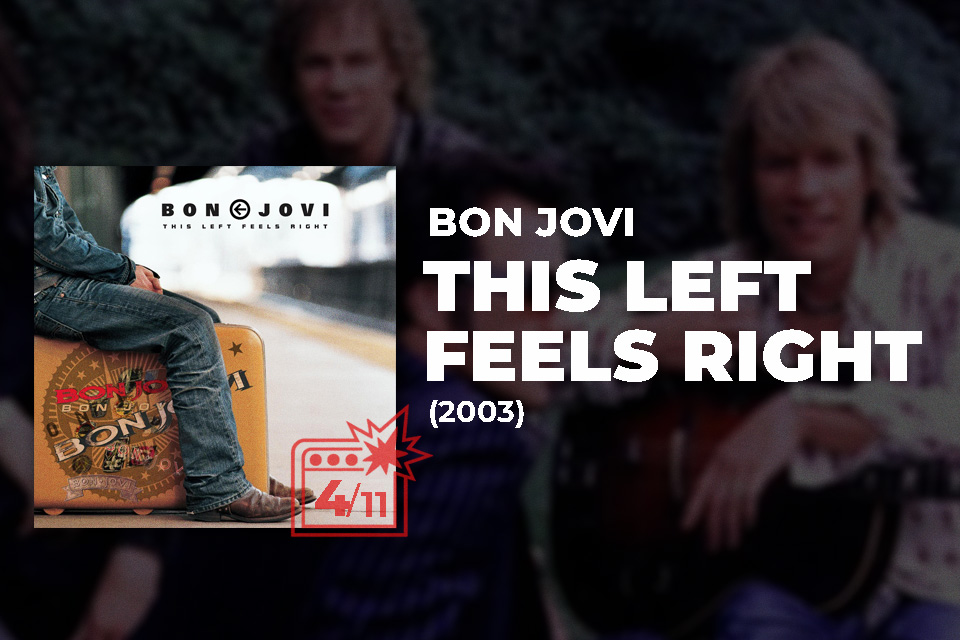
Re-imagined versions of their classic hits seemed like a cool idea at the time…
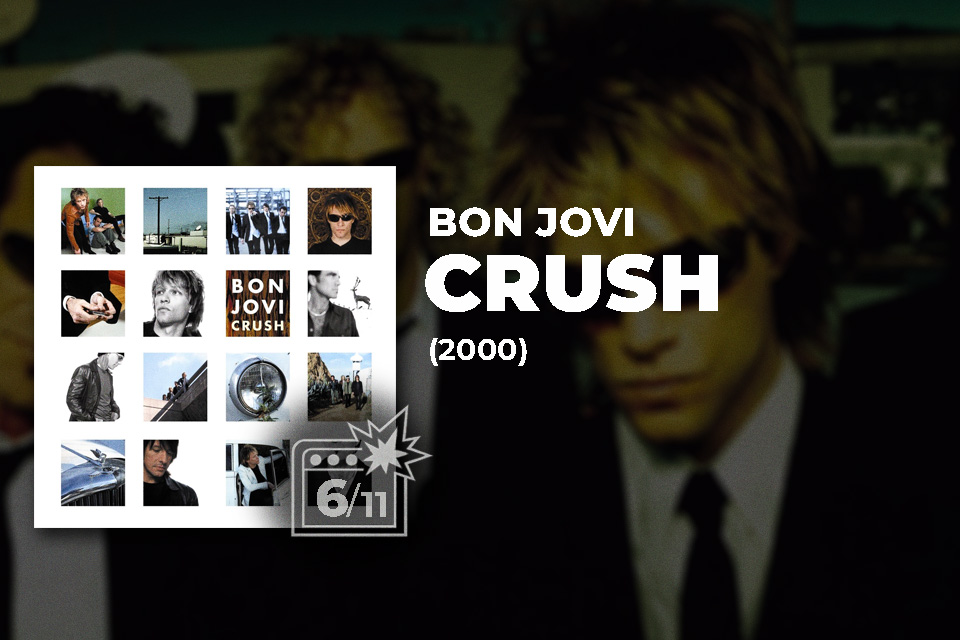
Crush (2000) finds Bon Jovi modernising after a long break: a colossal lead single, smart deep cuts, and a back half that loses momentum.
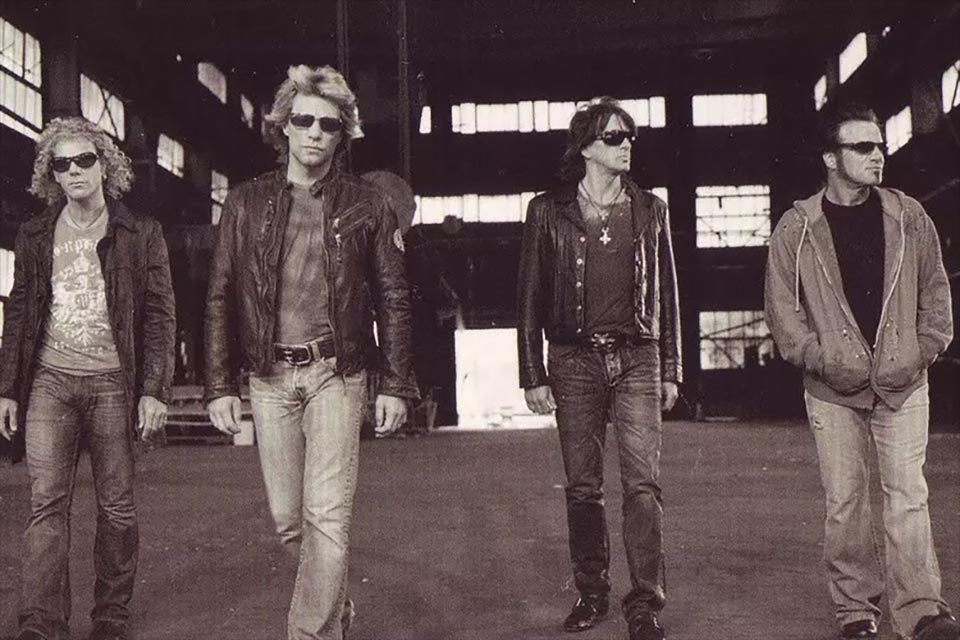
Explore the full Bon Jovi album guide
Few bands have navigated reinvention quite like Bon Jovi. From their mid-’80s breakthrough to the country detour of the 2000s and post-Sambora rebuild, their catalogue charts the evolution of arena rock across five decades.